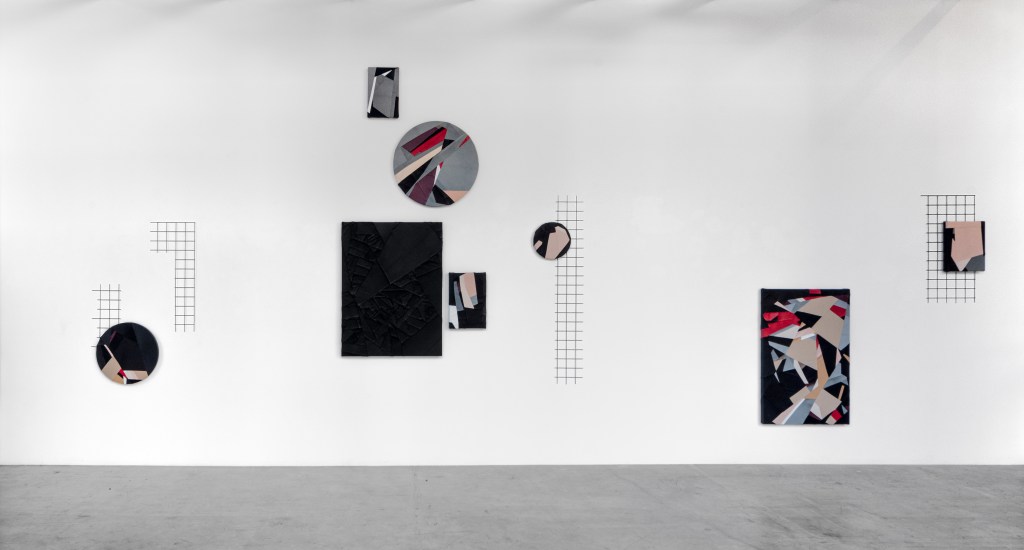
relational painting
2026, Moore Contemporary, Boorloo / Perth
Relational Painting begins with a return. Extending an investigation begun in Mobile Composition (2017), the work unfolds through assembly, bringing material and historical fragments into alignment and misalignment, where meaning is contingent and produced through proximity.
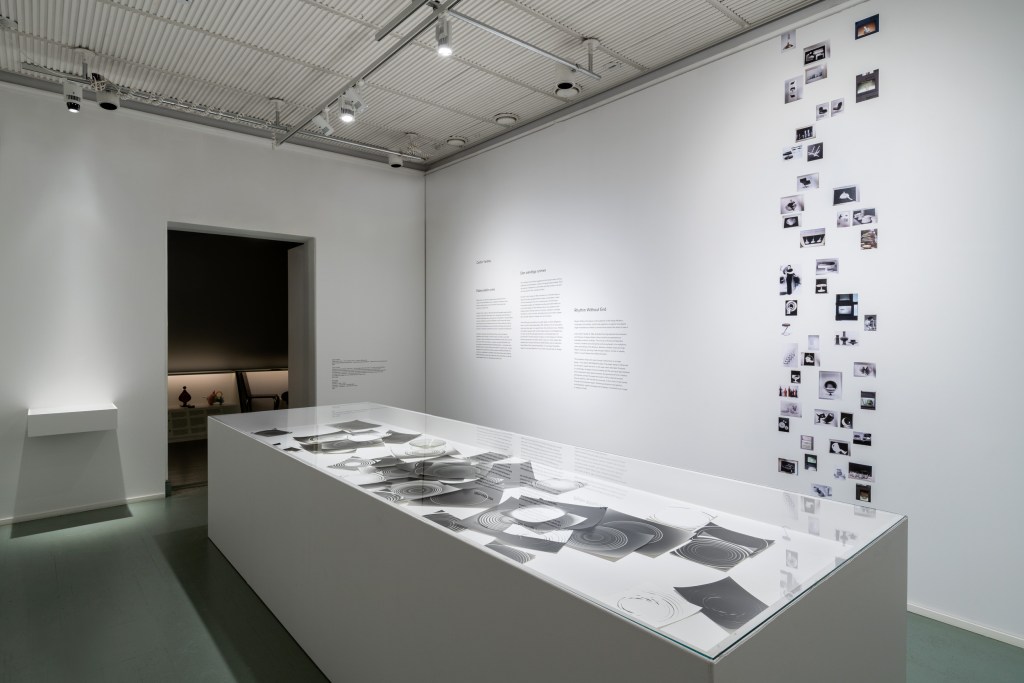
rhythm without end
2021, Helsinki Design Museum, Finland
Rhythm Without End draws on the collection and image archives of Design Museum Helsinki, using ideas of circulation, rhythm and repetition to explore how objects might simultaneously inhabit our world and be a lens through which to view it. Through a deep focus on Aino Aalto’s 1932 Bölgeblick glassware, the installation follows ideas of circularity, rhythm and repetition across objects, images and processes of making.
mobile composition
2017, Maison Louis Carré, France and Galerie
2020, curated by Andrew Renton for New Viewings, Galerie Barbara Thumm, Berlin
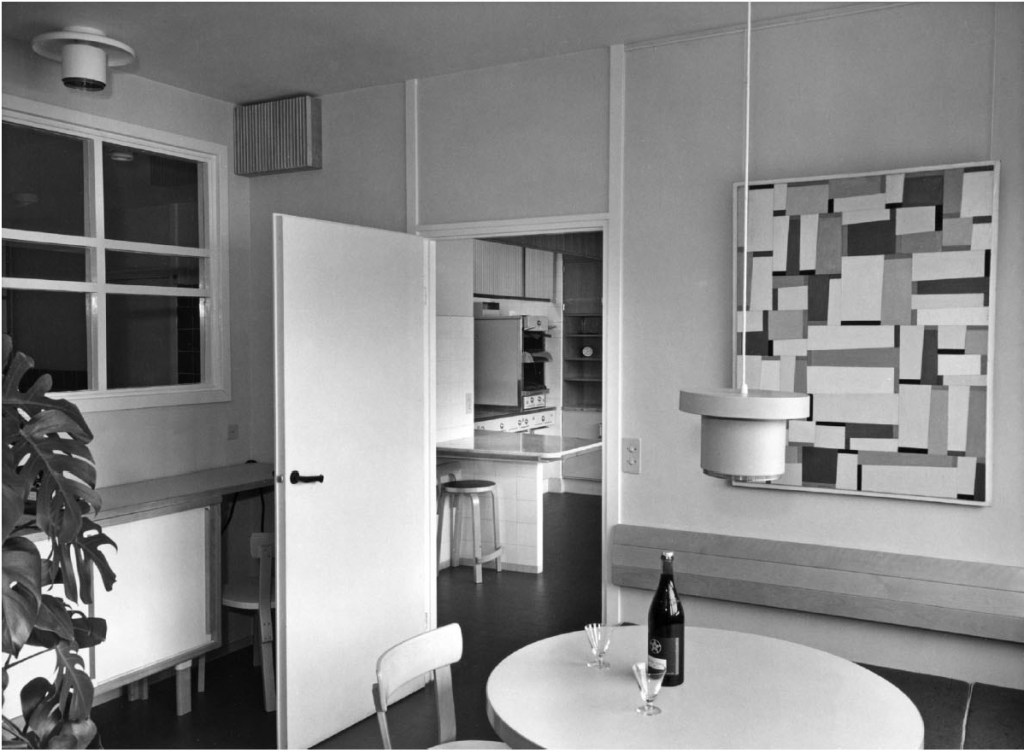
Photo: Heikki Havas, 1962. Courtesy Alvar Aalto Museum
Mobile Composition is an installation and artist book that develop through one another, focusing on the interior of Alvar Aalto’s Maison Louis Carré and the art collection of Paris art dealer Louis Carré, for whom the house was built. Working from archival photographs that fix the collection at a particular moment in 1962, the project attempts to reconvene the now-dispersed works through eighteen placeholders made in quilted black goat leather, retaining only their titles and dimensions, and installed to restage their original assembly.
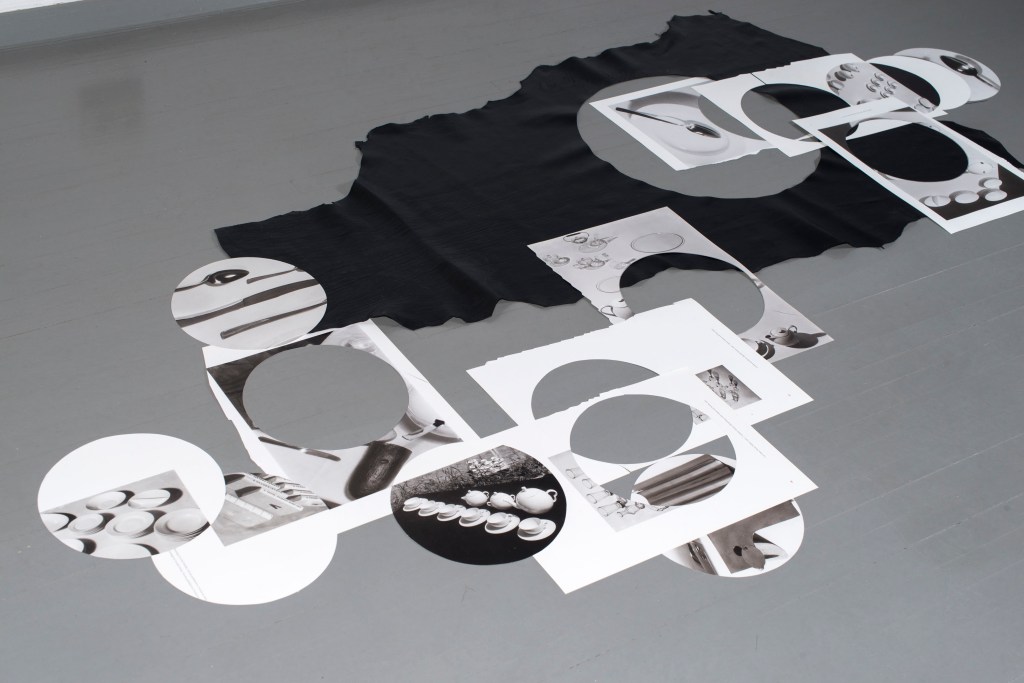
eclipse sequence
Eclipse Sequence, 2019, HIAP (Helsinki International Artist Programme), Finland
Eclipse Sequence brings together a series of moments shaped by proximity, movement and perception. The installation incorporates a video projected into a circular cut in goat leather, floor-based mirrors that double and appear to move the gallery’s existing wind tunnels and an assembly of cut and collaged bookplates from a publication of Josef Sudek’s photographs.
equilux
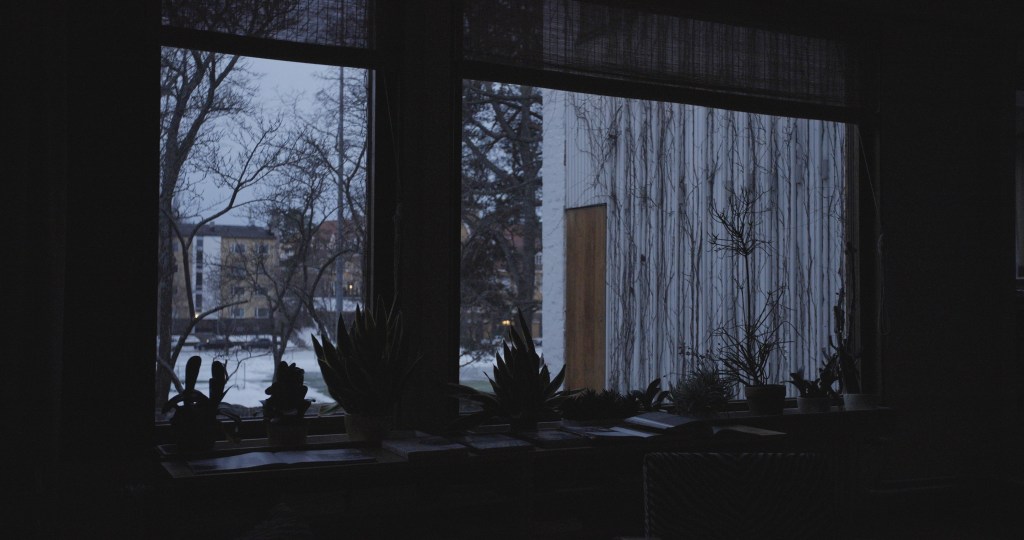
Equilux draws Aino Aalto and Virginia Woolf into dialogue through the structure of a single day. Filmed at their former homes on equilux – the twice-yearly moment when day and night are equal – the work forms a double portrait of two women, of two houses and of the same day, which occurs twice. Its six channels draw on the multiple perspectives of The Waves, in which Woolf imagined the lives of its six characters so interwoven that they continue each other. Tracing historical threads, object relationships and recurring forms, the work brings two distinct personal and creative legacies into unexpected proximity.

