mobile composition, artist publication

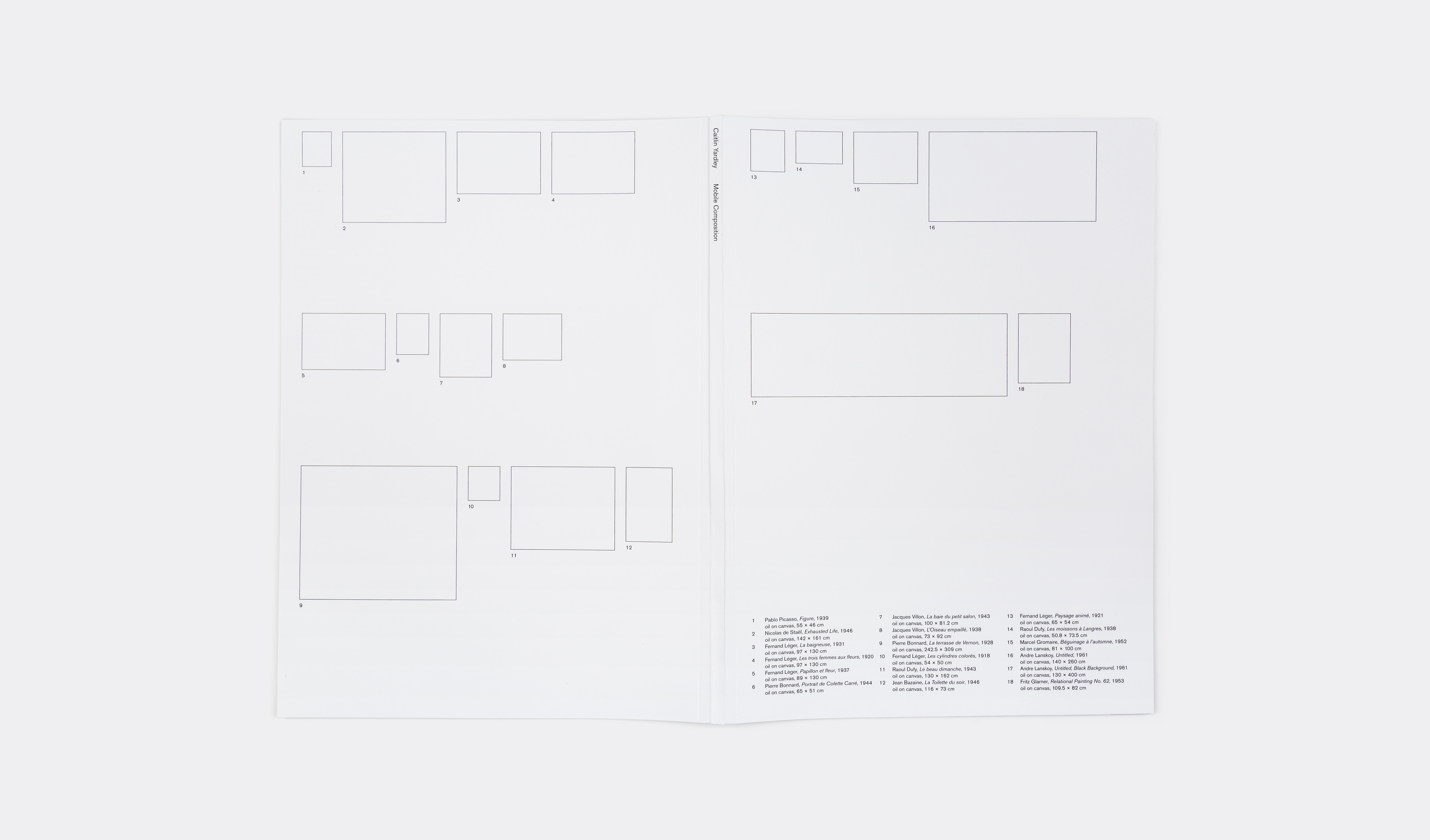
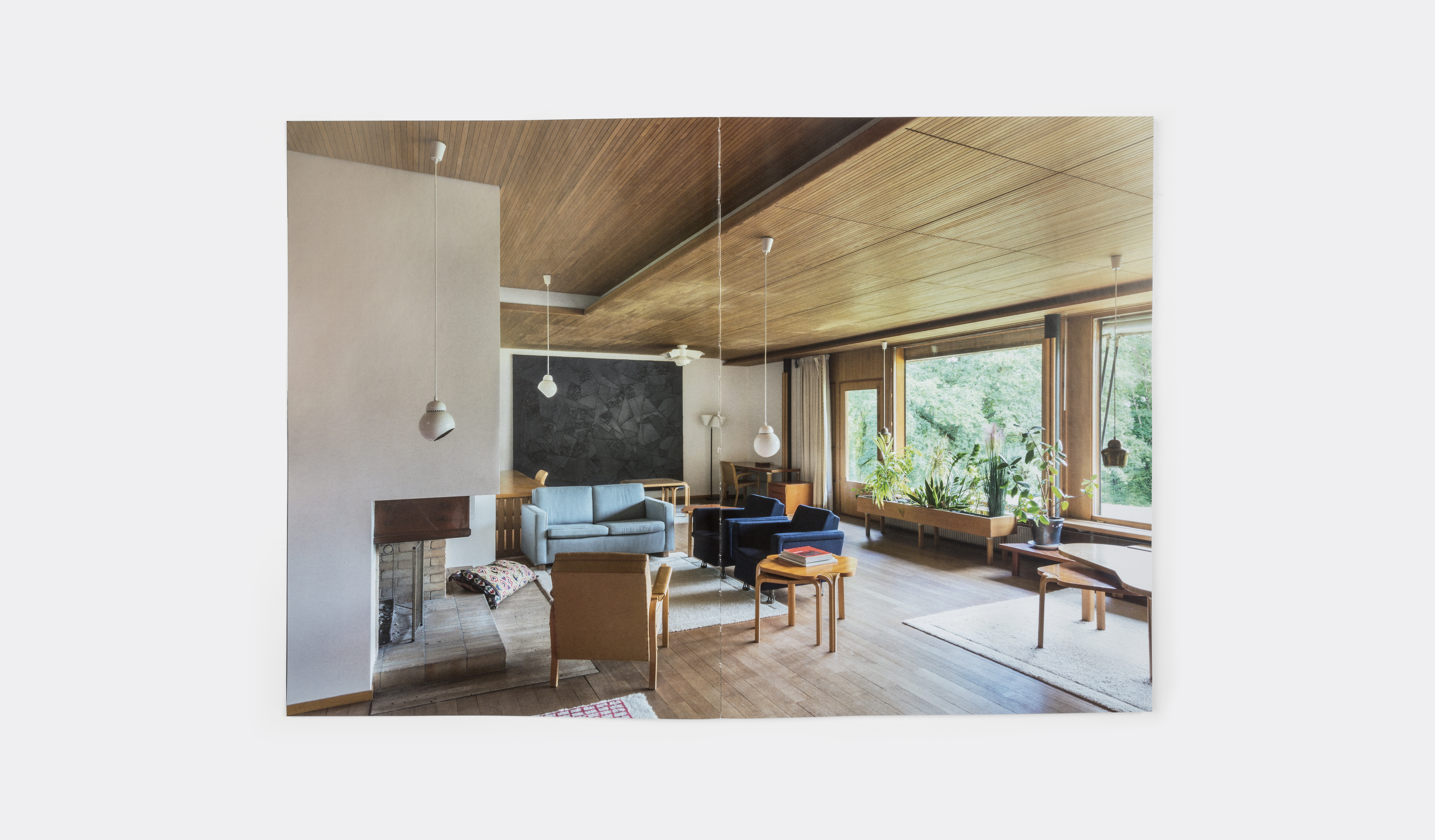
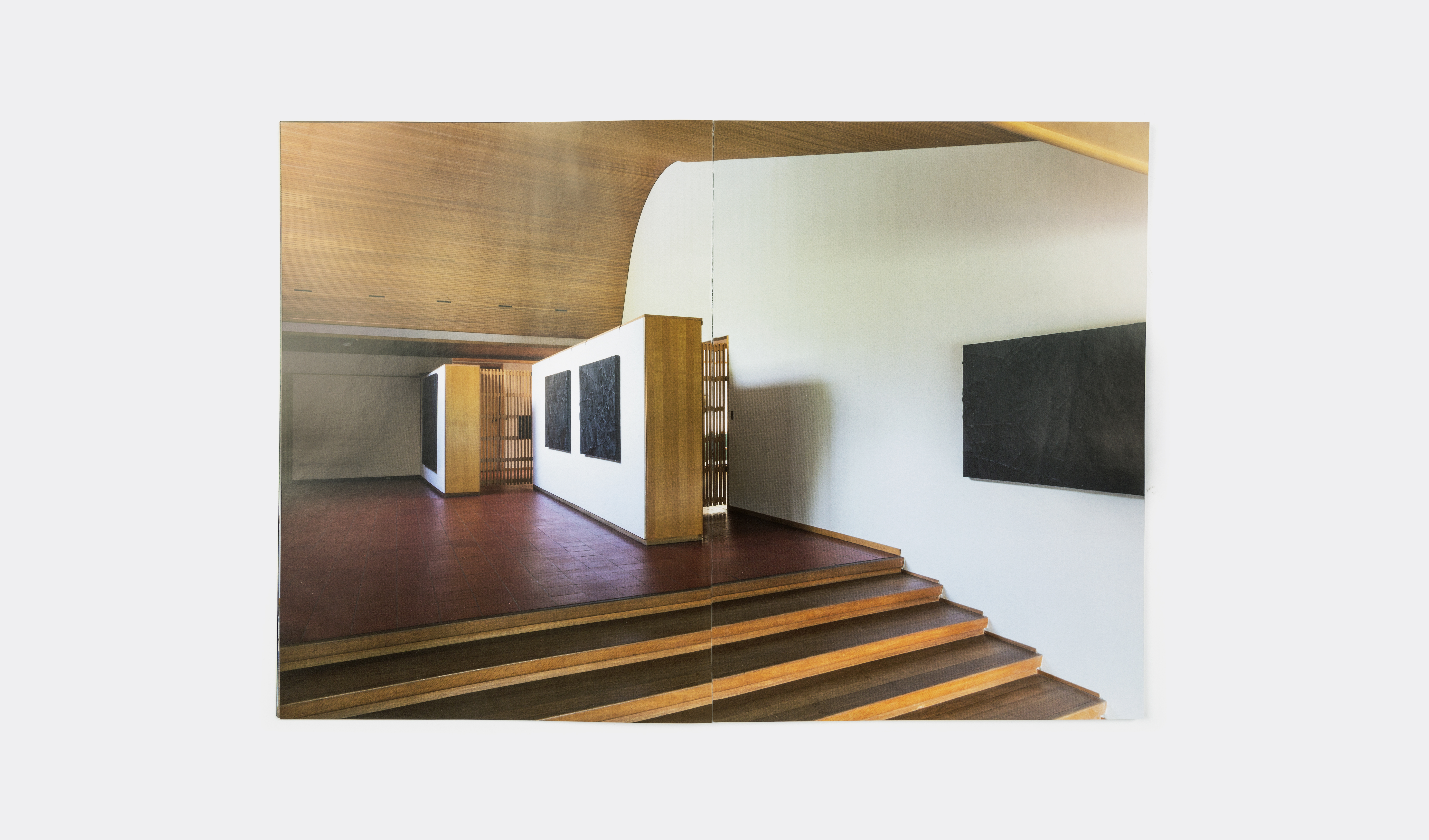
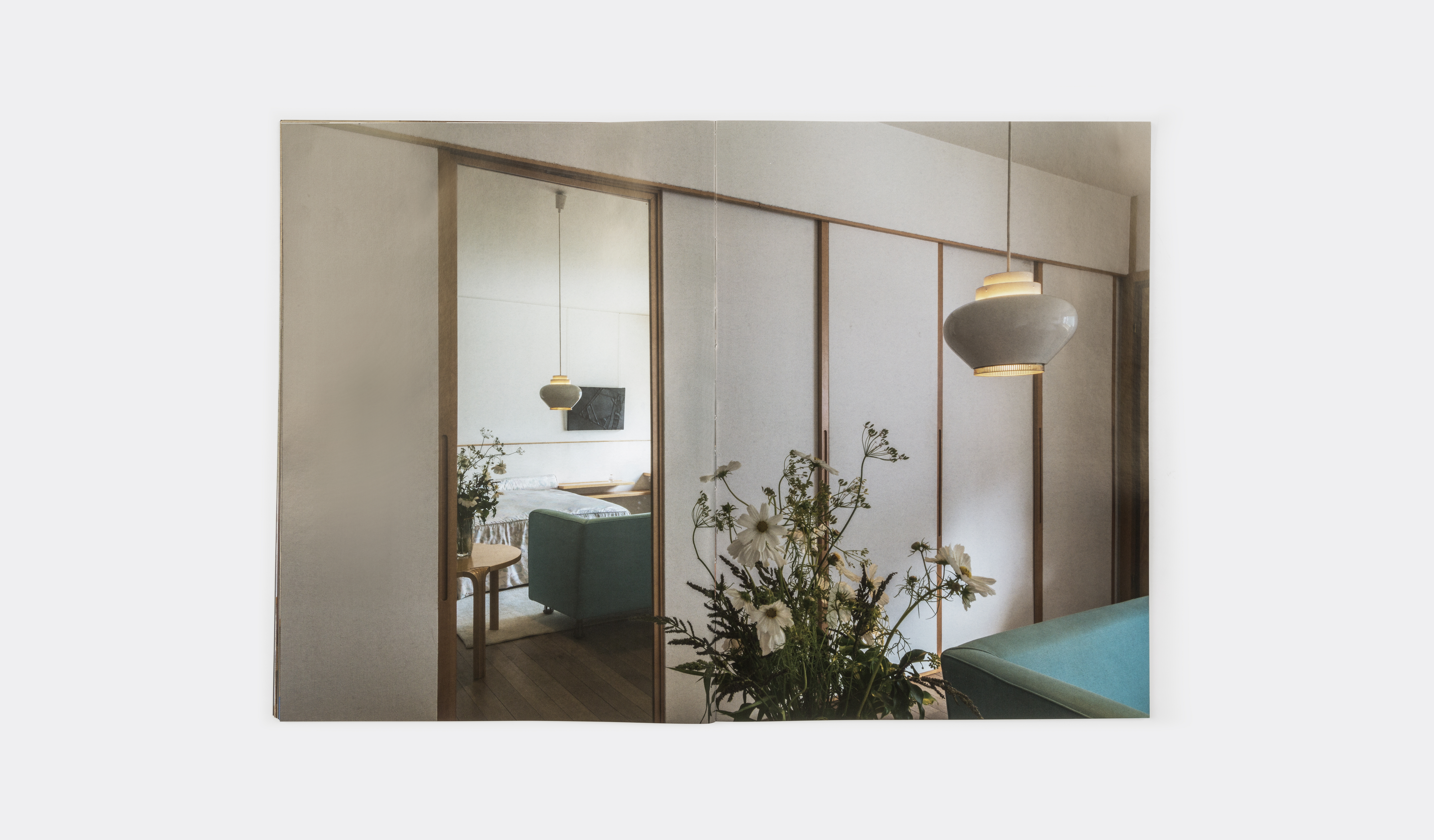
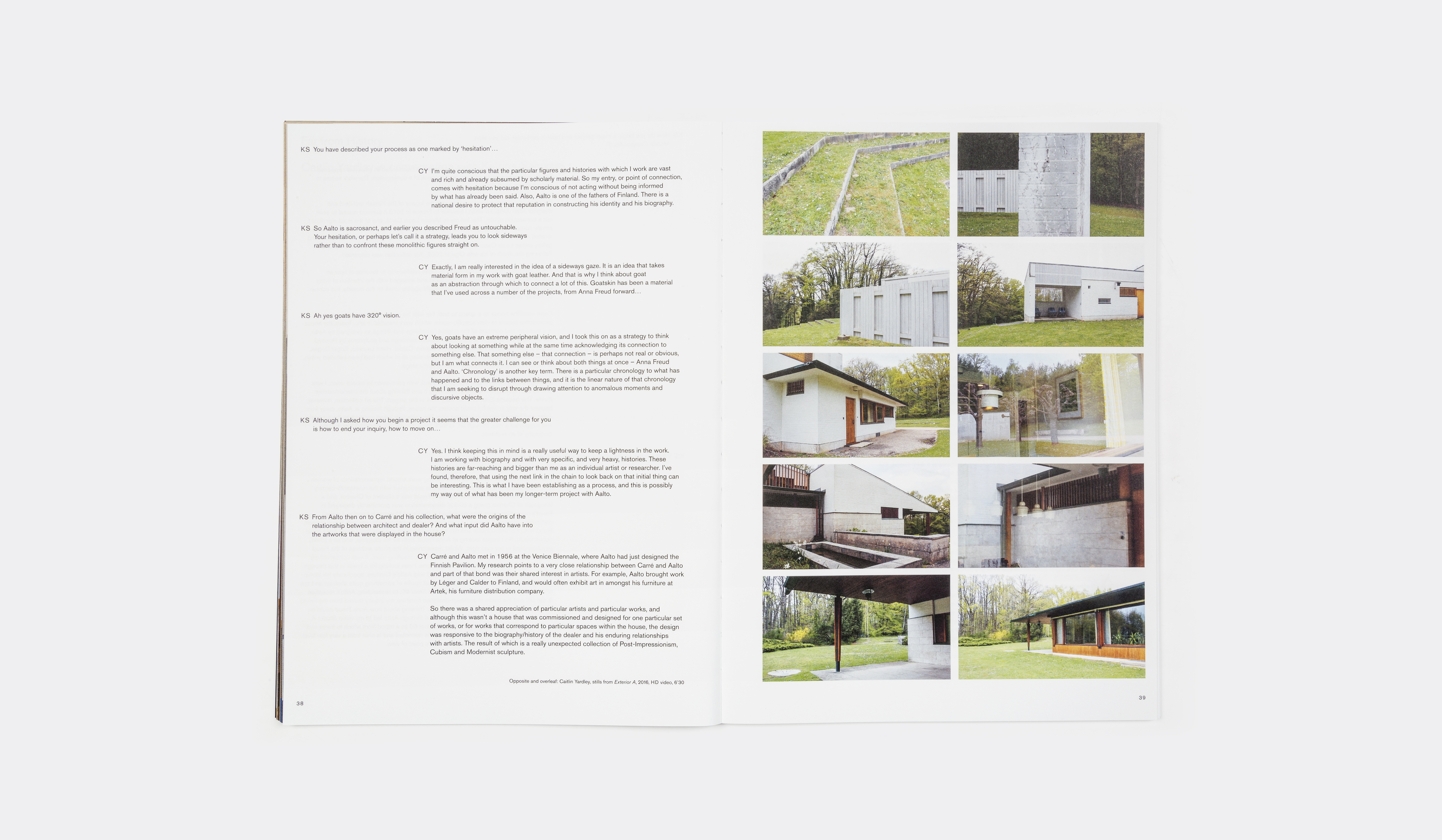
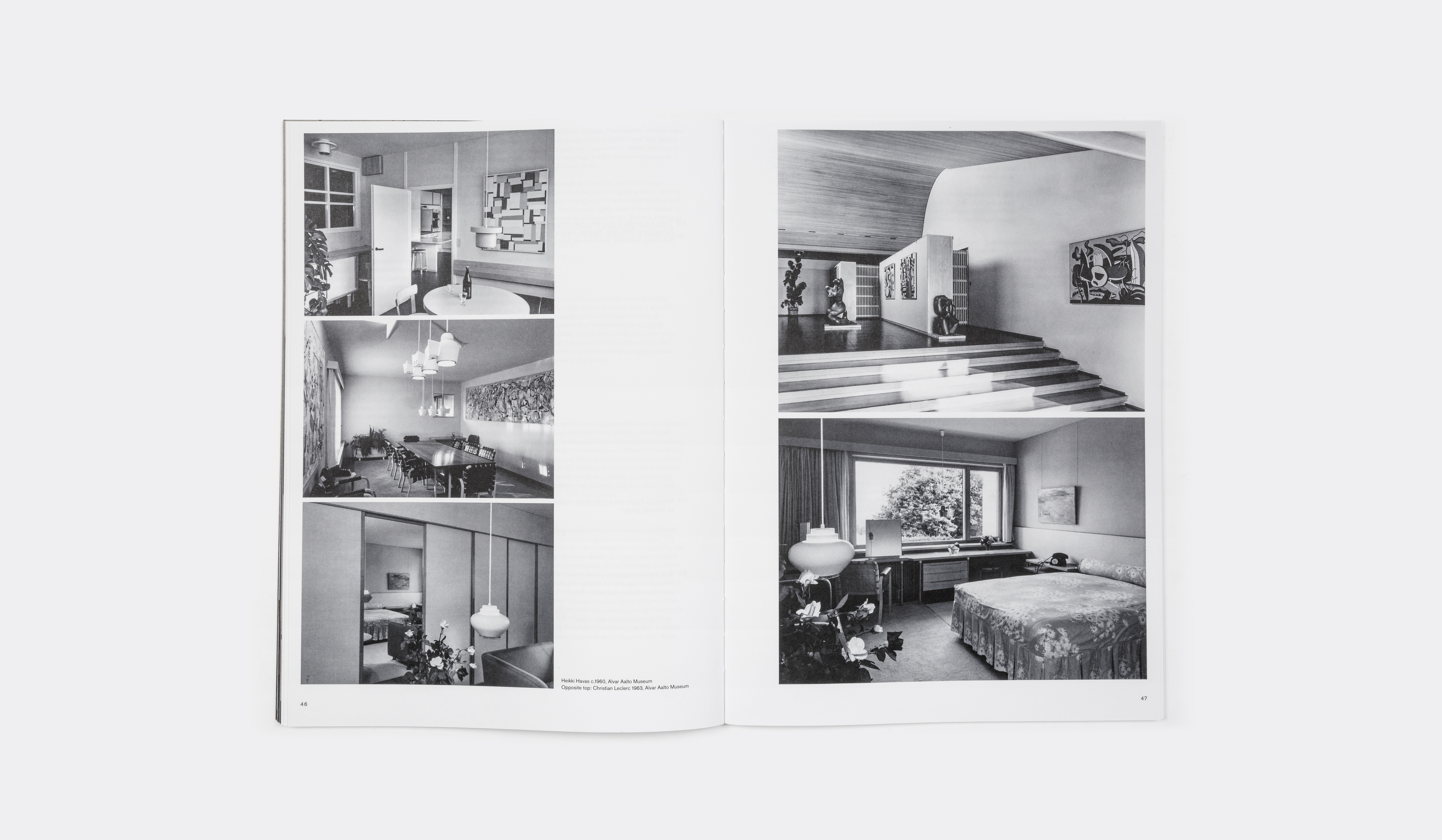
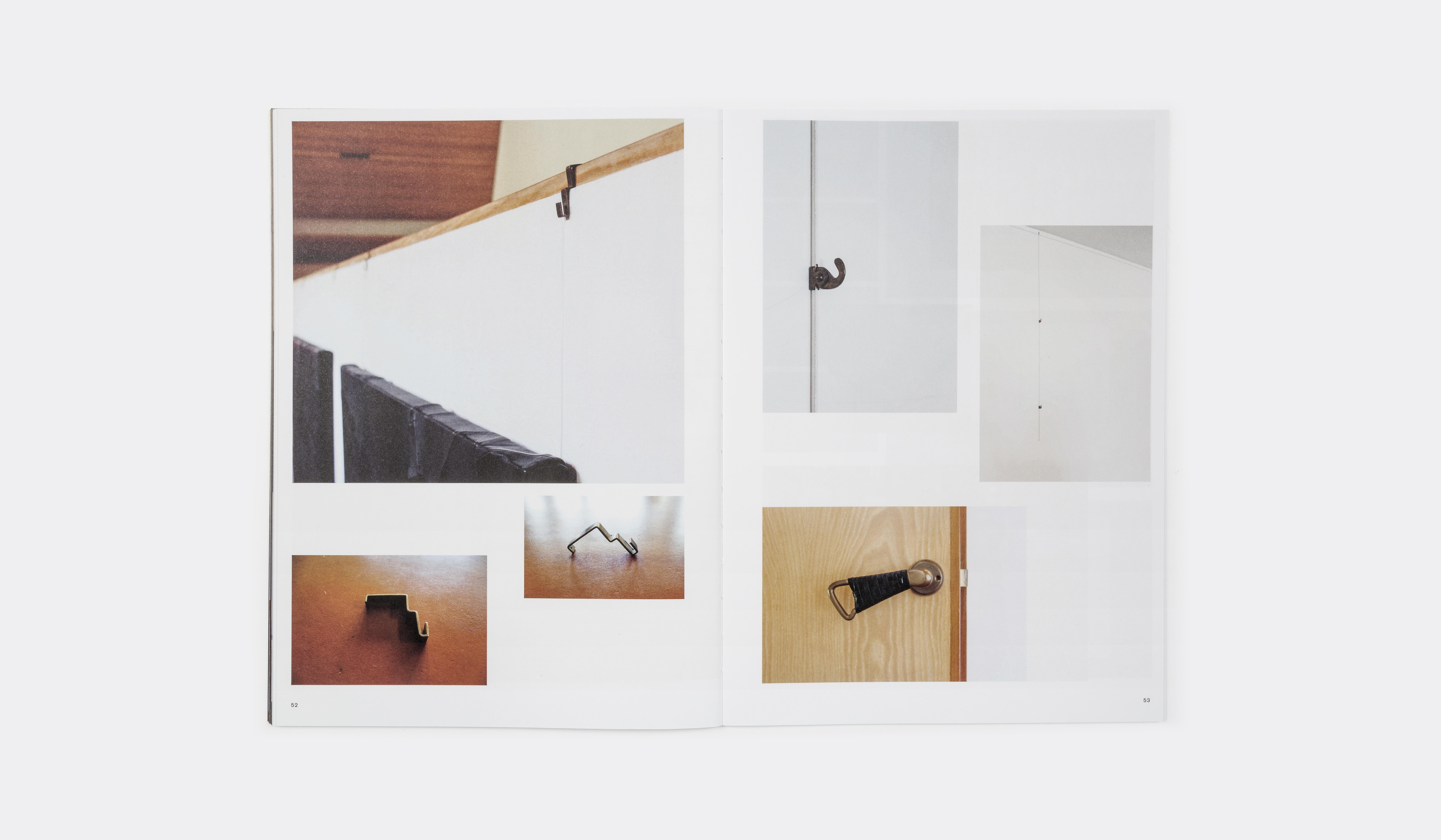
Mobile Composition, 2018, softcover, 80pp, 32 x 23 cm, edition of 500
ISBN: 978-1-5272-1475-0
Mobile Composition is an artist book and parallel installation focusing on the interior of Alvar Aalto’s Maison Louis Carré, located outside Paris and the art collection of Louis Carré, an art dealer for whom the house was built. Named for a small standing mobile in the collection by Alexander Calder, the work considers how artefacts and architecture might move through the world and collide in ways that open up access to peripheral histories and wider narratives.
Working from photographic documentation of the collection recorded during the 1962 visit of Finnish President Urho Kekkonen, Mobile Composition focuses on the collection’s posthumous dispersal and attempts to reconvene it through other means.
Acting as placeholders, key works from the collection have been identified and (re)produced in quilted black goat leather, carrying forward only the titles and dimensions from original works, and installed and documented to restage the archival photographs.
Conceived as an interior in its own right, the book assembles and arranges these new images with intersecting fragments of cultural and personal histories to form a non-linear, non-hierarchical body of evidence.
With contributions from Katrina Schwarz, Curator, British Council and Gemma Weston, Curator, Cruthers Collection of Women’s Art, University of Western Australia. Photos by Lucy Dawkins. Design by Studio Chehade.
Maison Louis Carré is Finnish architect and designer Alvar Aalto’s only building in France, located 40 kilometres southwest of Paris in the small village of Bazoches-sur-Guyonne. The house was commissioned following a meeting between Louis Carré, a Paris art dealer, and Alvar Aalto at the 1956 Venice Biennale, for which Aalto designed the Finnish Pavilion. Together, they created a significant design in modernist domestic architecture that is closely related to theories of how a domestic interior space might be conceived and arranged with the intention of living with art. It was proposed that the house might appear small on the outside but contain an interior of large volume.
Carré used the house as a space to both live with his collection and to bring clients to view specific works, installed in situ – the curation of the artwork’s installation in a constant state of flux. Today, the house functions as a museum, retaining all original furnishings and fittings as designed by Aalto; however, the walls and spaces intended for the artworks remain empty. On the death of Carré’s widow in 2002, the important collection – which included paintings and sculptures by Picasso, Calder, Léger, Bonnard, Le Corbusier, Klee, Degas and Villon – fell to distant family and was quickly dispersed at auction. While the art collection was dismantled, the house and its furnishings were recognised as of international significance and acquired for preservation by the Finnish Cultural Foundation and Association Alvar Aalto en France.
_____
This project is supported by Association Alvar Aalto en France, the British Council with Arts Council England and the Australia Council for the Arts.
Available from:
Architecture Association Bookshop, London; Printed Matter, New York; TACO!, London; Tenderbooks, London
 Caitlin Yardley