Category: Uncategorized
mobile composition
Mobile Composition, 2017–2020, Maison Louis Carré, France and Galerie Barbara Thumm, Berlin.
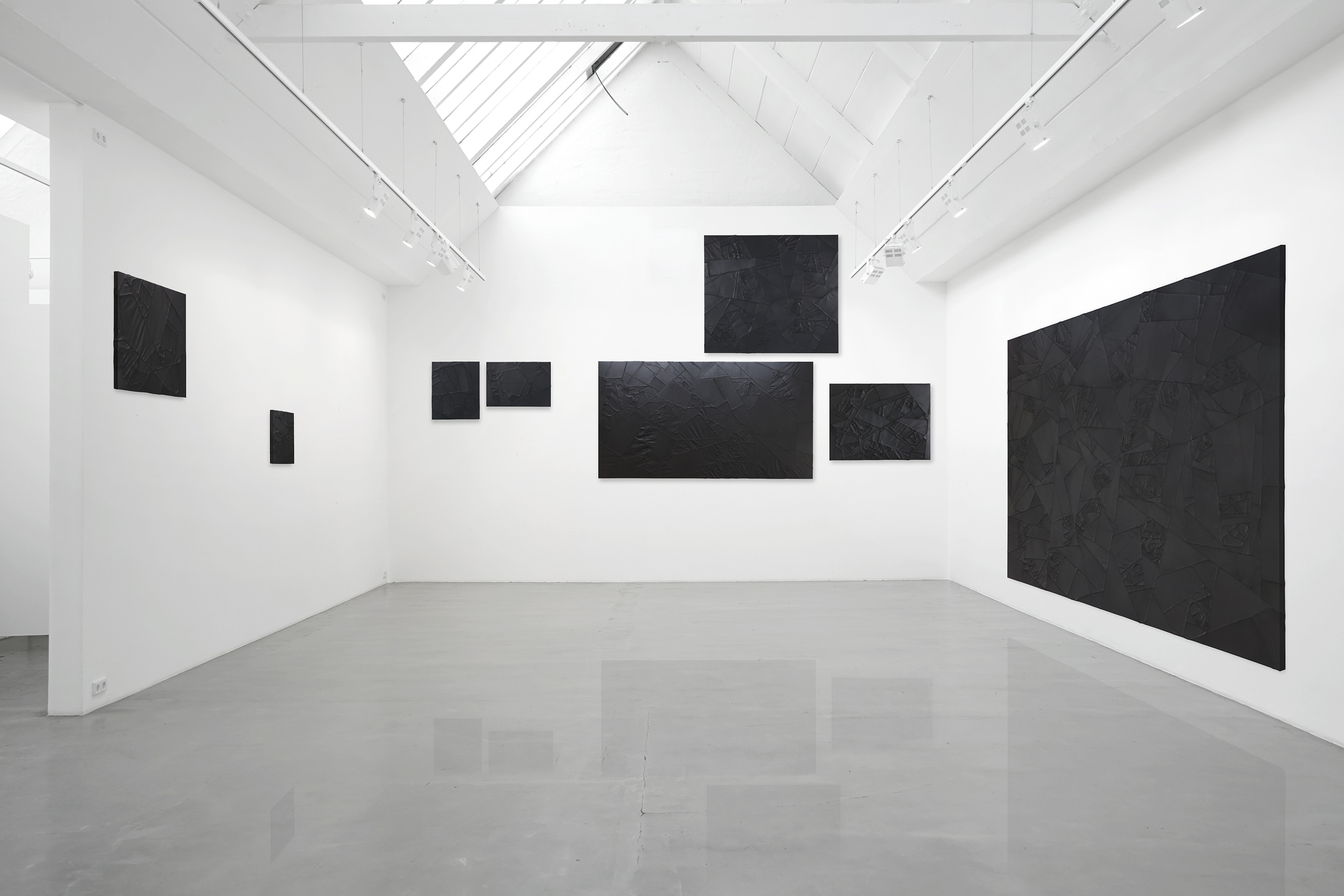
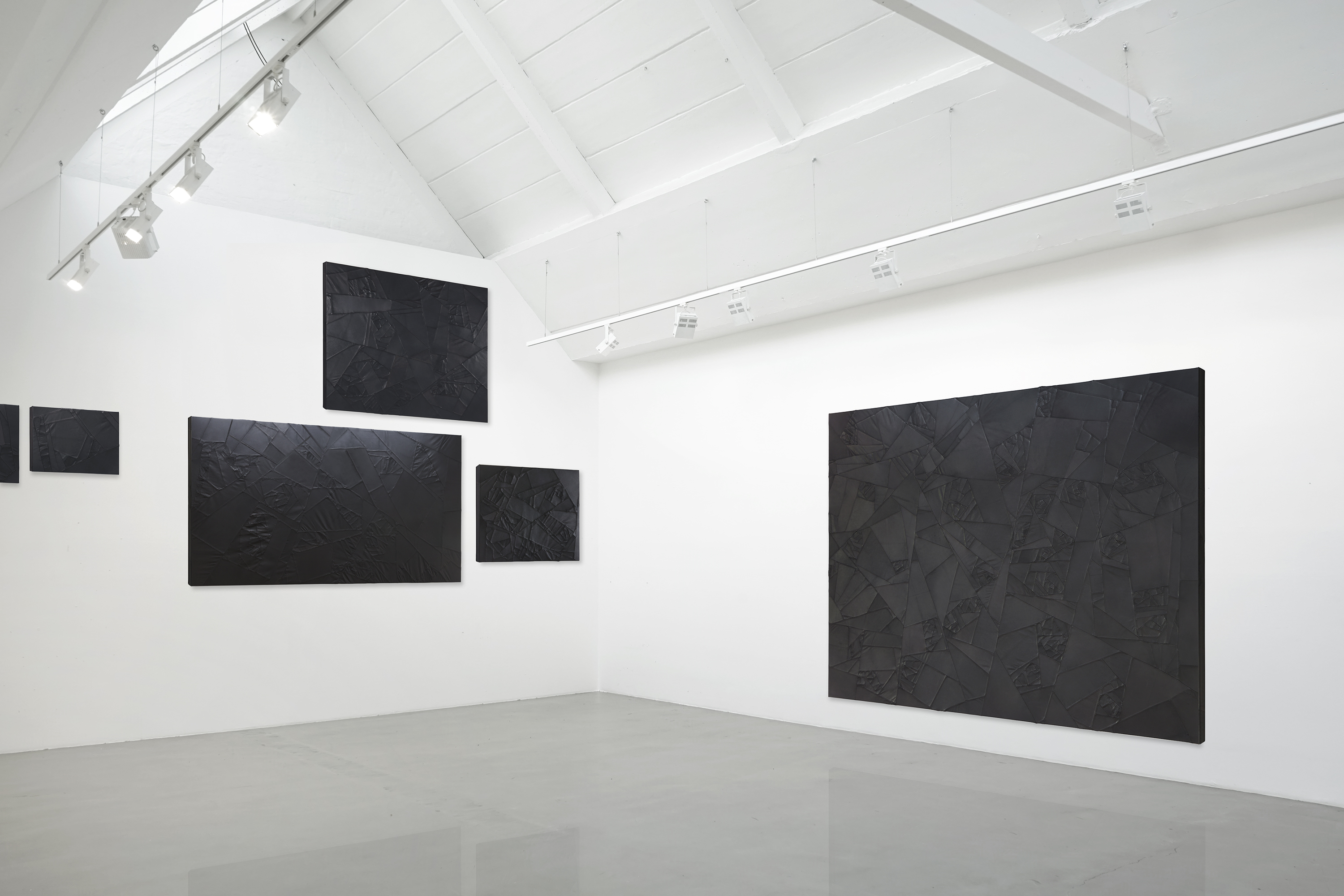
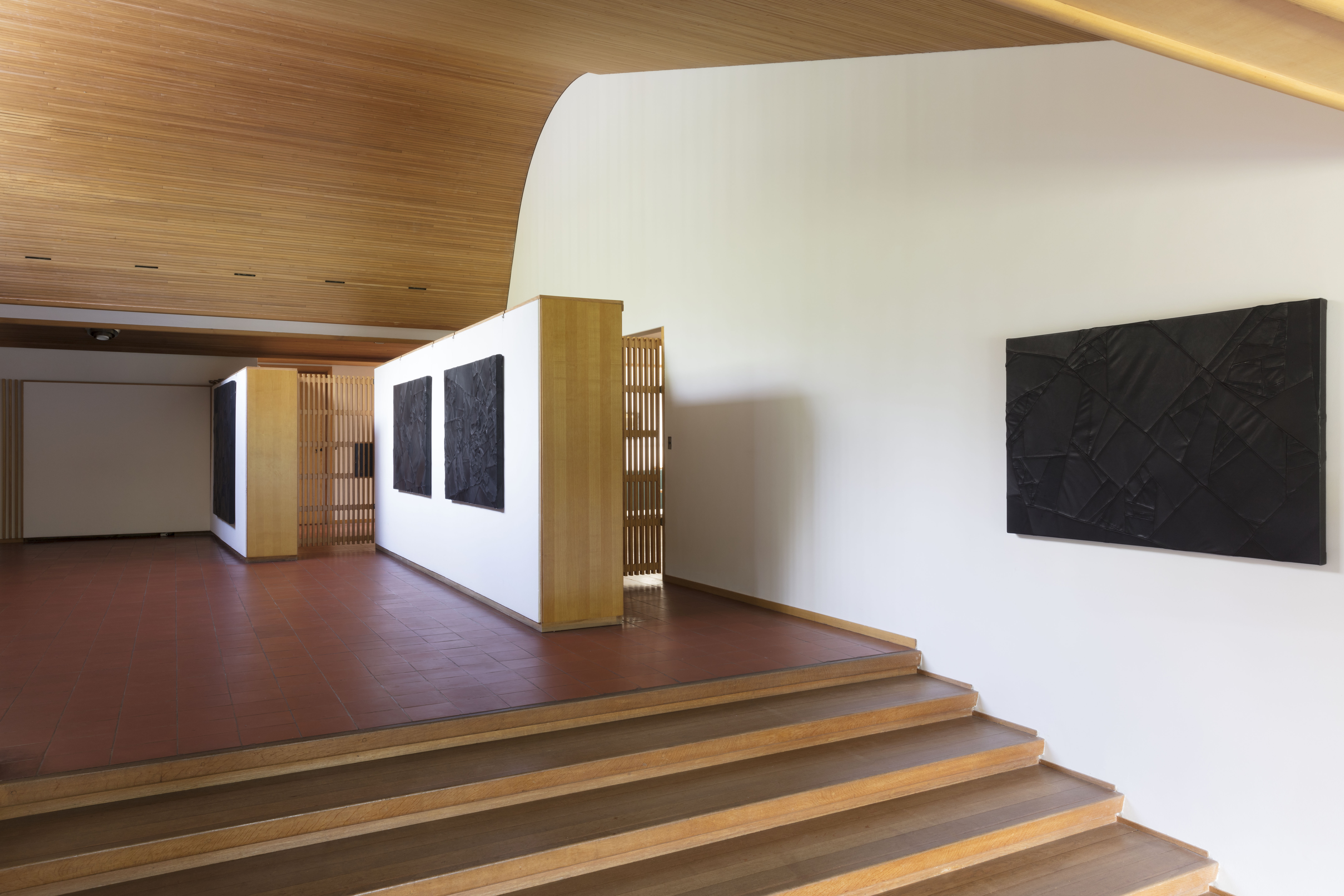
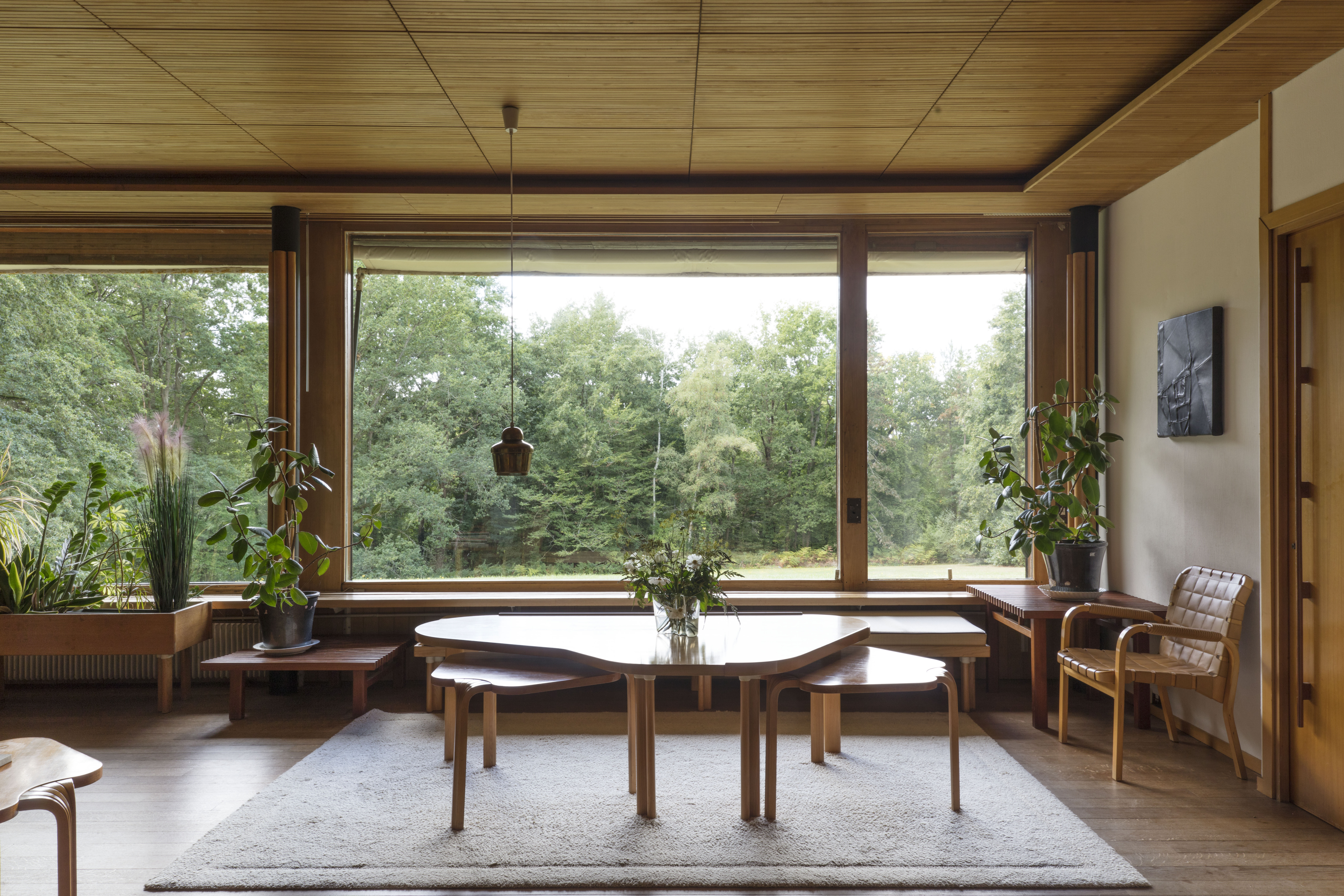
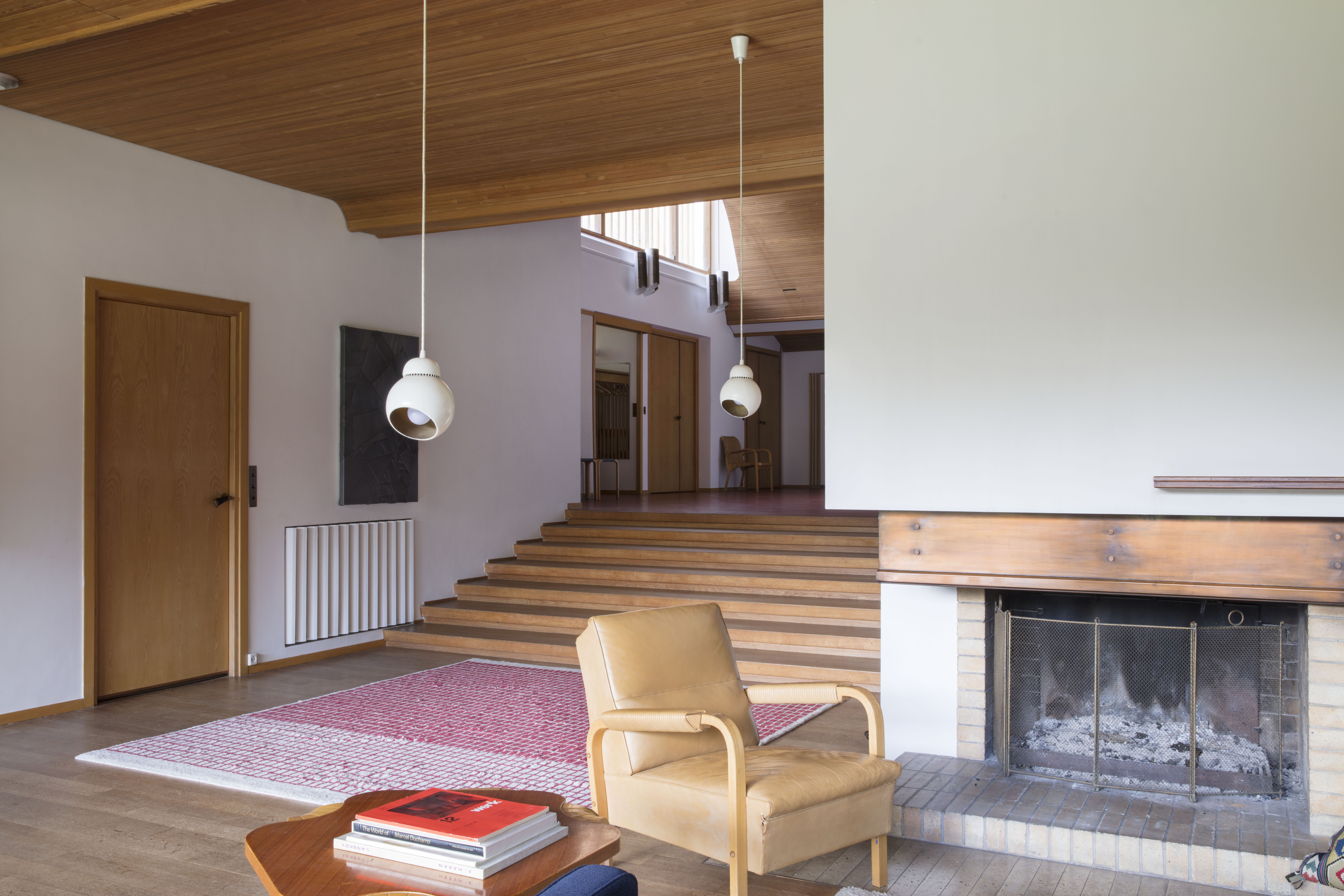
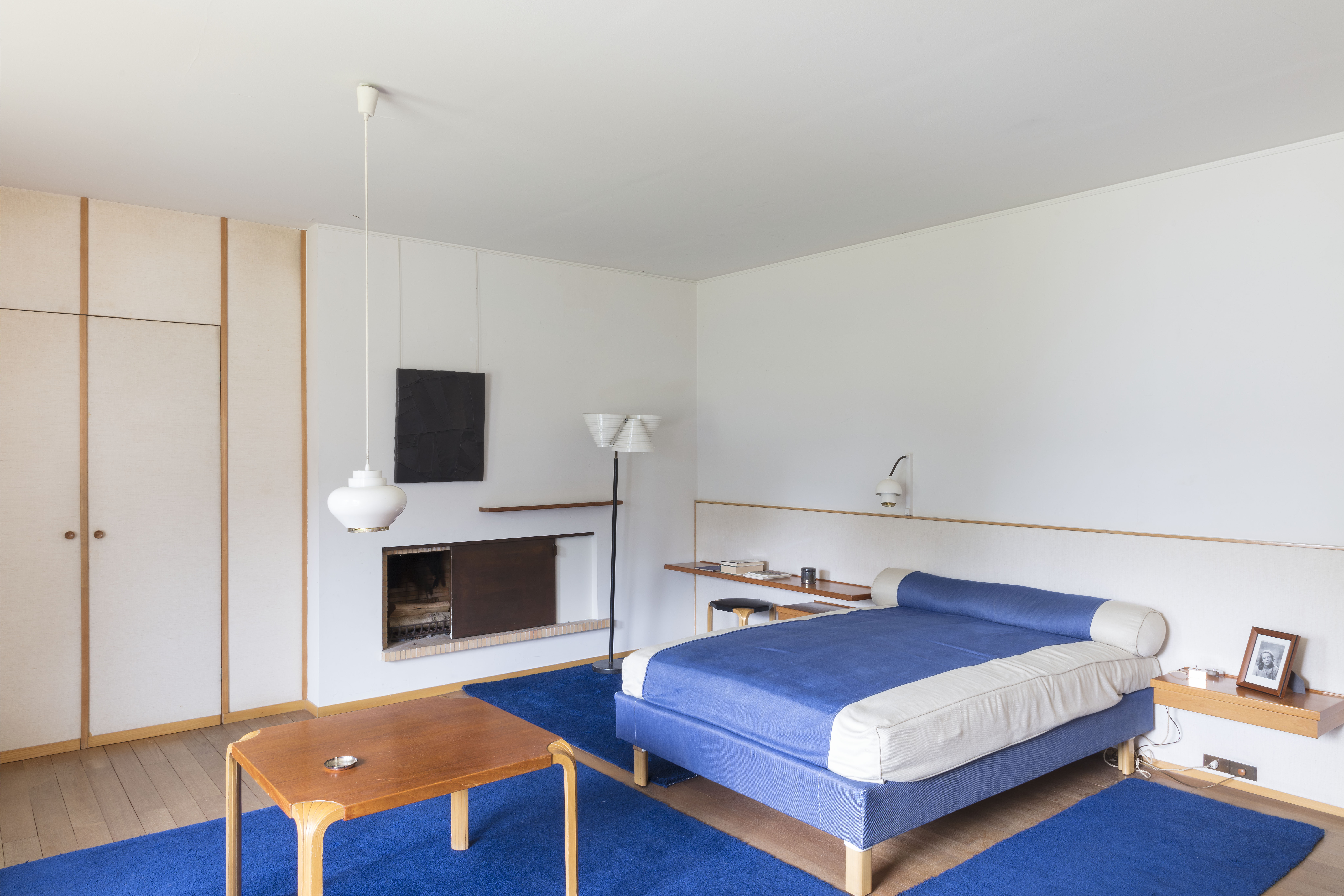
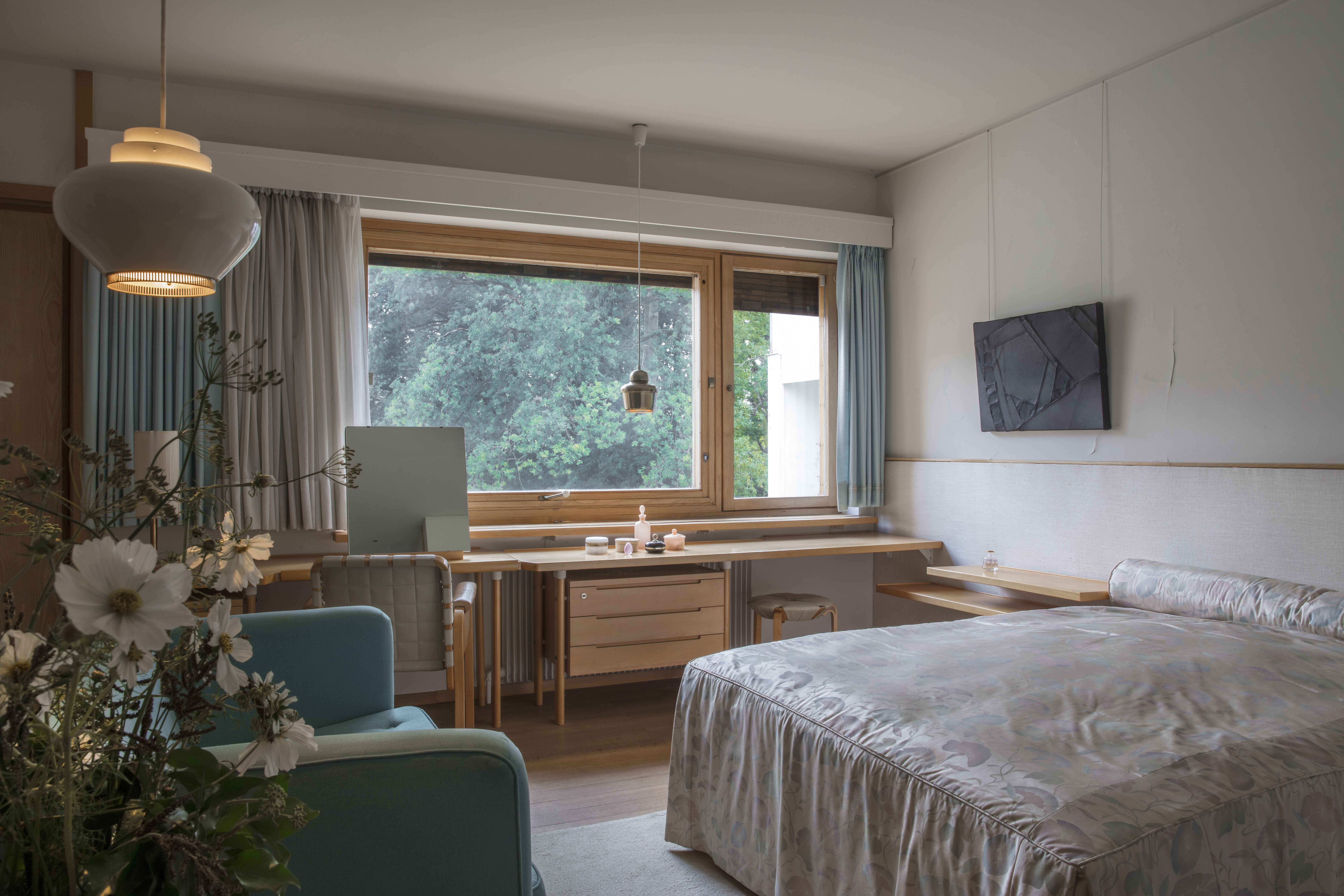
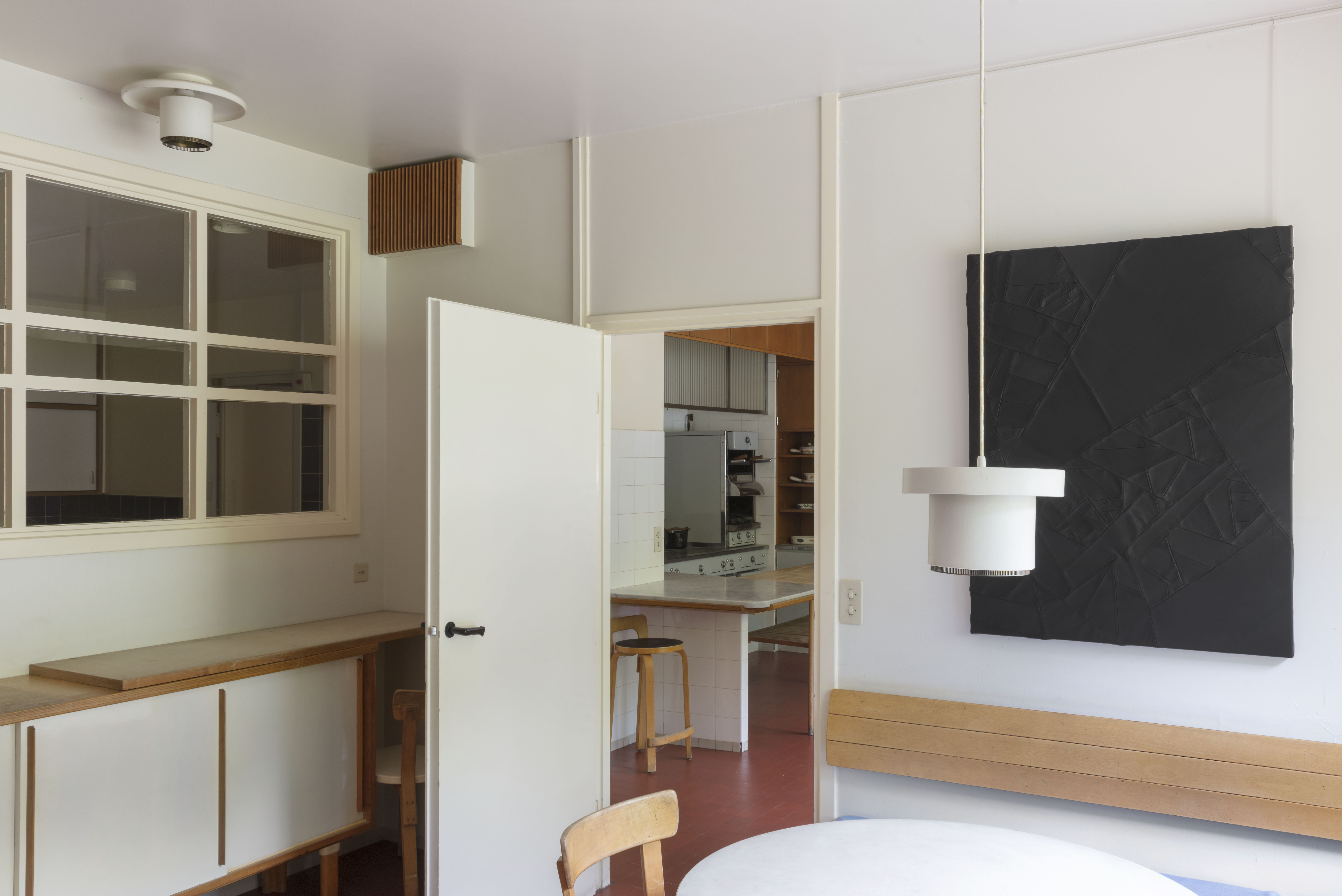
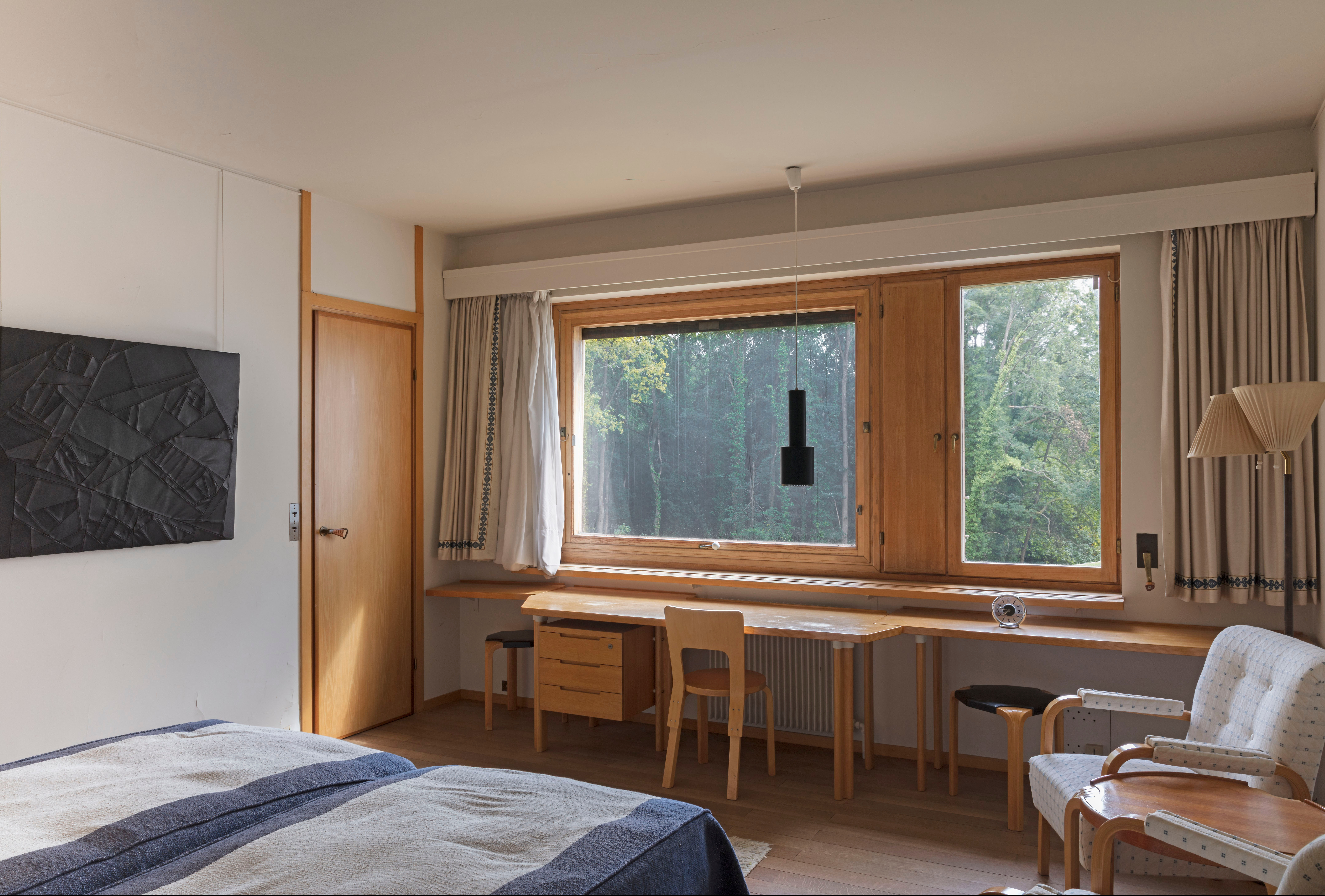
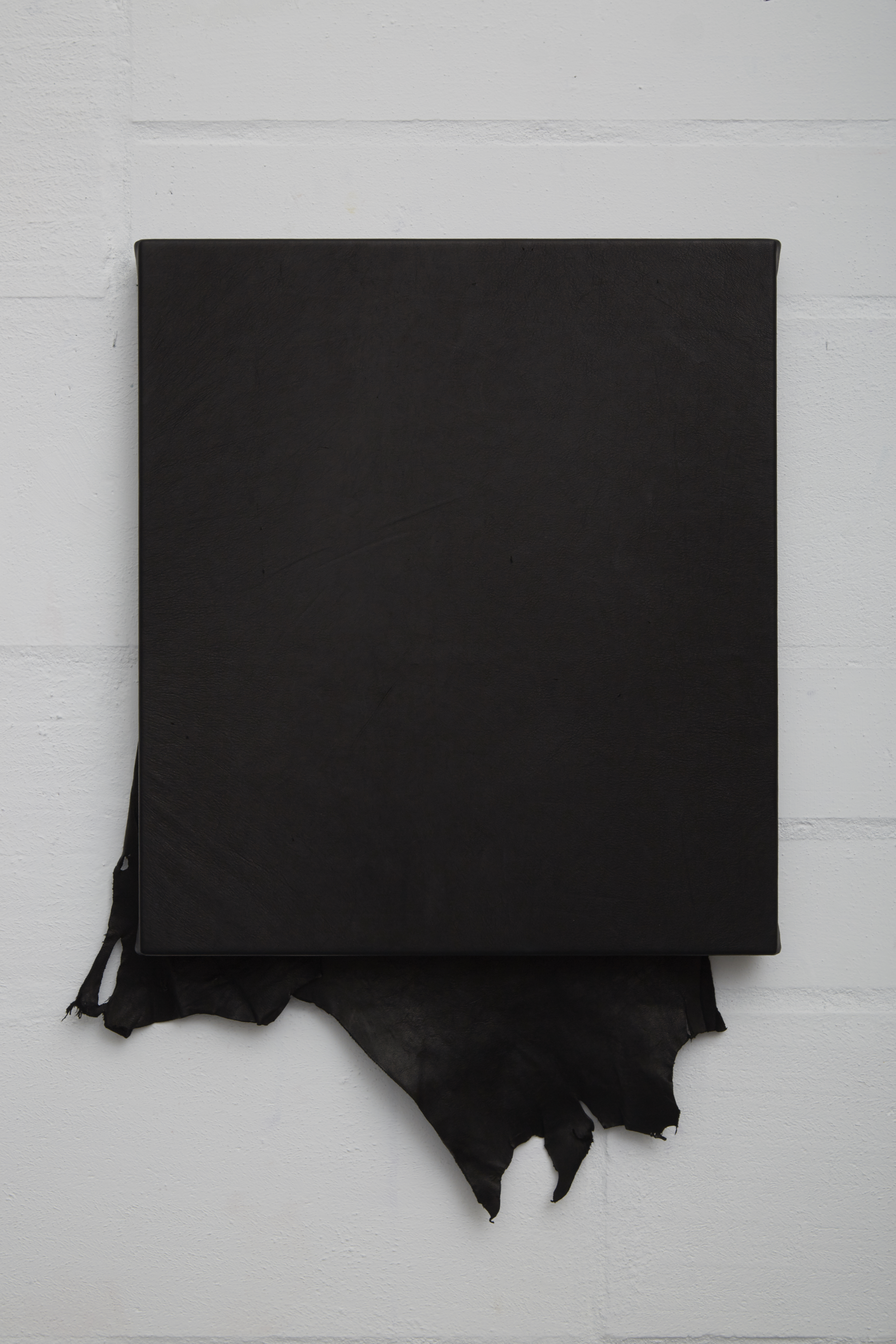
Mobile Composition is an installation and artist book that develop through one another, focusing on the interior of Alvar Aalto’s Maison Louis Carré and the art collection of Paris art dealer Louis Carré, for whom the house was built. Working from archival photographs that fix the collection at a specific moment in 1962, amidst a constant flow of paintings in and out of the house, the project examines its posthumous dispersal and attempts to reconvene it through other means. Acting as placeholders, eighteen key works were identified and remade in quilted black goat leather, retaining only the titles and dimensions of the originals, and installed and documented to restage the original photographs. The project unfolds across distinct but related forms including installation, exhibitions and an artist book.
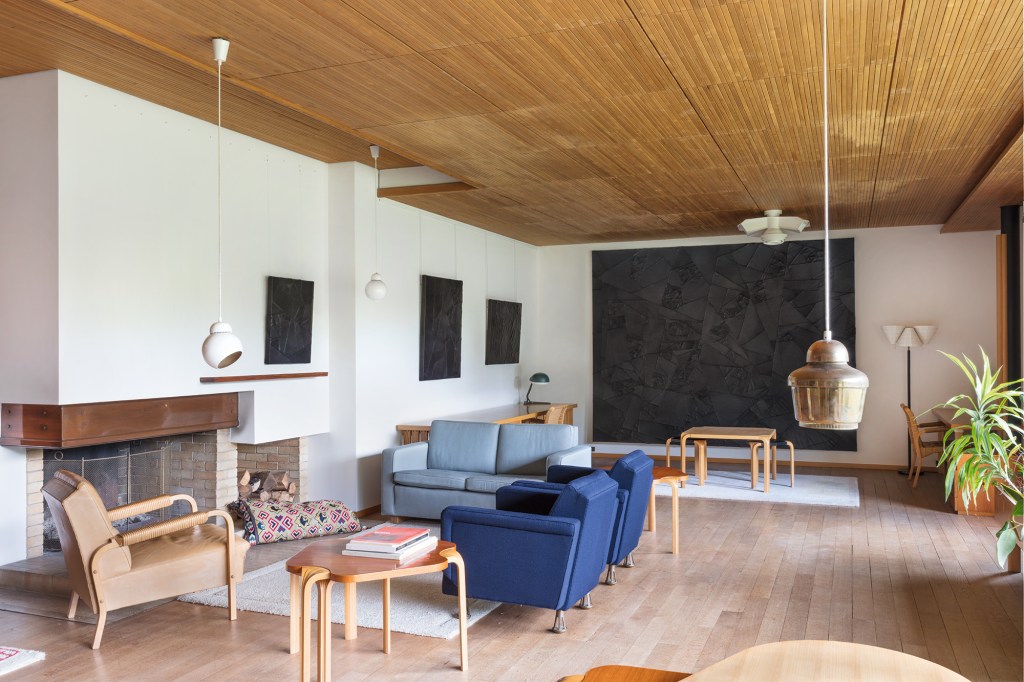
Maison Louis Carré, 2017
Developed in relation to the house and its dispersed collection, working from archival photographs fixed to a specific moment.
Artist Book, 2017
Conceived as an interior in its own right, the book brings together restaged photographs with archival, cultural and personal research. It gathers the many strands of Mobile Composition into a single form, including the re-identified list of artworks and their details, returning the dispersed collection to the house.
Galerie Barbara Thumm, Berlin, 2020
Curated by Andrew Renton for New Viewings. The project is reconfigured within a gallery context, where the work is reassembled through new spatial relations.
mobile composition, artist book

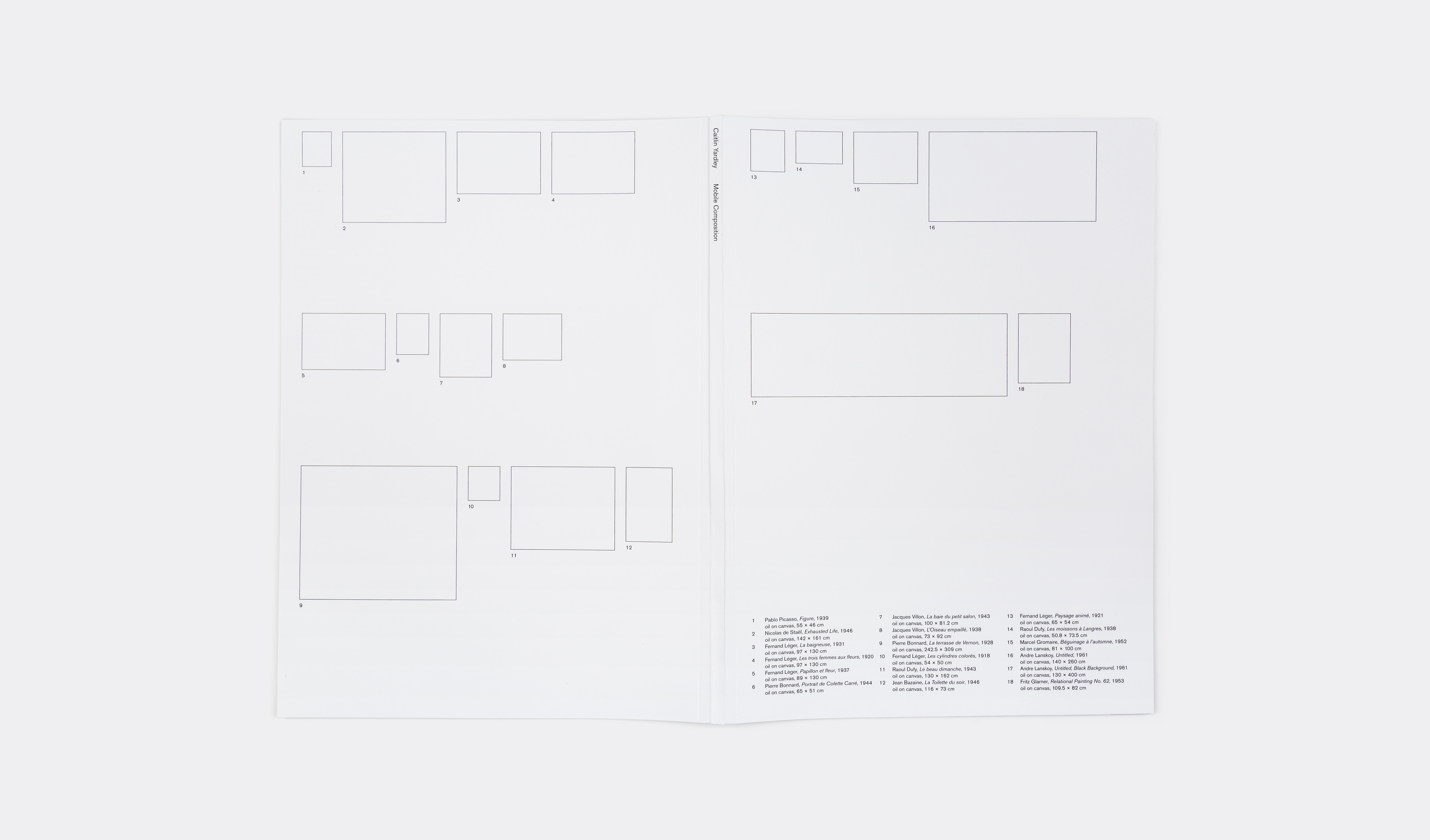
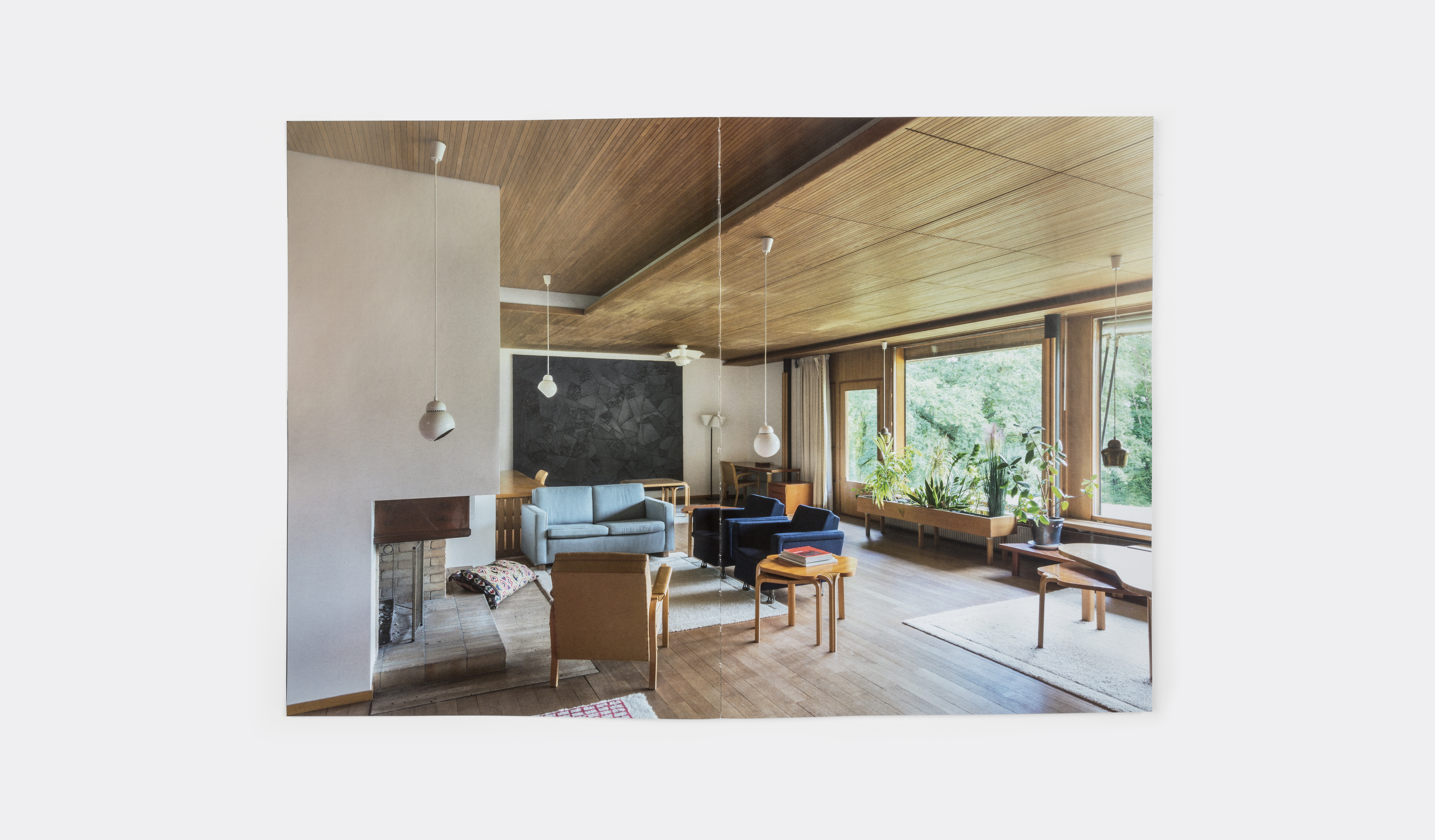
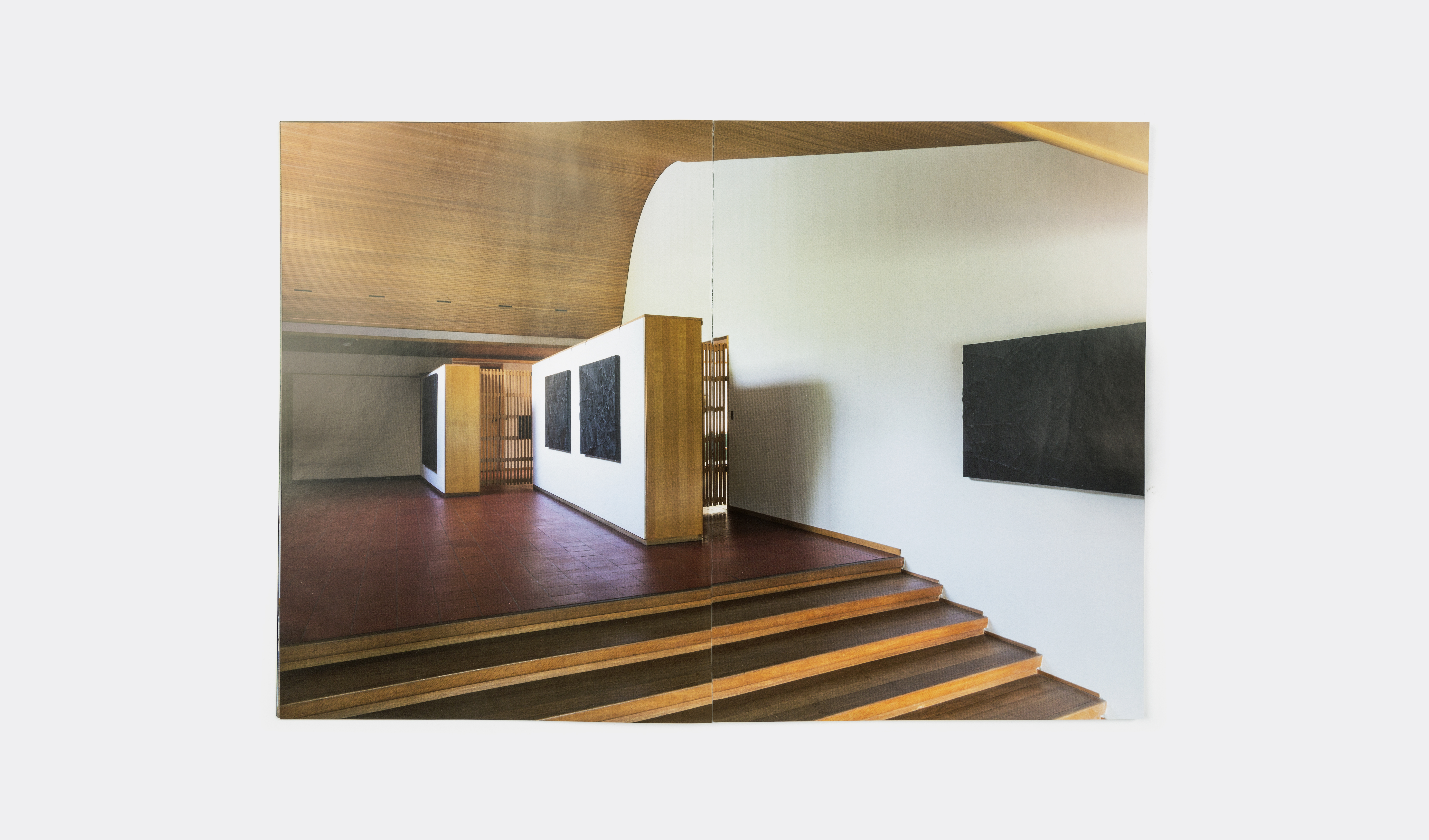
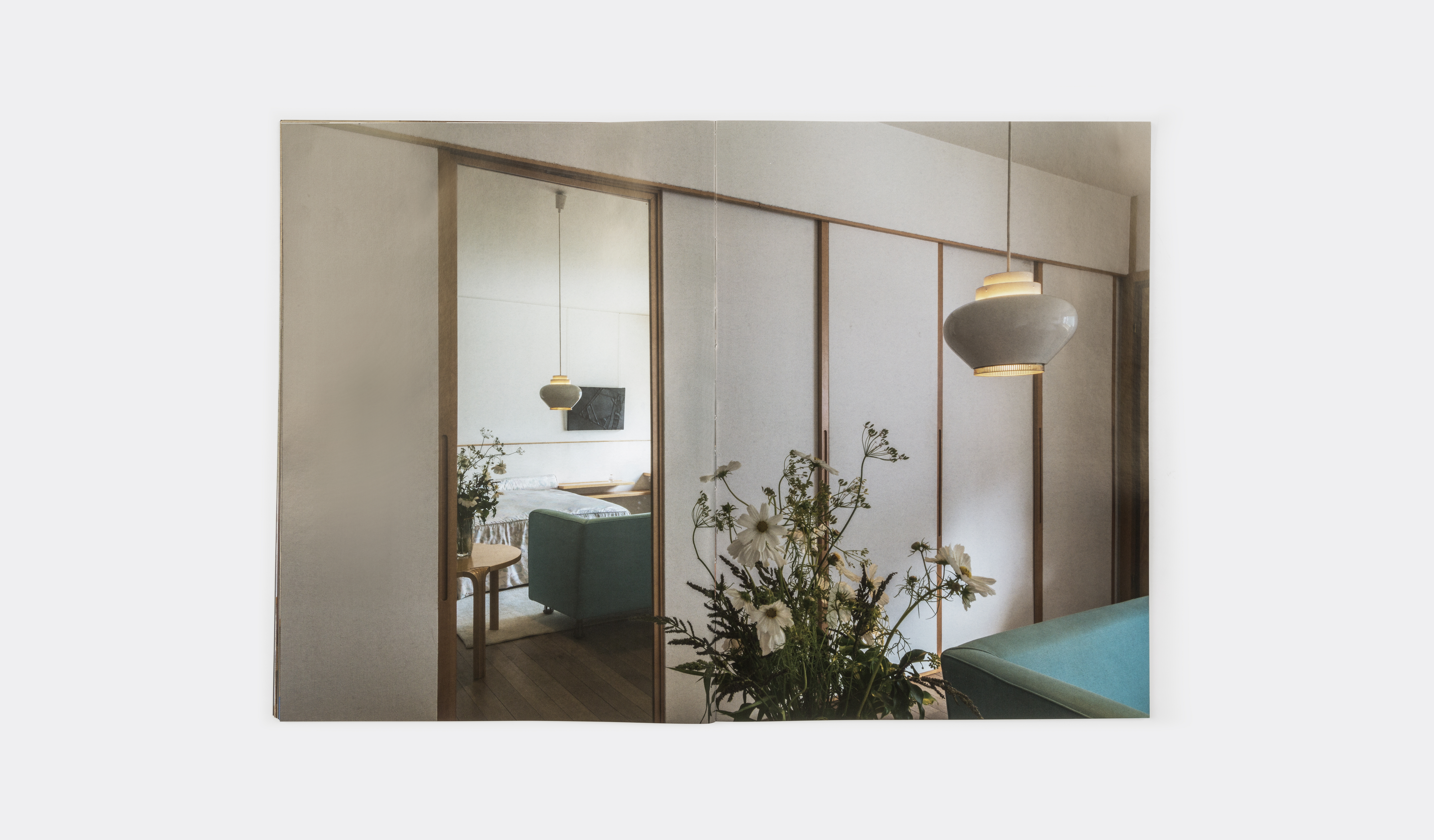
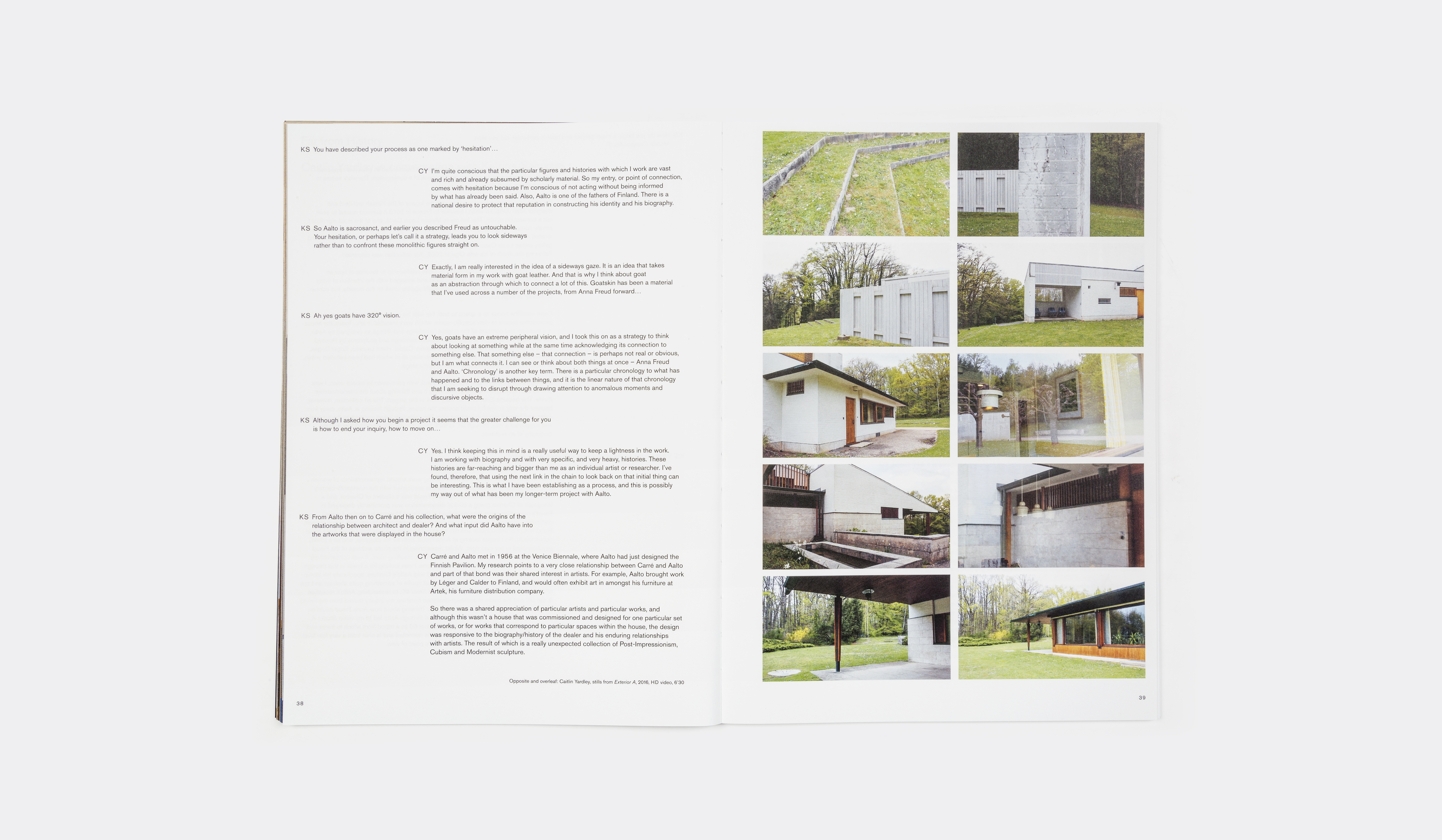
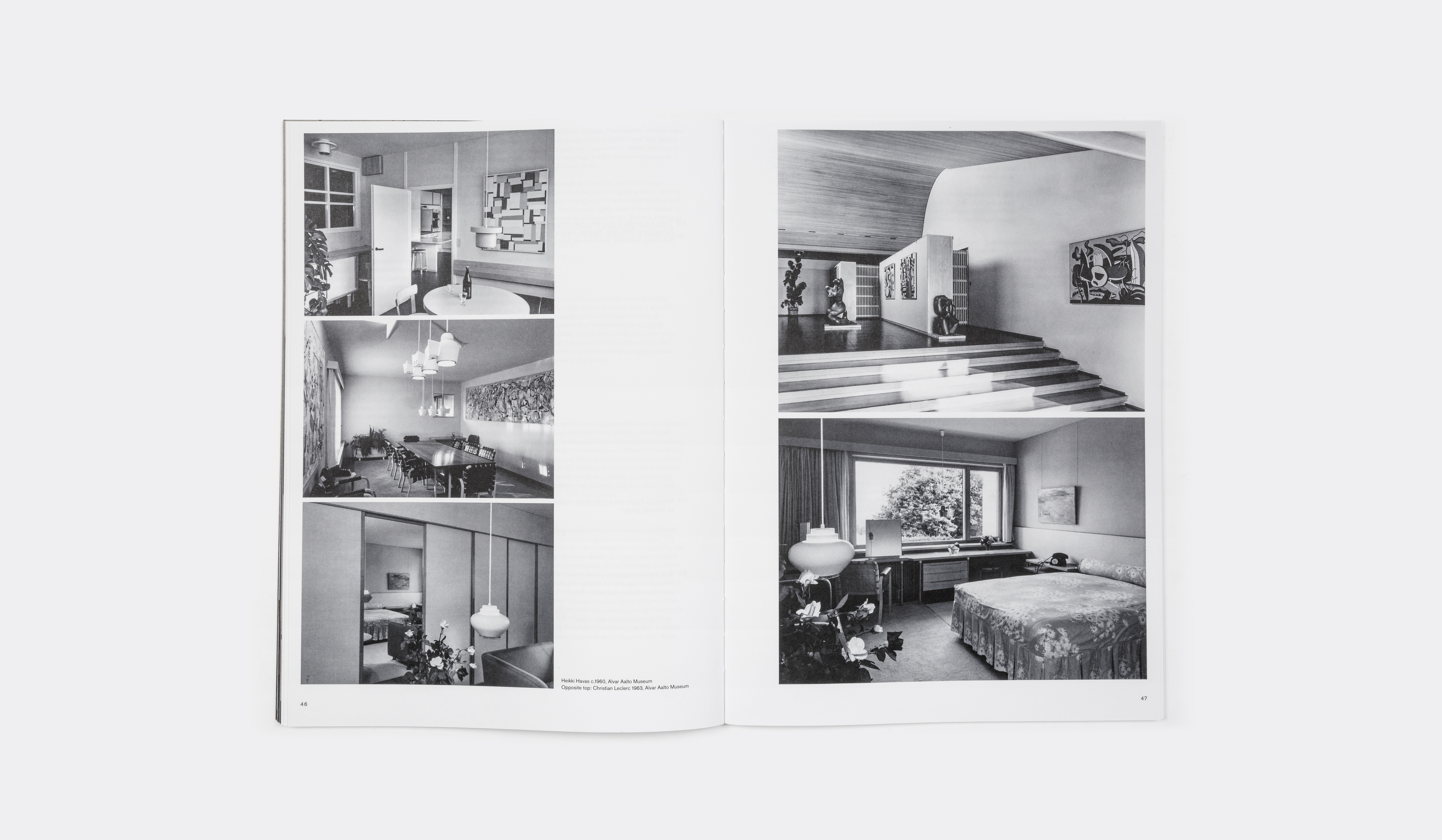
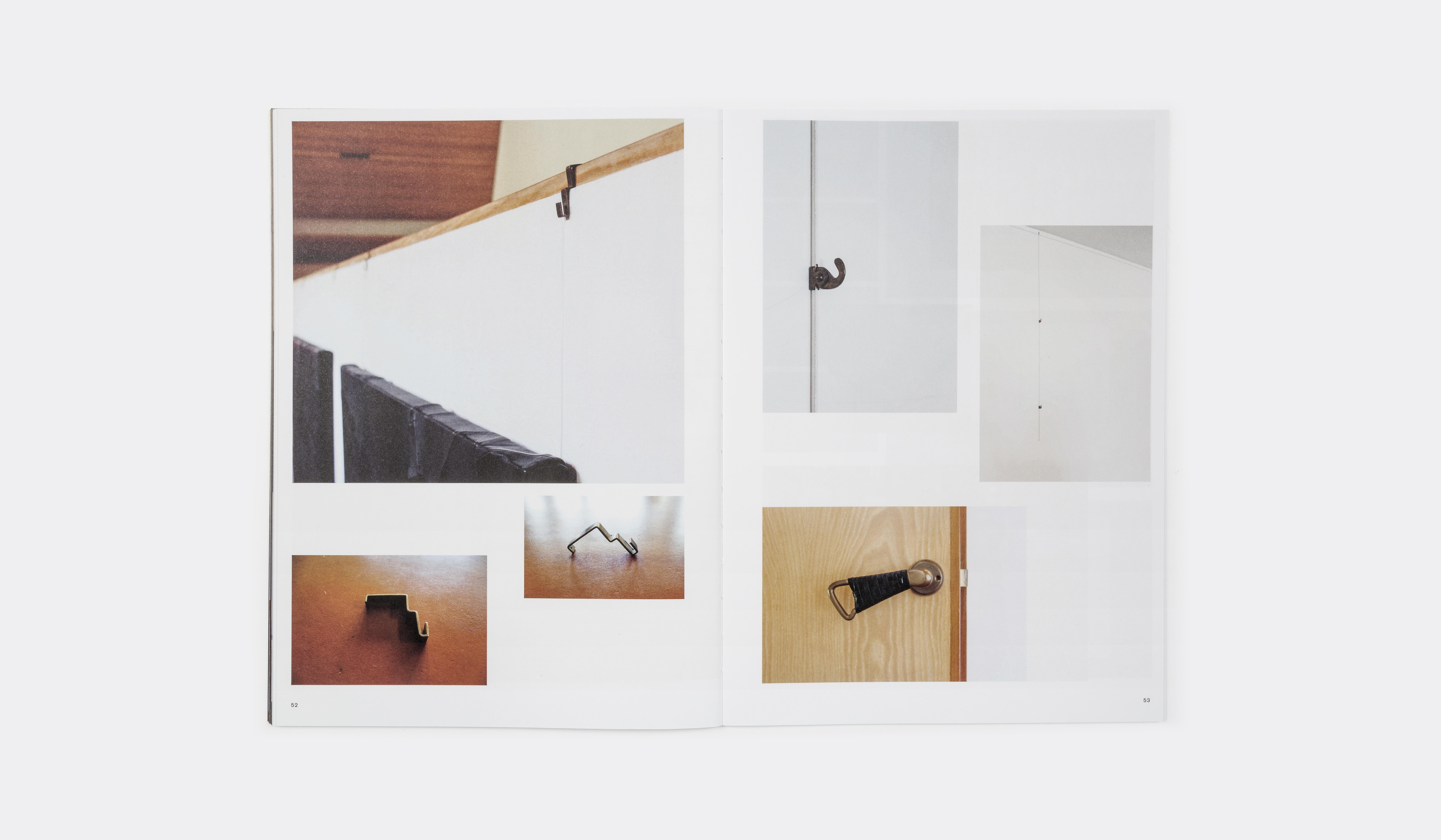
Mobile Composition, 2018, softcover, 80pp, 32 x 23 cm, edition of 500
ISBN: 978-1-5272-1475-0
Mobile Composition is an artist book and parallel installation focusing on the interior of Alvar Aalto’s Maison Louis Carré, located outside Paris and the art collection of Louis Carré, an art dealer for whom the house was built. Named for a small standing mobile in the collection by Alexander Calder, the work considers how artefacts and architecture might move through the world and collide in ways that open up access to peripheral histories and wider narratives.
Working from photographic documentation of the collection recorded during the 1962 visit of Finnish President Urho Kekkonen, Mobile Composition focuses on the collection’s posthumous dispersal and attempts to reconvene it through other means.
Acting as placeholders, key works from the collection have been identified and (re)produced in quilted black goat leather, carrying forward only the titles and dimensions from original works, and installed and documented to restage the archival photographs.
Conceived as an interior in its own right, the book assembles and arranges these new images with intersecting fragments of cultural and personal histories to form a non-linear, non-hierarchical body of evidence.
With contributions from Katrina Schwarz, Curator, British Council and Gemma Weston, Curator, Cruthers Collection of Women’s Art, University of Western Australia. Photos by Lucy Dawkins. Design by Studio Chehade.
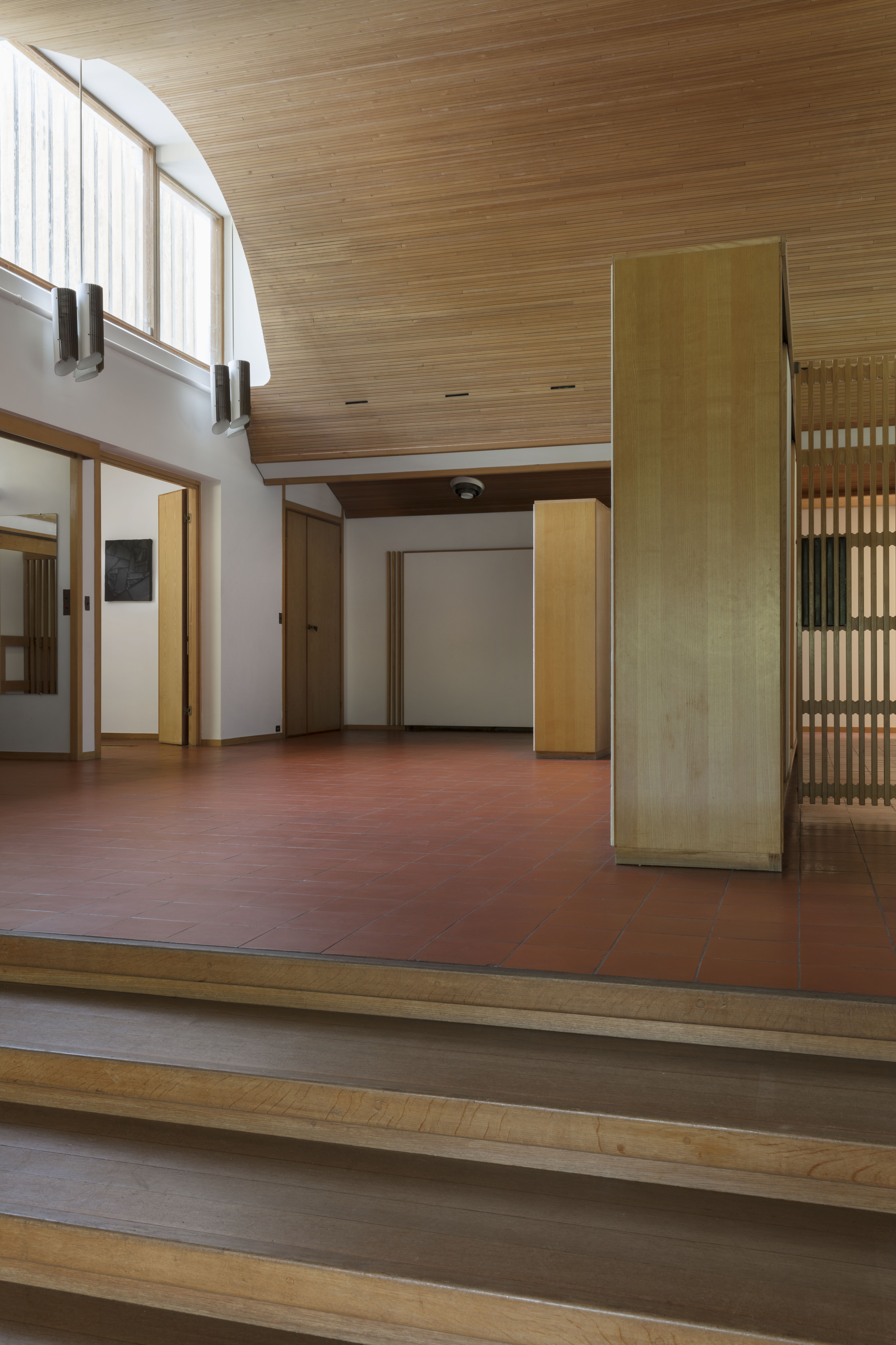
Maison Louis Carré is Finnish architect and designer Alvar Aalto’s only building in France, located 40 kilometres southwest of Paris in the small village of Bazoches-sur-Guyonne. The house was commissioned following a meeting between Louis Carré, a Paris art dealer, and Alvar Aalto at the 1956 Venice Biennale, for which Aalto designed the Finnish Pavilion. Together, they created a significant design in modernist domestic architecture that is closely related to theories of how a domestic interior space might be conceived and arranged with the intention of living with art. It was proposed that the house might appear small on the outside but contain an interior of large volume.
Carré used the house as a space to both live with his collection and to bring clients to view specific works, installed in situ – the curation of the artwork’s installation in a constant state of flux. Today, the house functions as a museum, retaining all original furnishings and fittings as designed by Aalto; however, the walls and spaces intended for the artworks remain empty. On the death of Carré’s widow in 2002, the important collection – which included paintings and sculptures by Picasso, Calder, Léger, Bonnard, Le Corbusier, Klee, Degas and Villon – fell to distant family and was quickly dispersed at auction. While the art collection was dismantled, the house and its furnishings were recognised as of international significance and acquired for preservation by the Finnish Cultural Foundation and Association Alvar Aalto en France.
_____
This project is supported by Association Alvar Aalto en France, the British Council with Arts Council England and the Australia Council for the Arts.
Available from:
Architecture Association Bookshop, London; Printed Matter, New York; TACO!, London; Tenderbooks, London
relational painting
Relational Painting, 2026, Moore Contemporary, Boorloo/Perth, Australia
Relational Painting begins with a precise act of return. In 2017, Mobile Composition reconvened a now-dispersed art collection through a series of placeholders made in quilted black goat leather, restaging archival photographs of the collection and a historically specific choreography of the installation in situ. One of these proxies marked the absence of Fritz Glarner’s Relational Painting No. 62 (1953), carrying forward only its title and original scale.
This restaging unfolded at Maison Louis Carré, the house (now museum) that Alvar Aalto designed for Paris art dealer Louis Carré. Today, the original Aalto-designed furnishings remain, yet the walls, conceived and arranged as an experiment in living with art, stand empty. Within the house, the matte-black works appeared as redactions or voids, underlining absence.
Here, Relational Painting No. 62 functions as a hinge, linking this earlier investigation of modernist interiors, collections and loss to one in which ‘relational painting’ becomes an ongoing material practice.
The work unfolds through assembly, bringing fragments into relation through alignment and misalignment, where meaning is contingent and produced through proximity. Quilting intensifies this negotiation of abstraction. These works hold the logic of painting but behave as objects. Goat leather is a recurring material, speaking to peripheral vision and to interconnection shaped by perception, movement and handling.
Gridded steel fragments extend this logic into the room, bringing the works into dialogue with architecture, while the leather resists, behaving like skin, responsive and difficult to fully stabilise. Installed as a constellation, the relational extends into display, insisting that meaning forms between things rather than within them, and is held, if only temporarily.
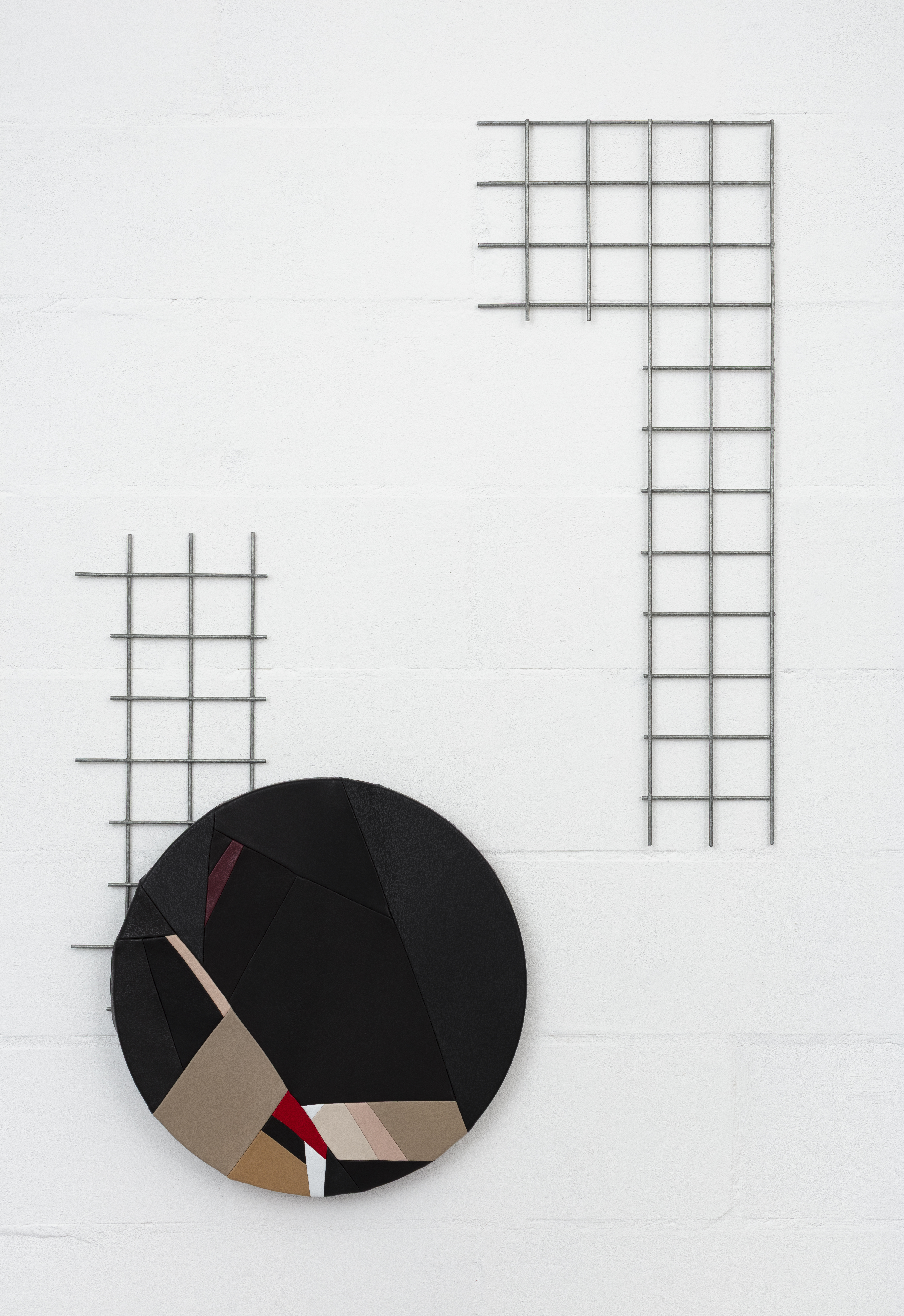
Relational Painting No. 18, 2026
quilted aniline goat leather, galvanised steel
136 x 98 x 6 cm
Photo: Lucy Dawkins
equilux
Equilux, 2023–, 4k six-channel video installation
Cinematography: Candida Richardson
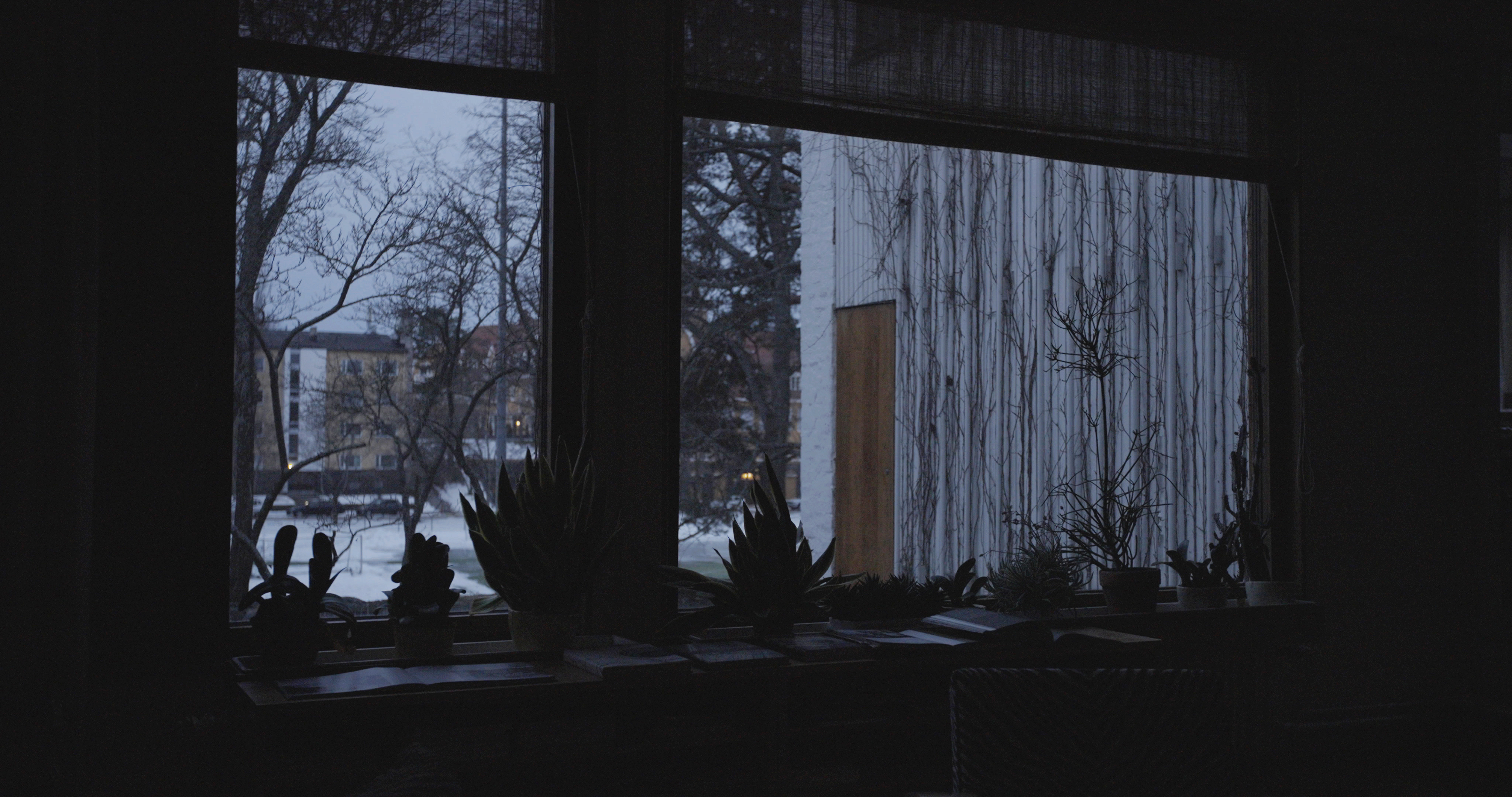
Equilux draws Aino Aalto and Virginia Woolf into dialogue through the structure of a single day. Filmed at their former homes on equilux, the moment twice yearly when day and night are exactly equal, the work forms a double portrait of two women, of two houses and of the same day, which occurs twice. The six channels are drawn from the multiple perspectives in The Waves, in which Woolf imagined the lives of the six characters so interwoven that they continue each other. The work traces numerous historical threads, object relationships and recurring forms, through which separate histories find unexpected convergence across time and distance.
Filmed with permission of the National Trust and Alvar Aalto Foundation. Supported by Creative Australia, Arts Council England and the Finnish Institute for the UK & Ireland.
rhythm without end (night and day)
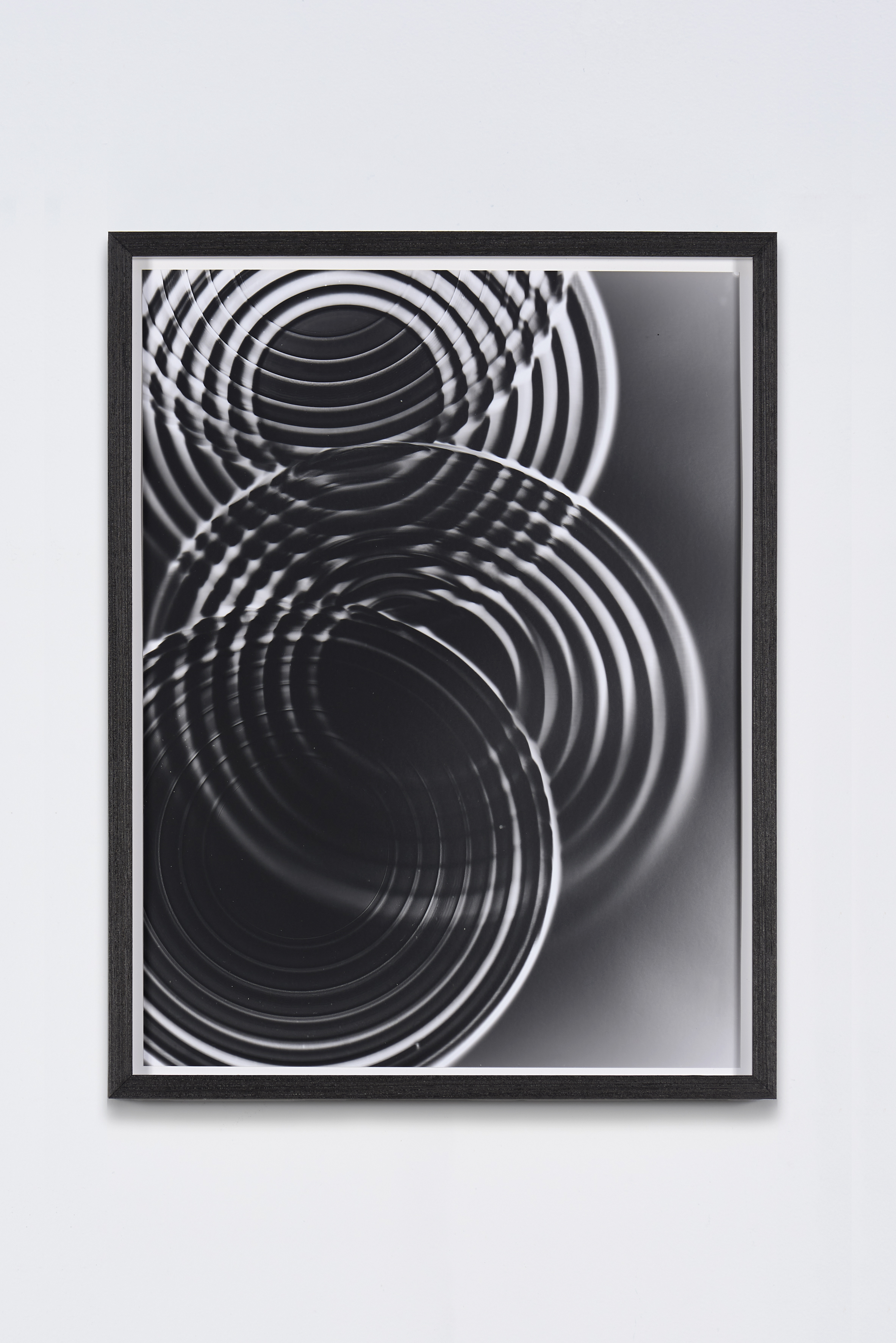
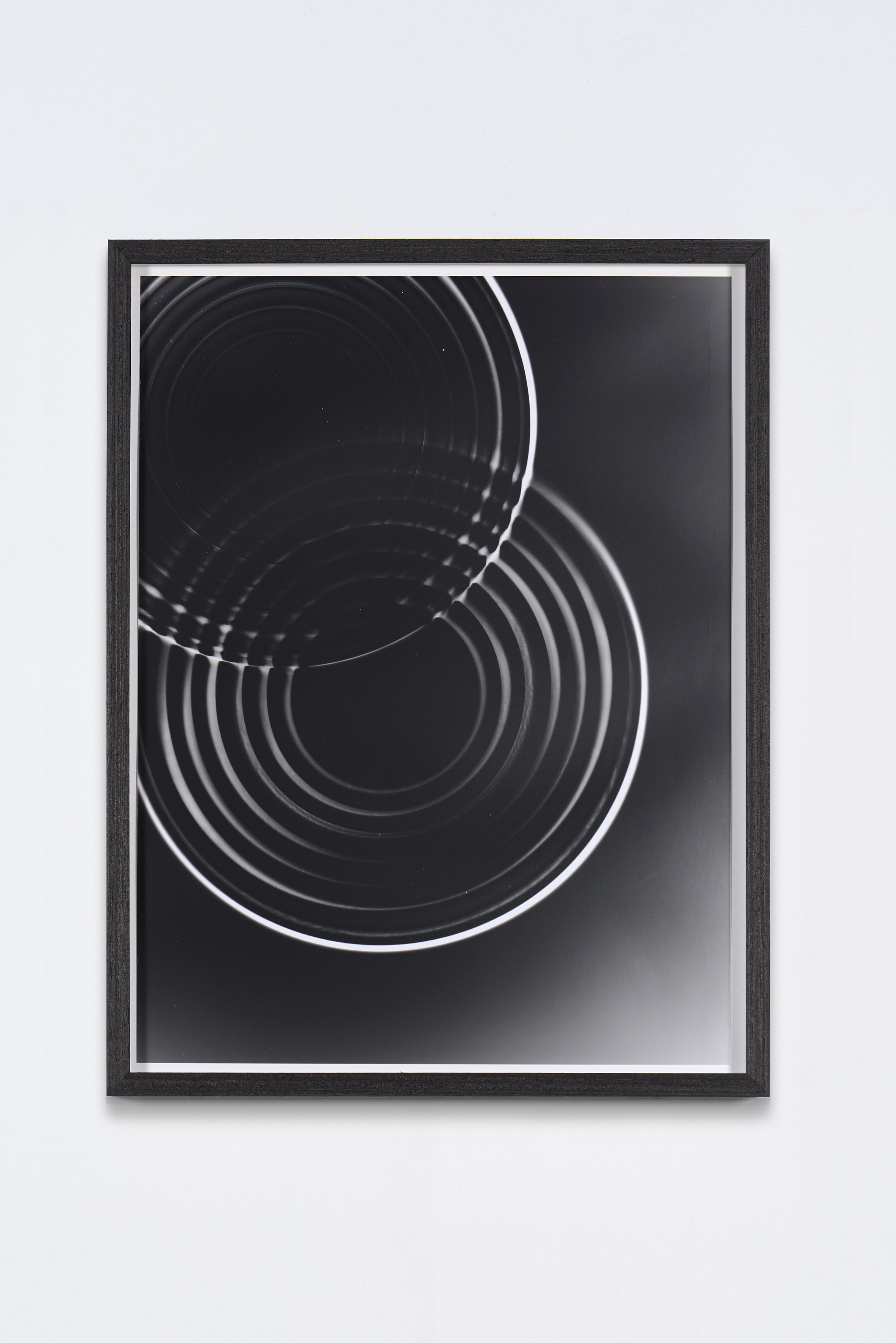
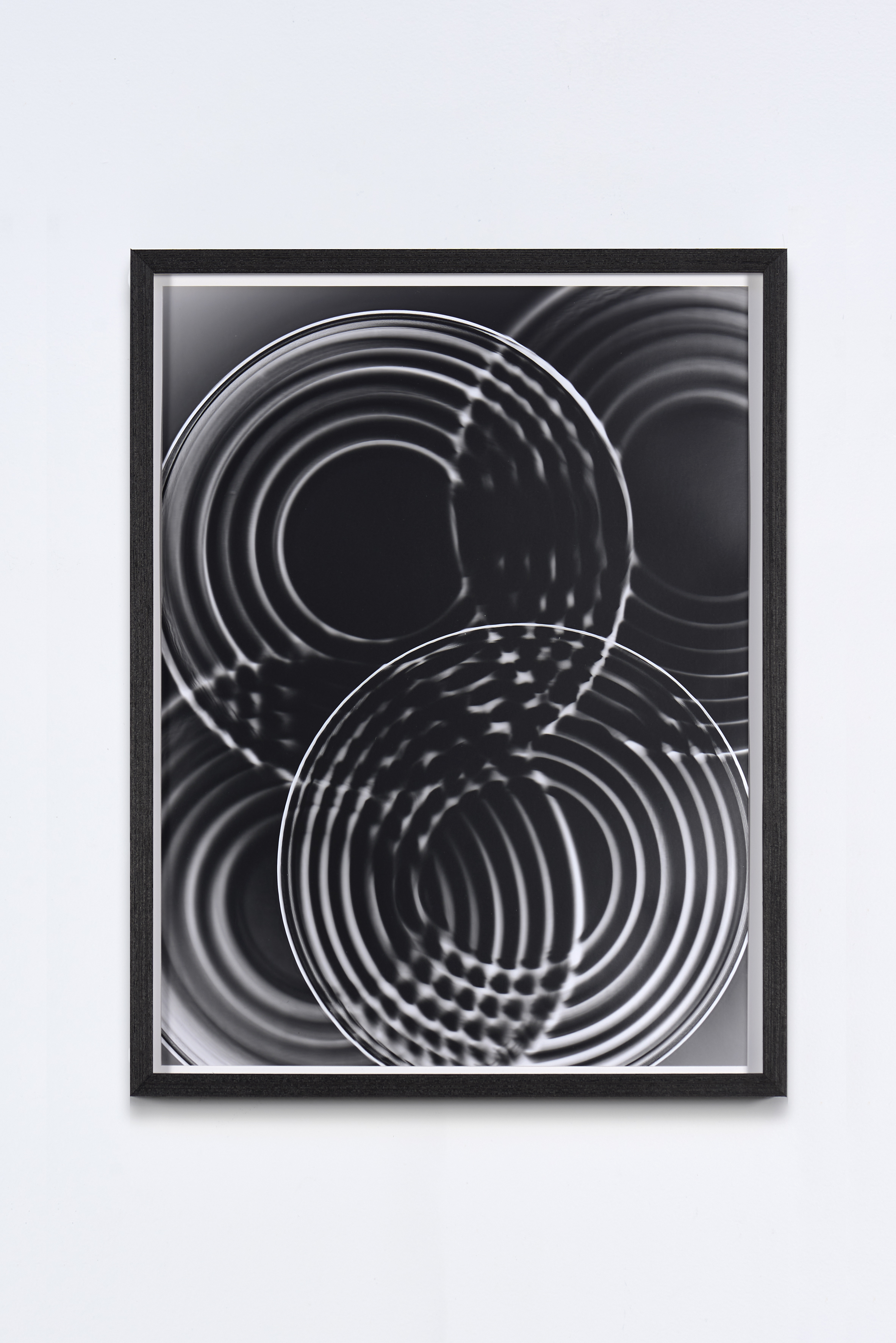
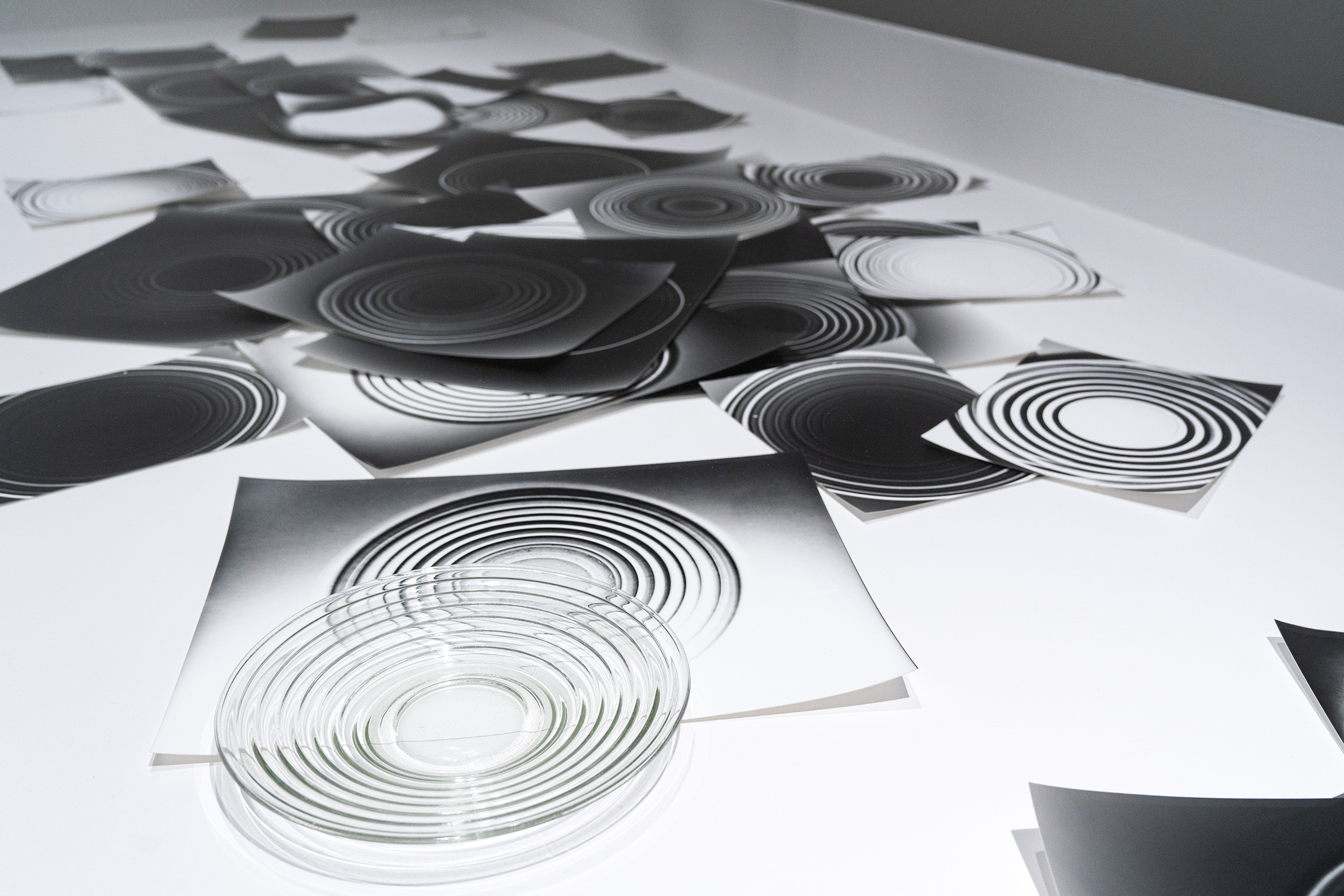
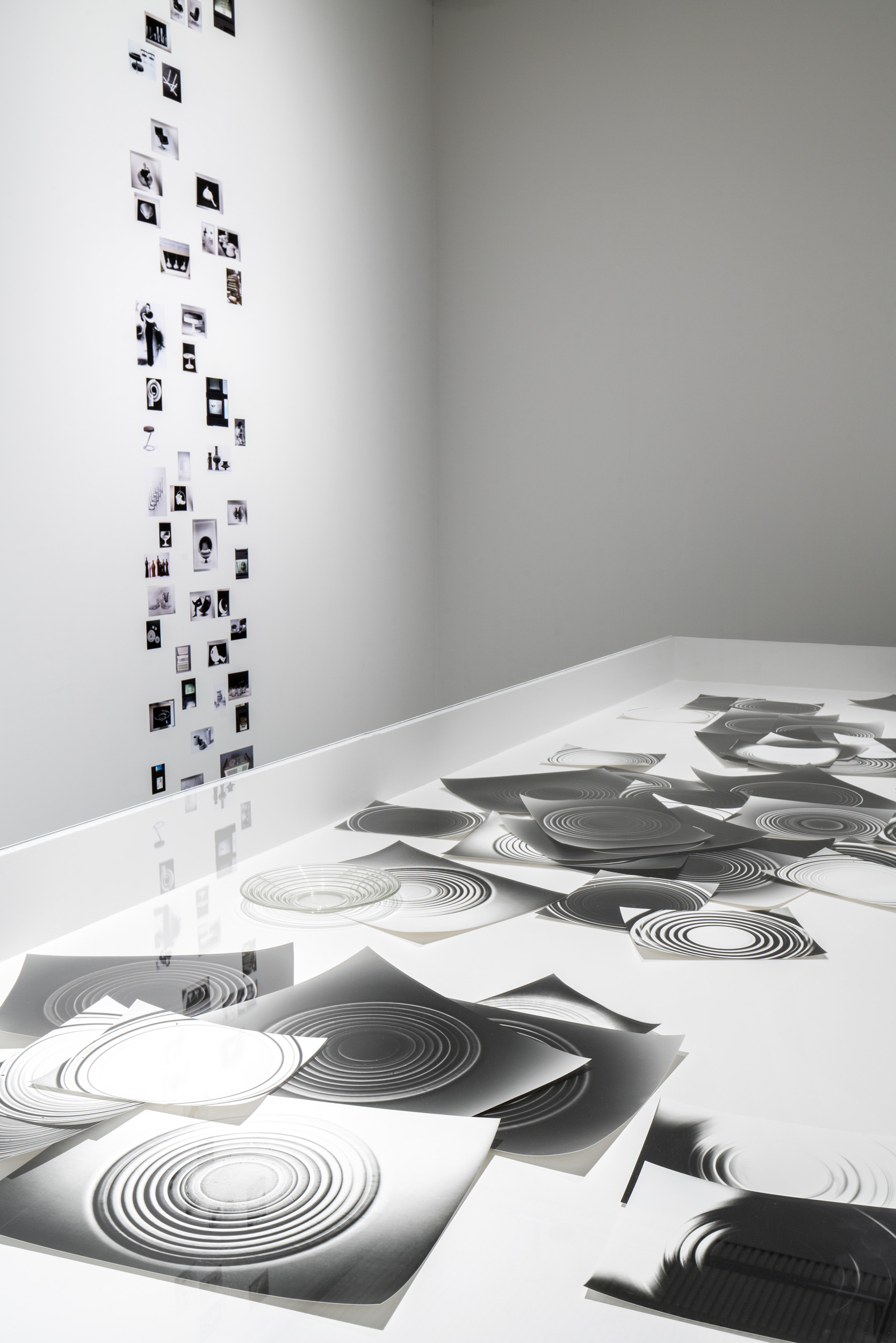
Rhythm Without End (Night and Day), 2022, Moore Contemporary, Boorloo/Perth. Gelatin silver prints (photograms). Photos: Rebecca Mansell
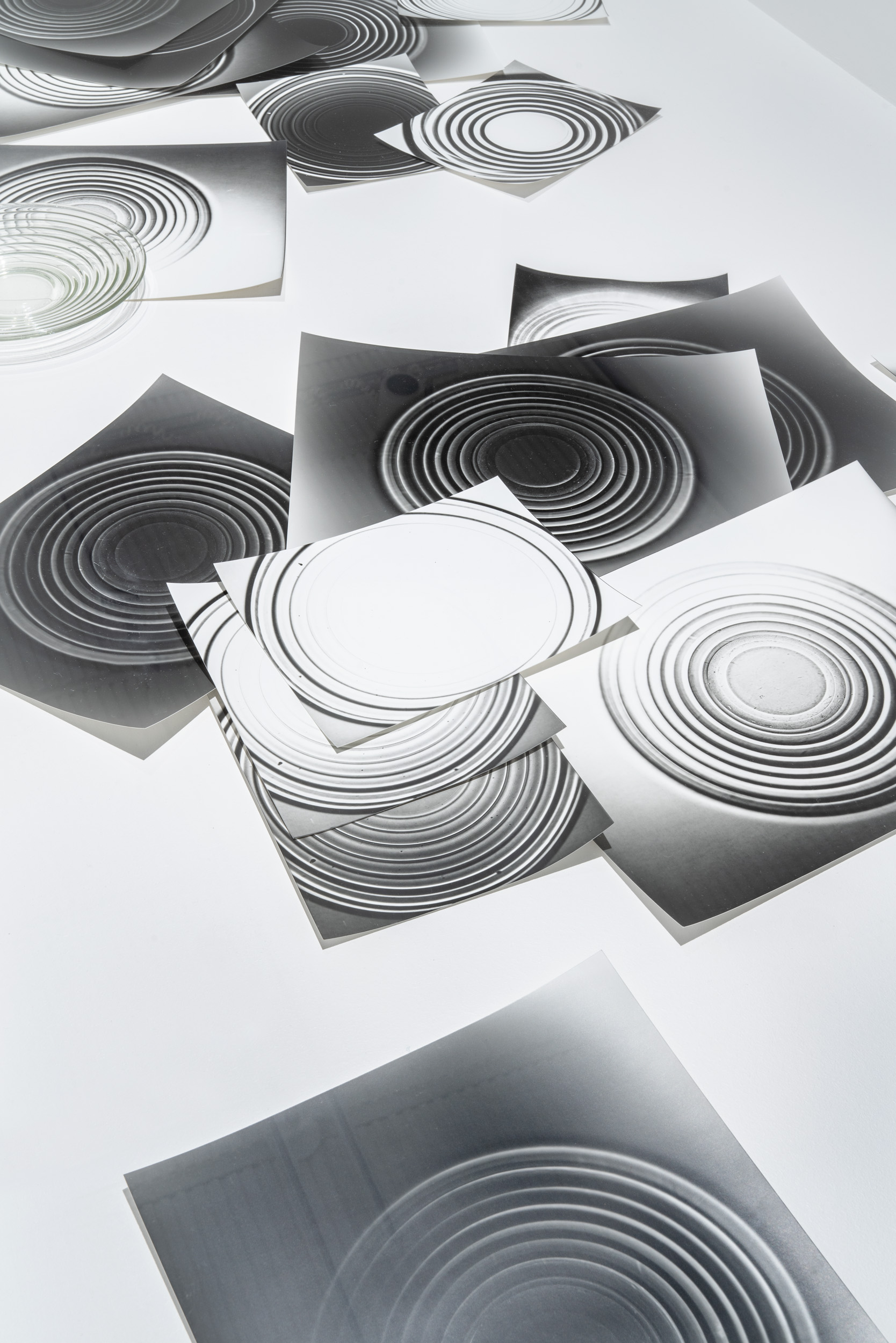
Rhythm Without End takes its title from a small gouache by Robert Delaunay from 1935, held at MoMA in New York, and posthumously attributed by his wife Sonia Delaunay to several of his works featuring concentric rings and discs. Built through contrast and inversion, these forms echo the negative image inherent to the photogram.
The four Aino Aalto Bölgeblick glass plates assembled within these photograms arrived in their original boxes with faded price labels still attached, indicating that they too once moved through MoMA, possibly sold through the museum’s gift shop alongside the 1984 exhibition that included Aino’s work, but was named for her husband – Alvar Aalto: Furniture and Glass. Read alongside Sonia Delaunay’s posthumous attribution of Robert’s title, these overlapping histories bring into view forms of authorship and legacy in which women remain central while often partially obscured. Here, these histories converge through the inversion, dissolution and doubling of the photogram.

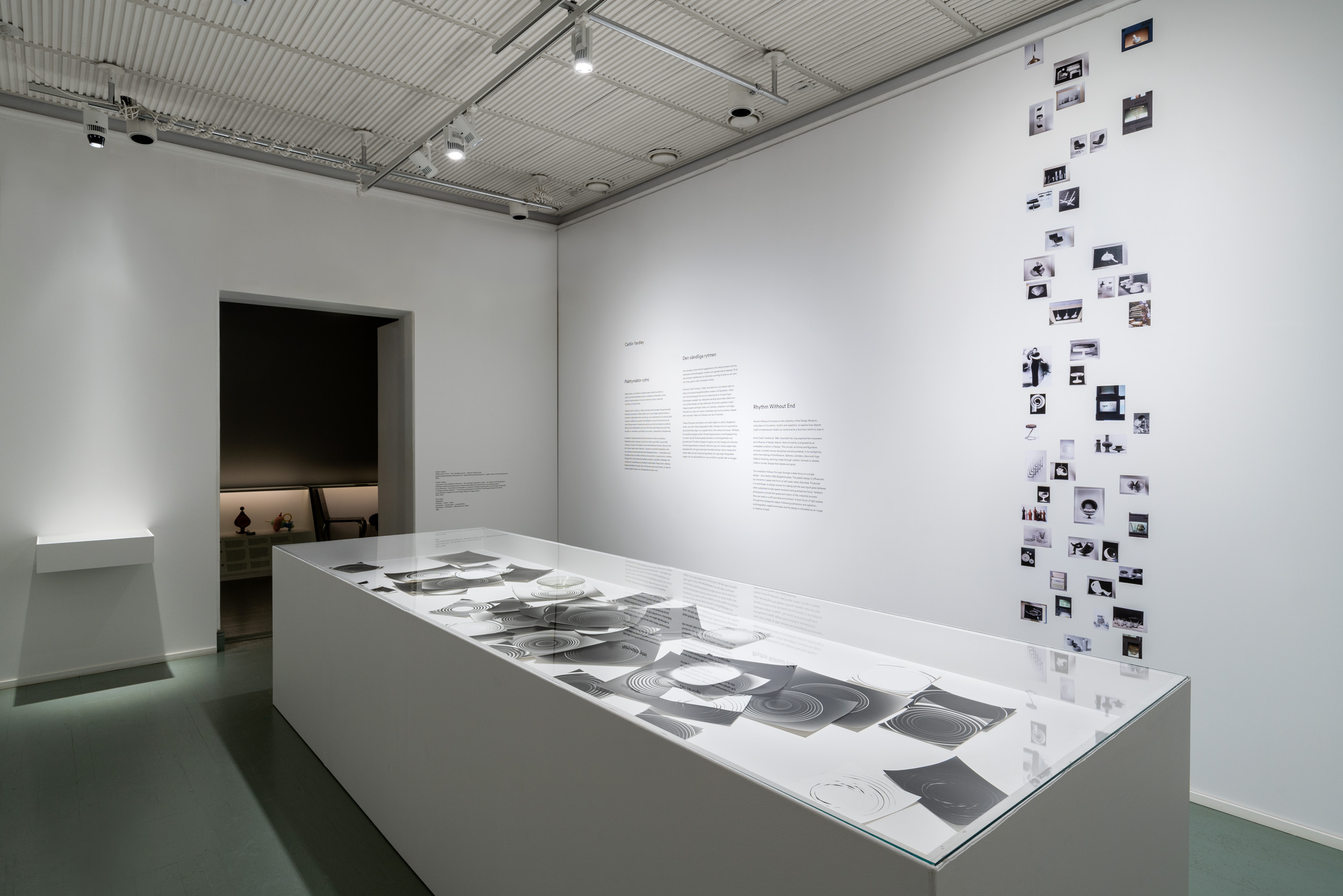
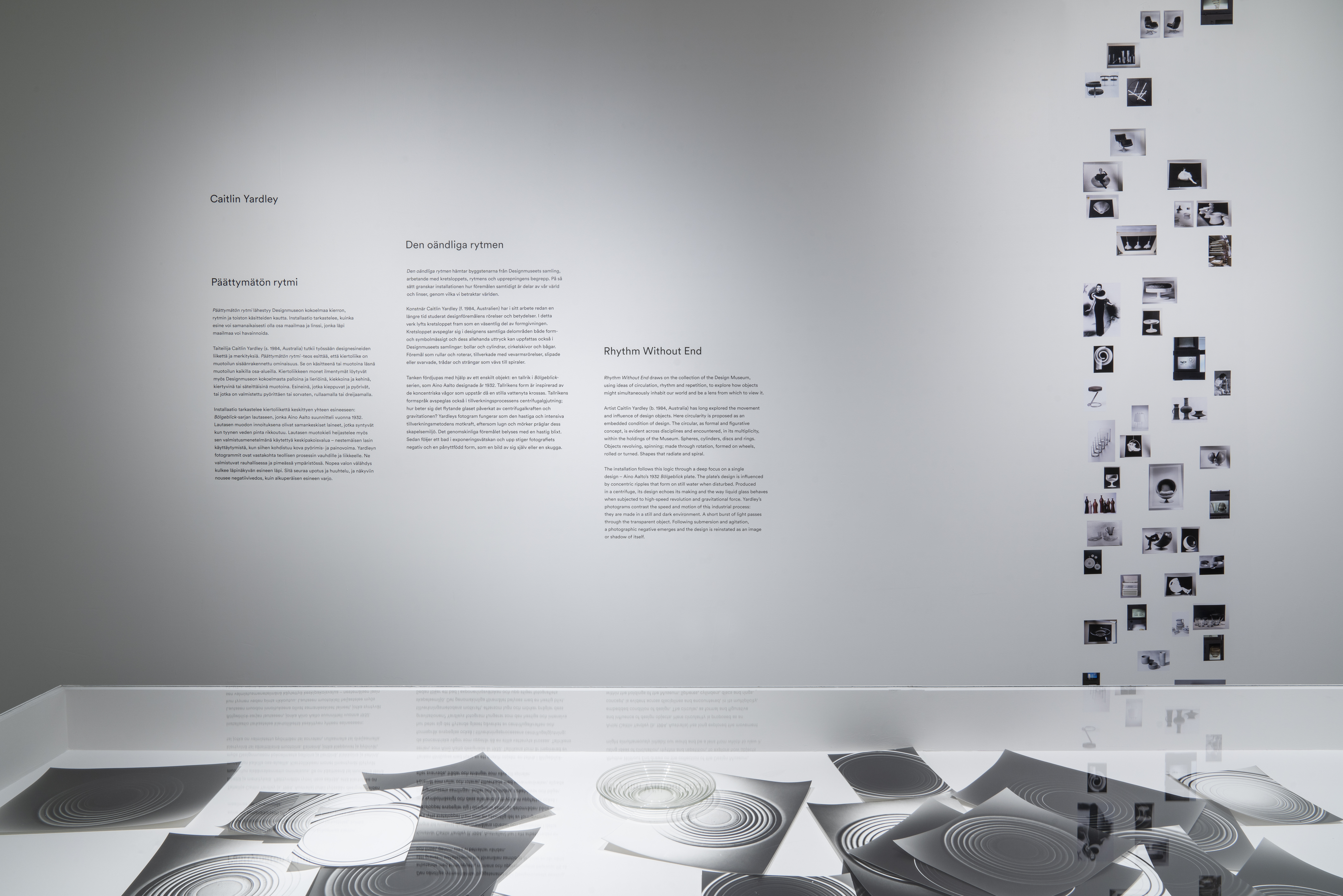
rhythm without end, design museum helsinki
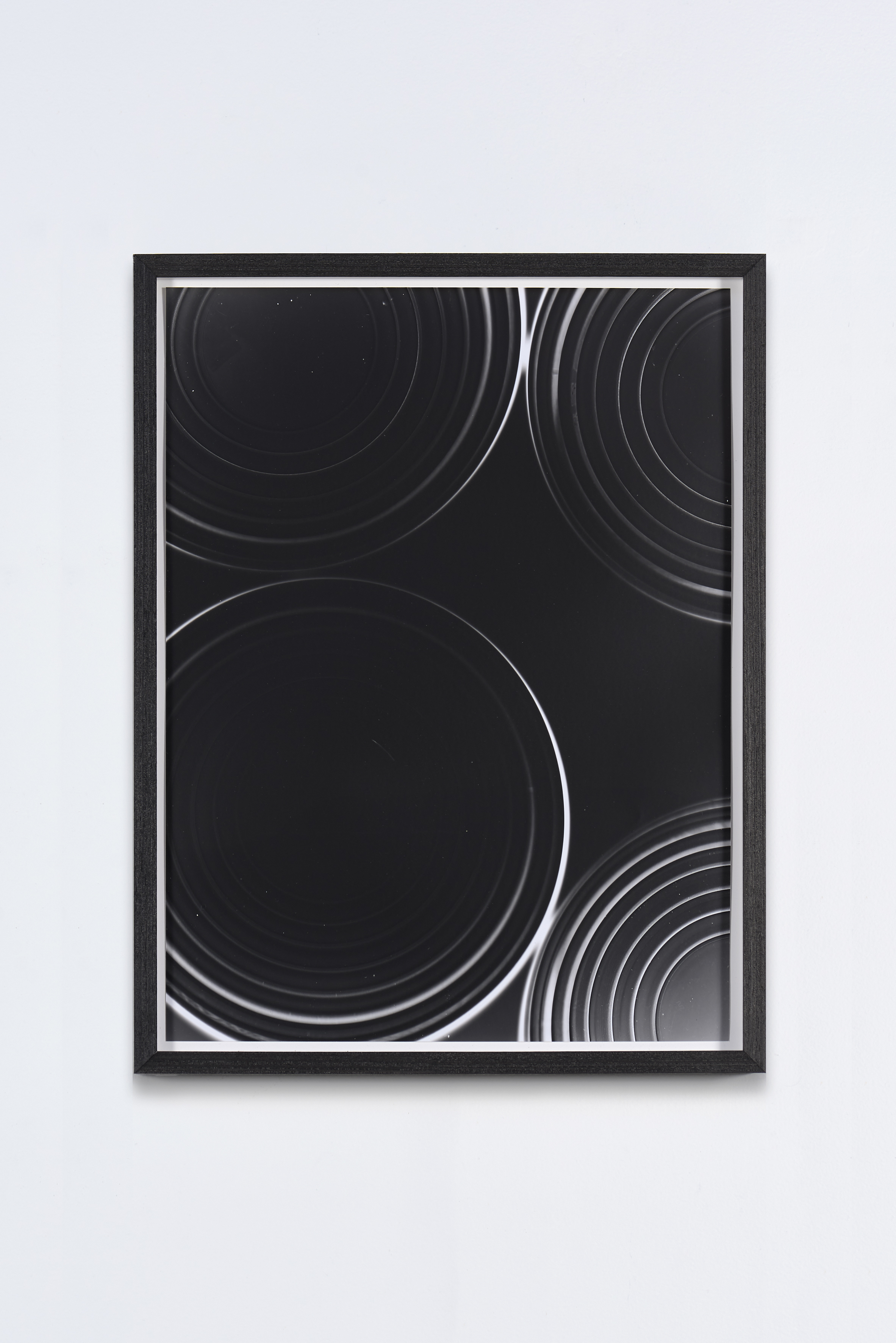
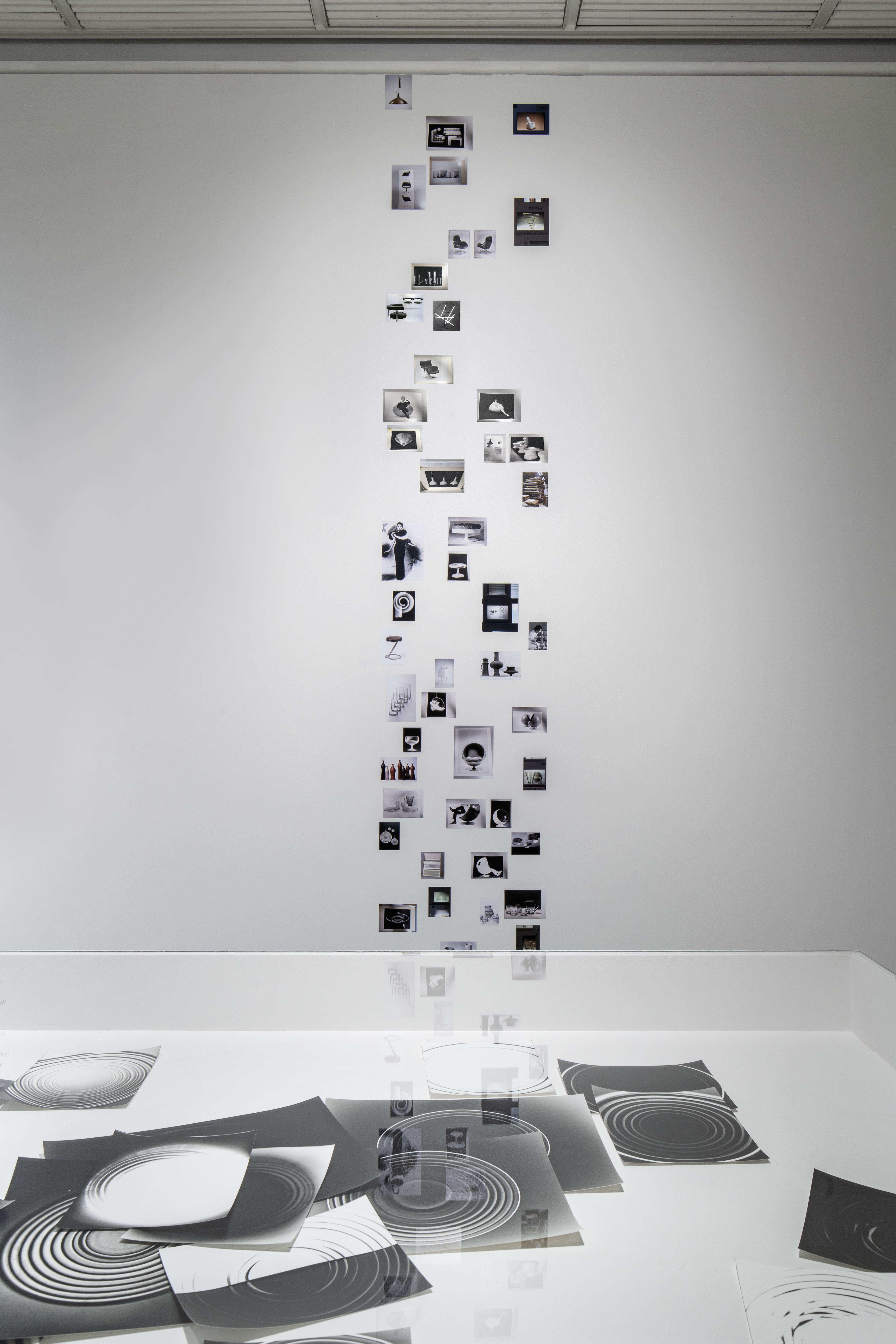
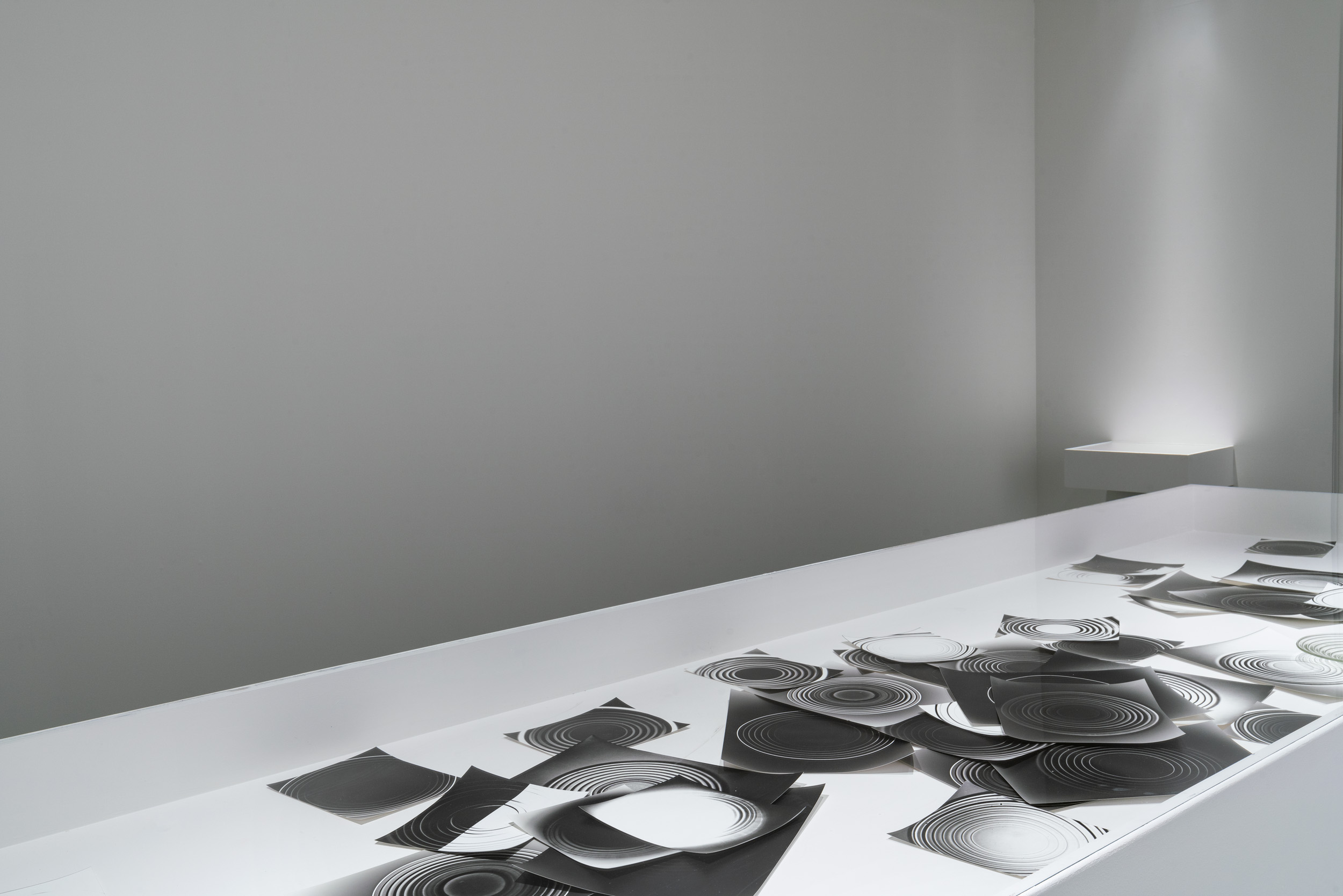
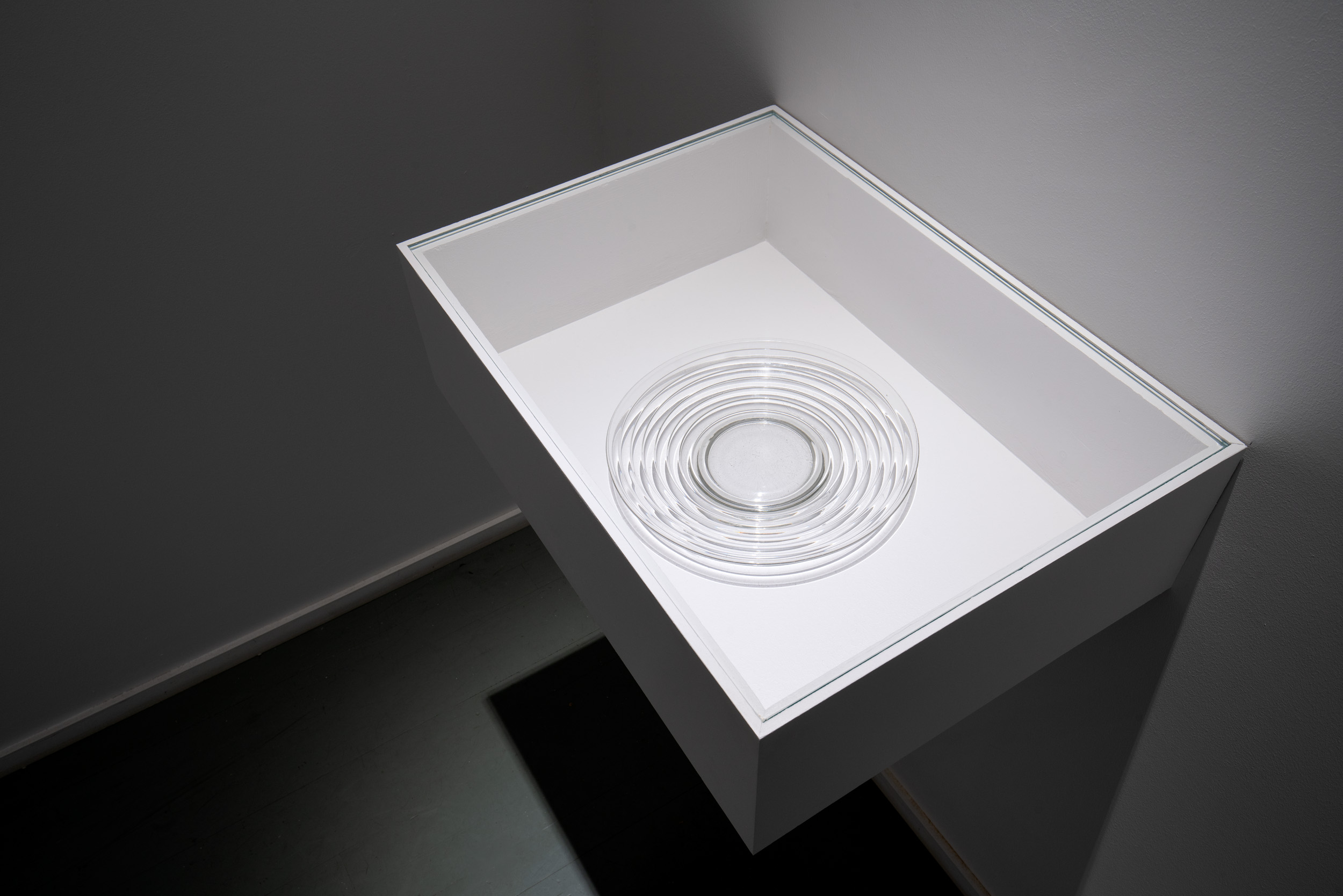
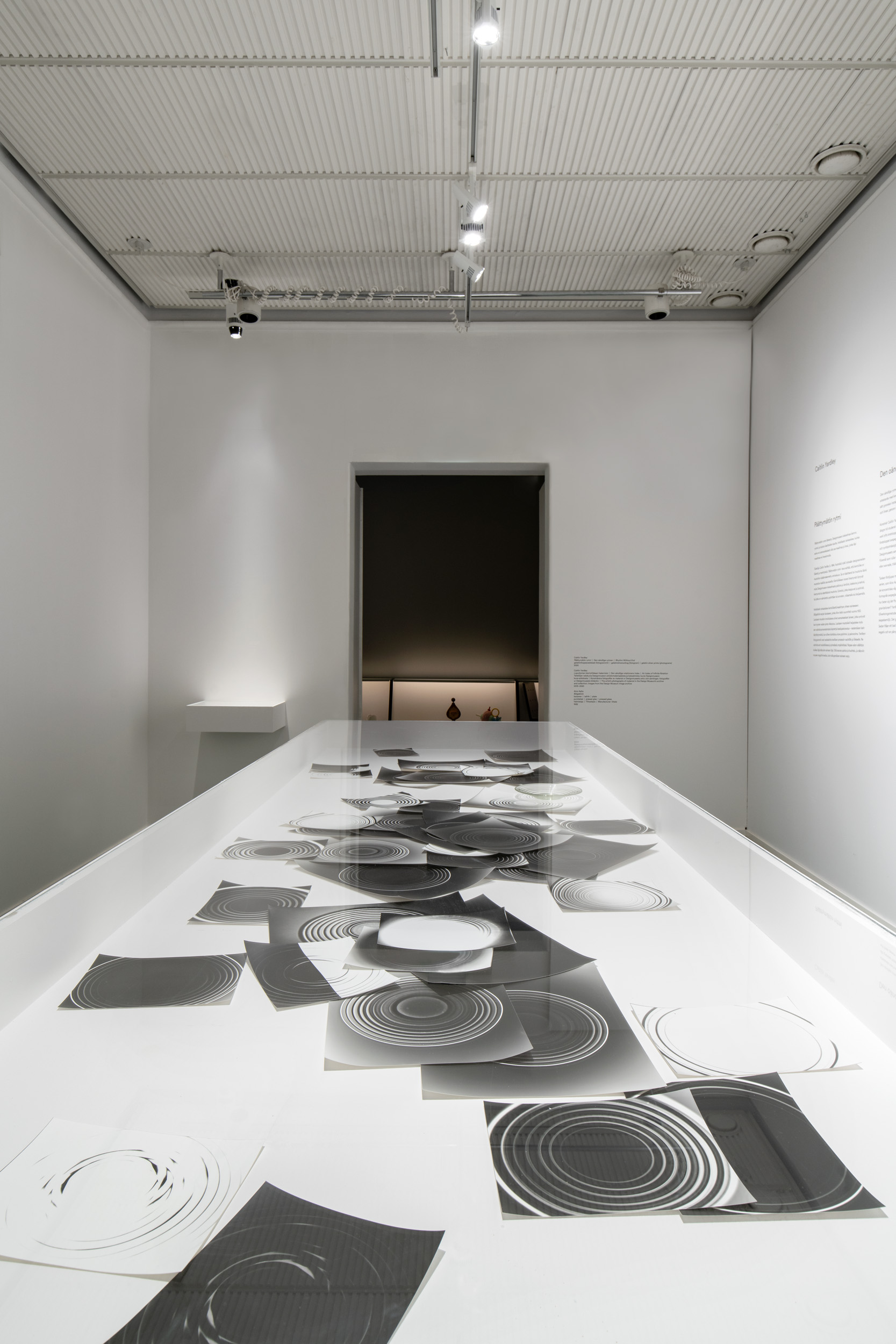
Rhythm Without End, 2021 Design Museum Helsinki gelatin silver prints (photograms); Aino Aalto, Bolgeblick, 1932, pressed glass, manufactured by Iittala. An Index of Infinite Rotation, 2019-20, images from Design Museum Helsinki’s image archive, alongside the artist’s photographs of material in the archive and collection. Photos: Paavo Lehtonen
Rhythm Without End draws on the collection of the Design Museum, using ideas of circulation, rhythm and repetition, to explore how objects might simultaneously inhabit our world and be a lens from which to view it. Circularity is proposed as an embedded condition of design. The circular, as formal and figurative concept, becomes evident across disciplines and encountered, in its multiplicity, within the holdings of the Museum. Spheres, cylinders, discs and rings. Objects revolving, spinning; made through rotation, formed on wheels, rolled or turned. Shapes that radiate and spiral. The installation follows this logic through a deep focus on a single design – Aino Aalto’s 1932 Bölgeblick plate. The plate’s design is influenced by concentric ripples that form on still water when disturbed. Produced in a centrifuge, its design echoes its making and the way liquid glass behaves when subjected to high-speed revolution and gravitational force. The photograms continue an engagement with circularity, translating the object into an image — its form dissolved and reconstituted as a photographic negative, an inversion of itself. Installed within a four-metre-long vitrine mirroring the dimensions of the artist’s own studio table, the surface of research enters the gallery, transforming the site of making into one where process is visible and contingent.


mobile composition, galerie barbara thumm, berlin
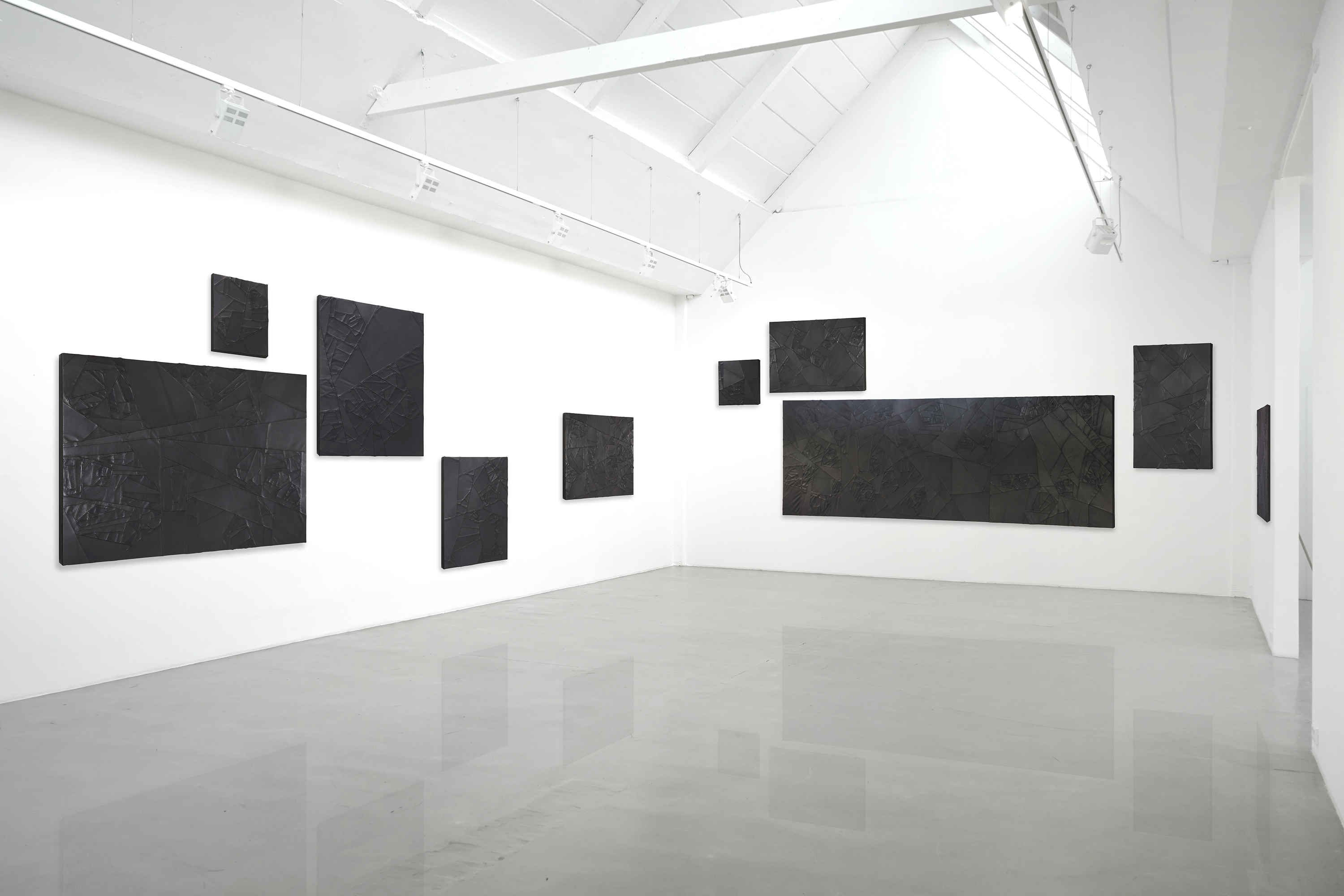
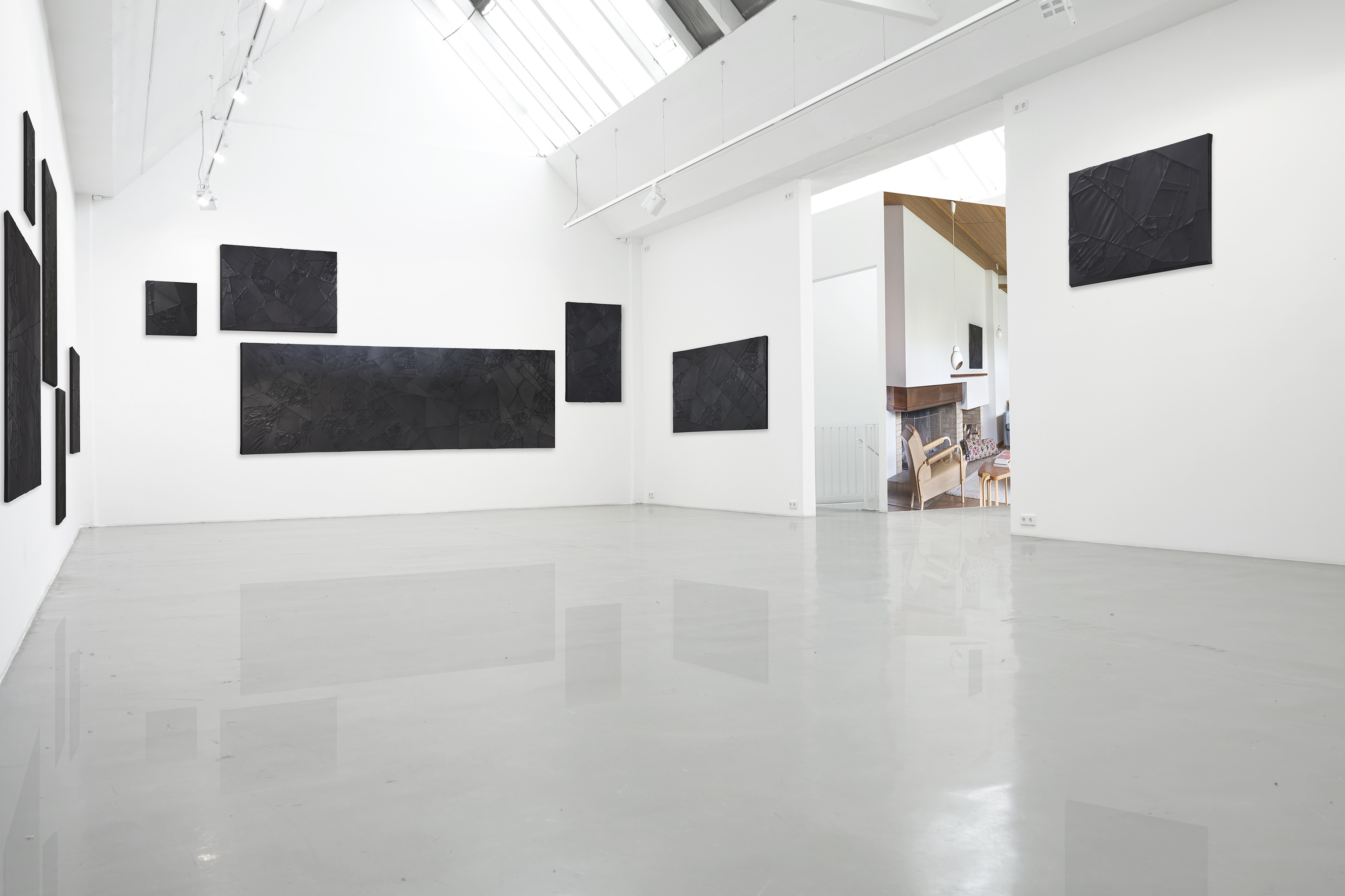
Mobile Composition, 2020, curated by Andrew Renton for New Viewings #27, Galerie Barbara Thumm, Berlin
In 2017-18, Caitlin Yardley undertook a research project in the house Alvar Aalto designed for French gallerist, Louis Carré. Painstakingly researching eighteen paintings which formed one installation amidst a constant flow of paintings in and out of the house (in a particularly well-documented moment in 1962), she remade her own versions of the works according to the scale of the originals and installed them back where the ‘originals’ once had been located. Caitlin’s versions involved sewing quilts pieced out of non-reflective, black goat leather. She calls them ‘quilts’, but here they function in painting’s absence: “I think it is really important that I’m not making new paintings within the frame of works in the original collection. I’m more interested in acknowledging them as objects in the world; objects with a specific material surface.” The works were made to move beyond the house, and this new installation marks a doubled absence – the absent paintings as well as the absent house. They might be seen as echoes, emptied markers, signalled by title and dimension. But they’re handled. They’ve become something else. And in this installation the new works are removed from the context which engendered them, to a space detached from this history and point of origin. The renegotiation of a new space by means of these works is a highly materialised prospect. Andrew Renton, 2020

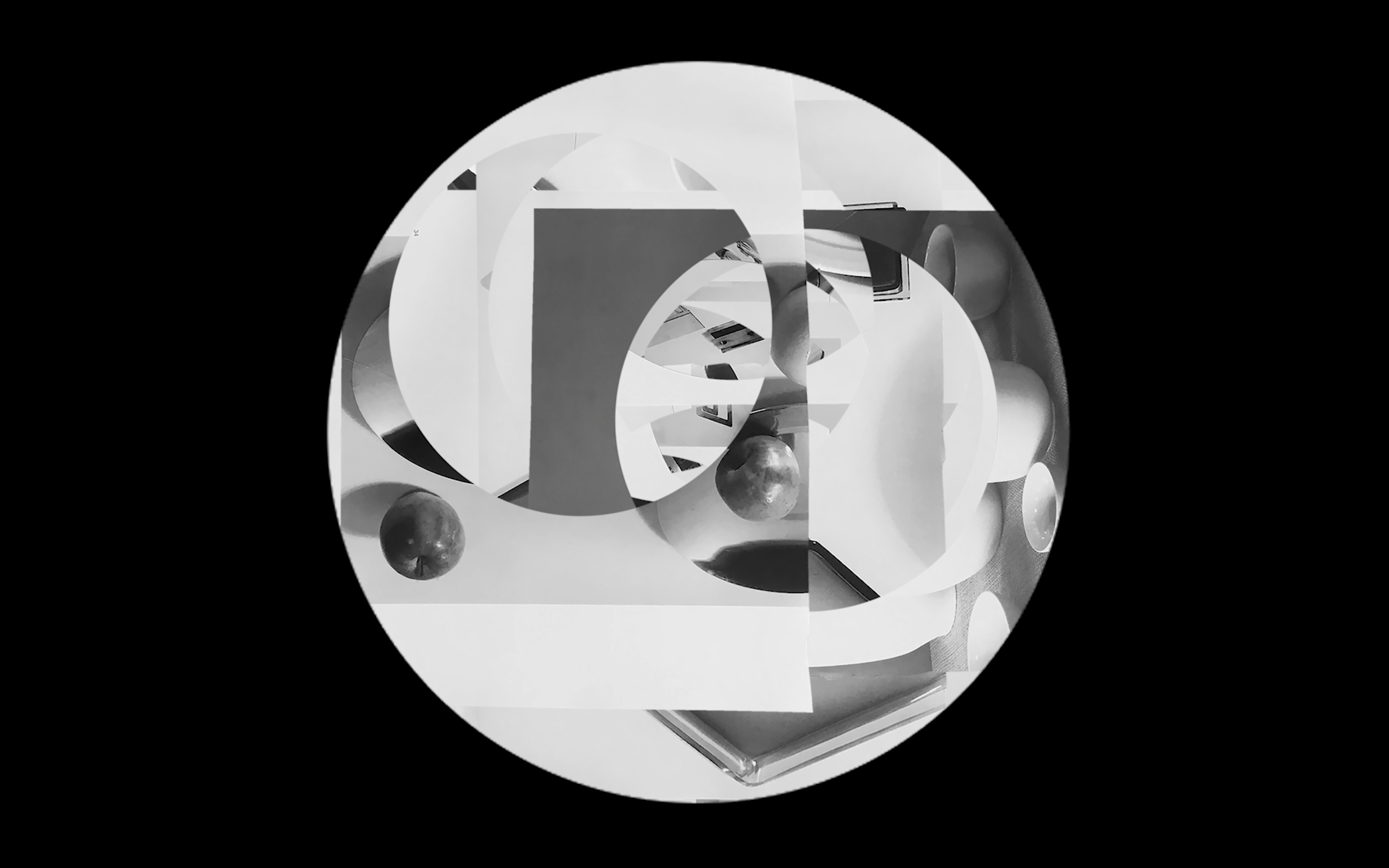
eclipse sequence (diagram)
Eclipse Sequence (Diagram), 2019, HD video, 6’38” (loop)
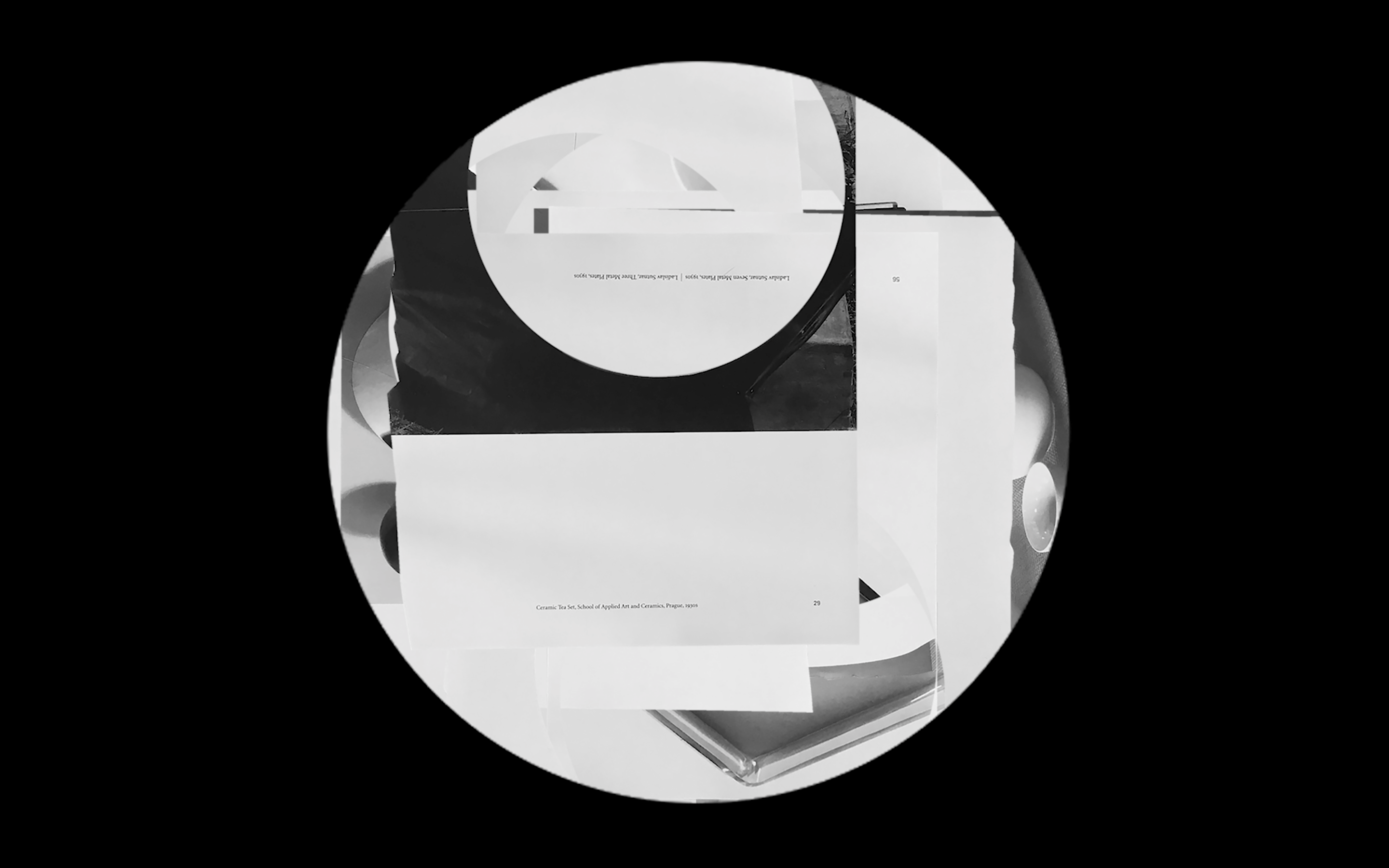
eclipse sequence
Eclipse Sequence, 2019, HIAP, Helsinki. Aniline goatskin, HD video, mirrors, bookplates from Josef Sudek: The Commercial Photography of Družstevní Práce. Photos: Sheung Yiu


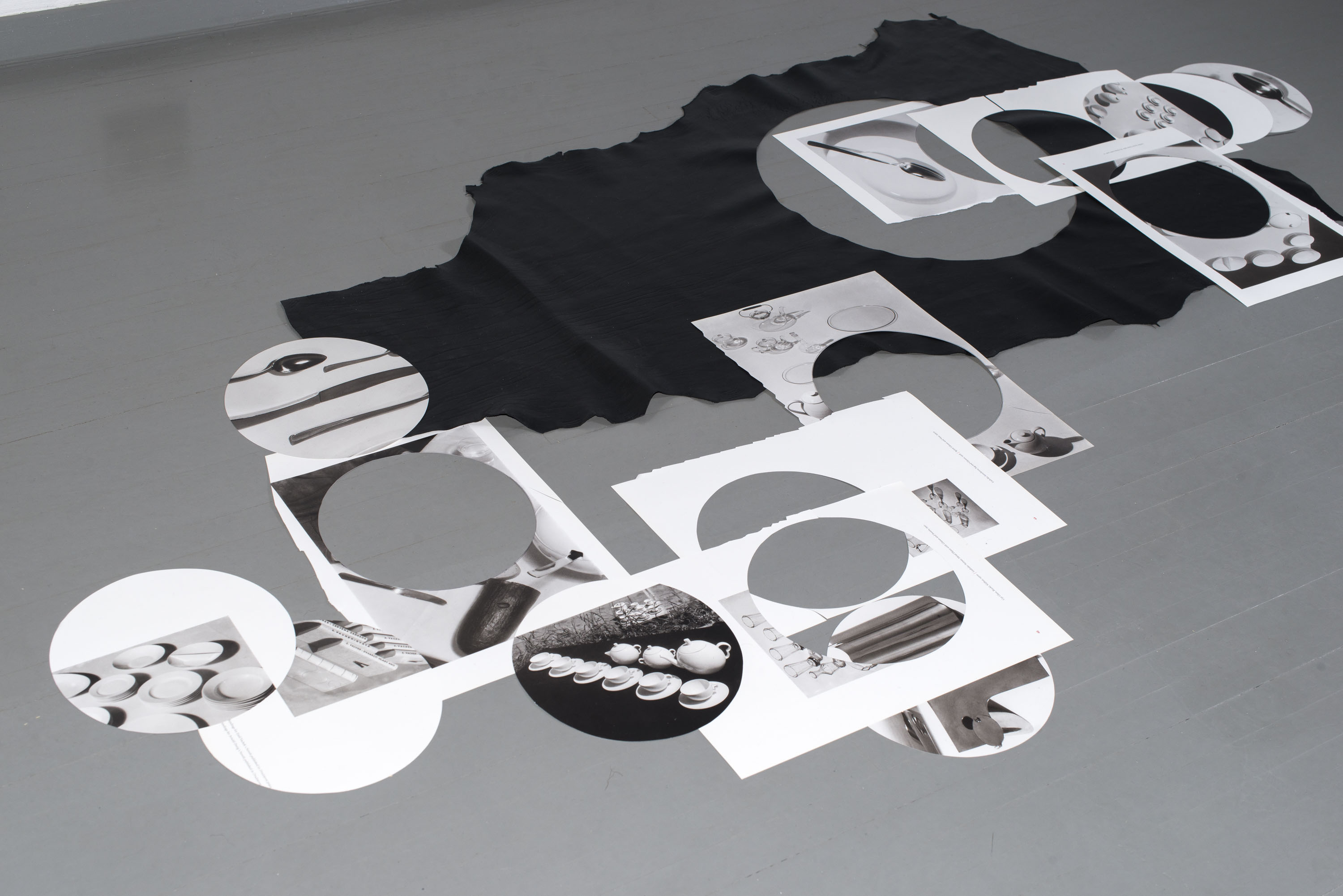
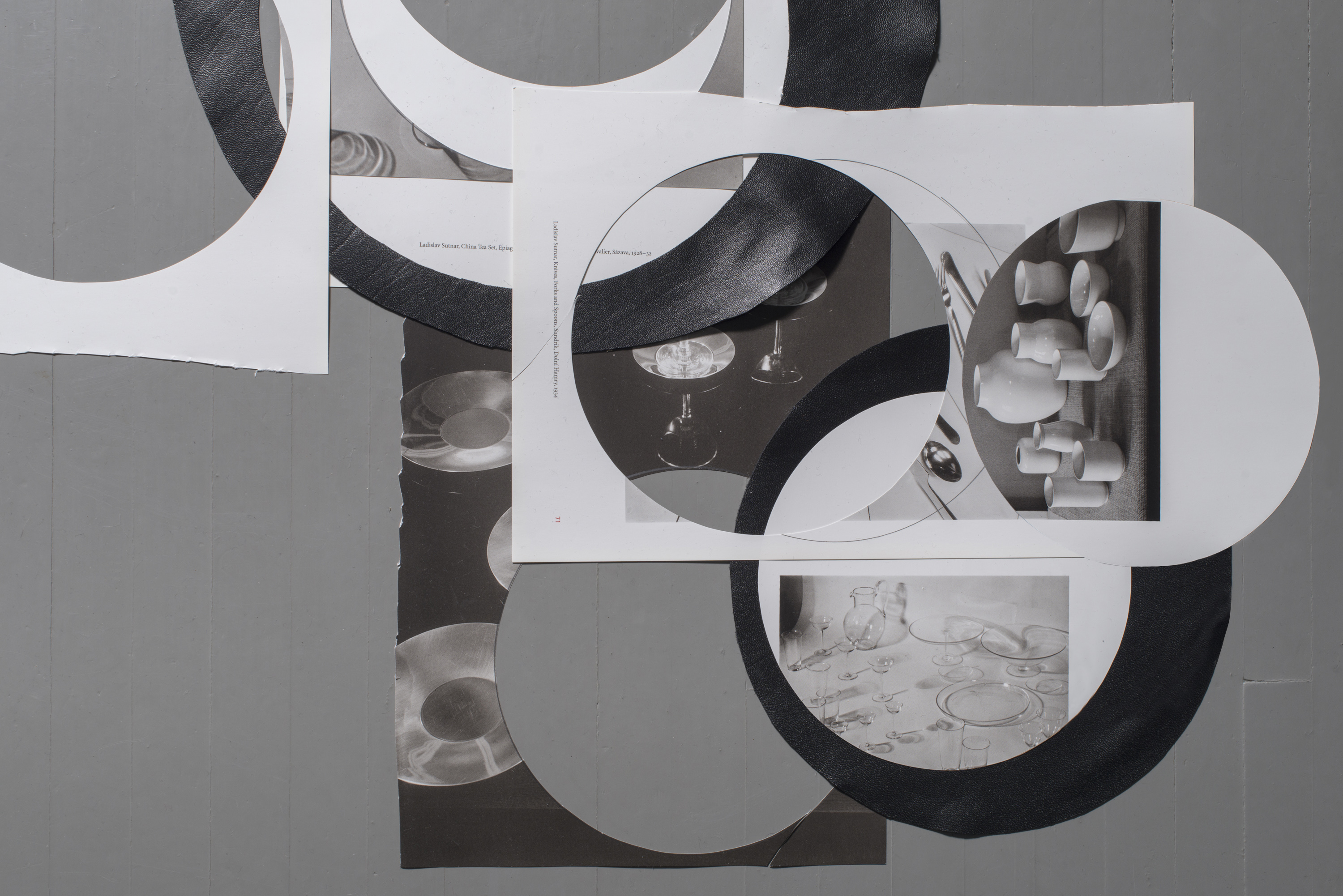
mobile composition, maison louis carré
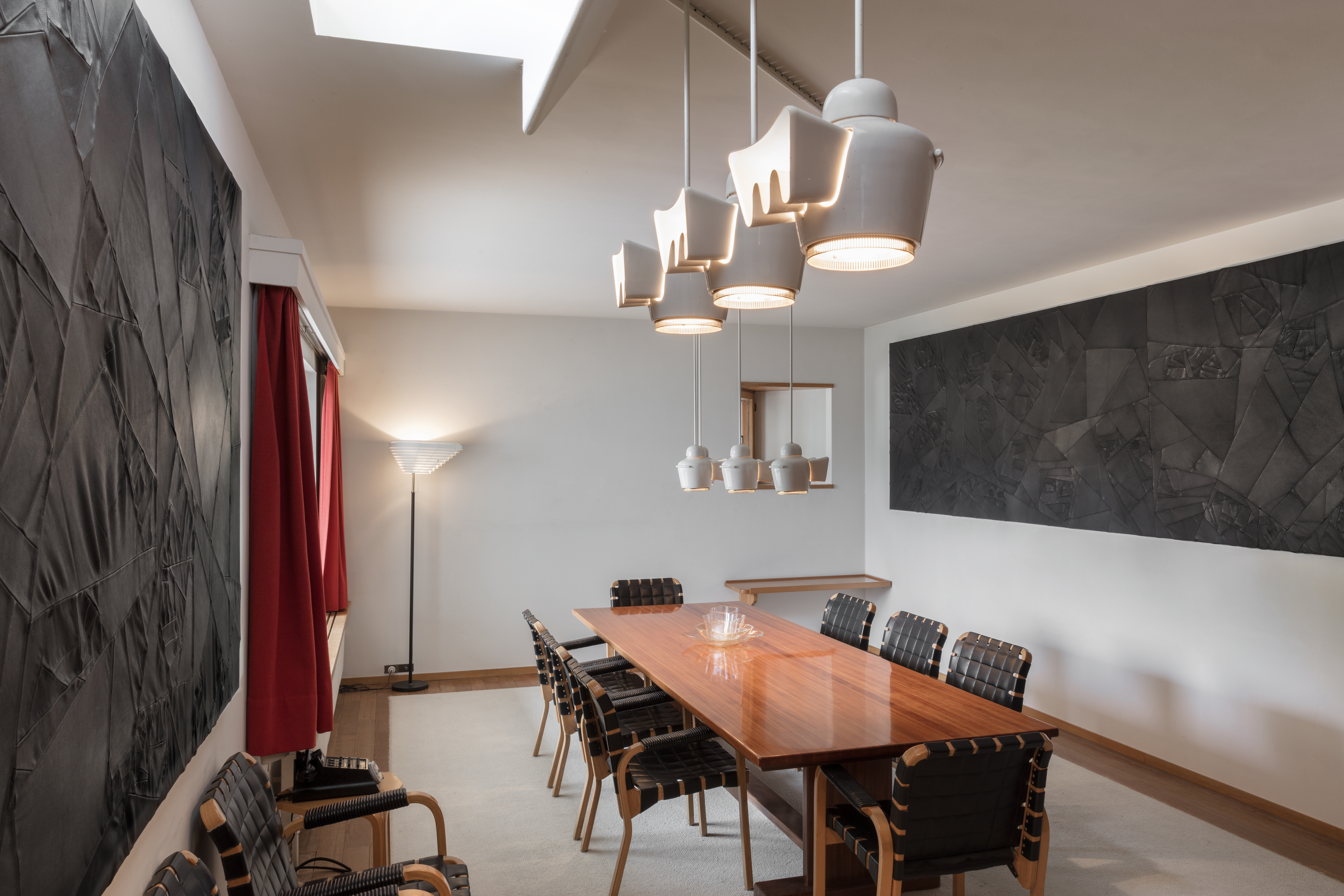
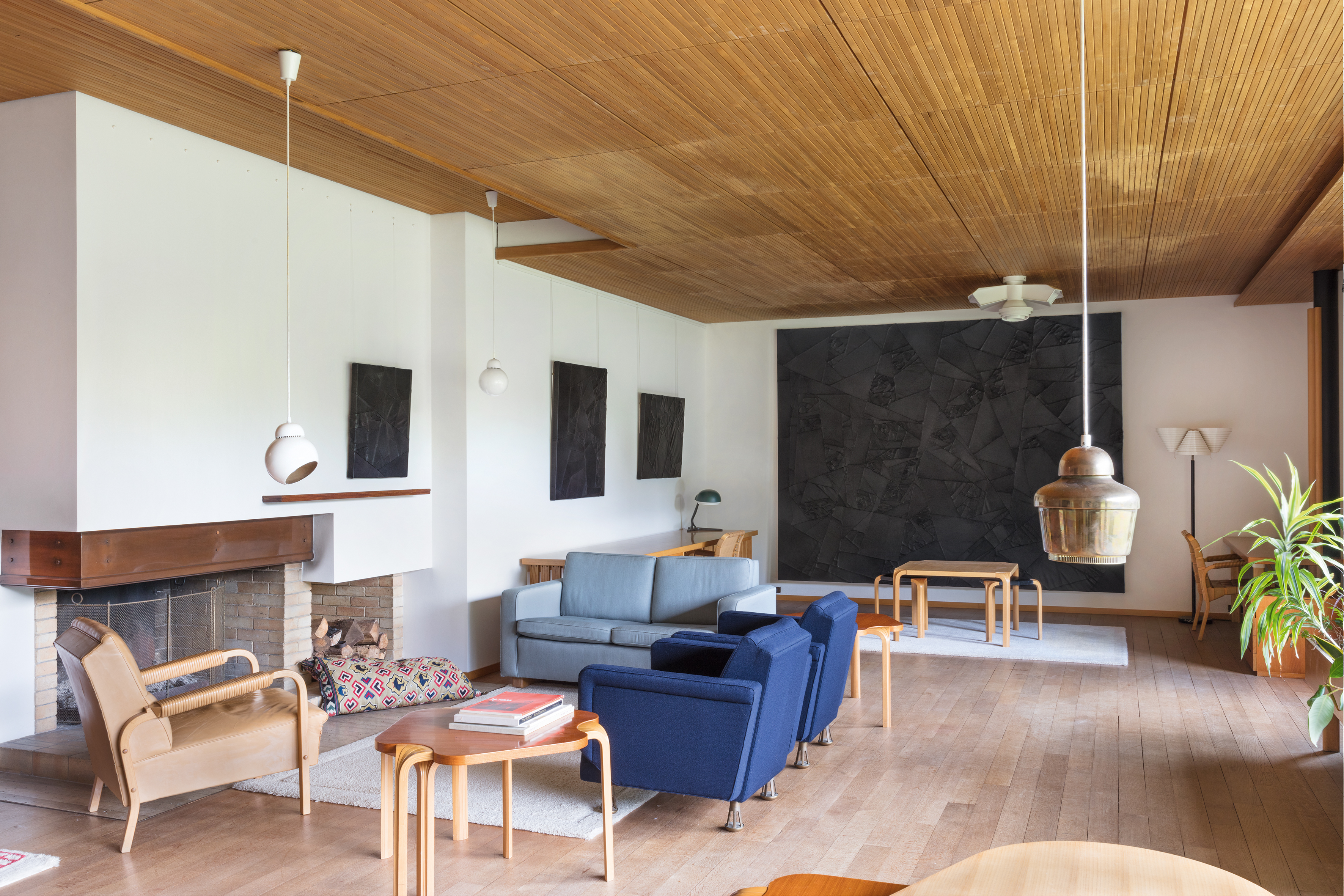
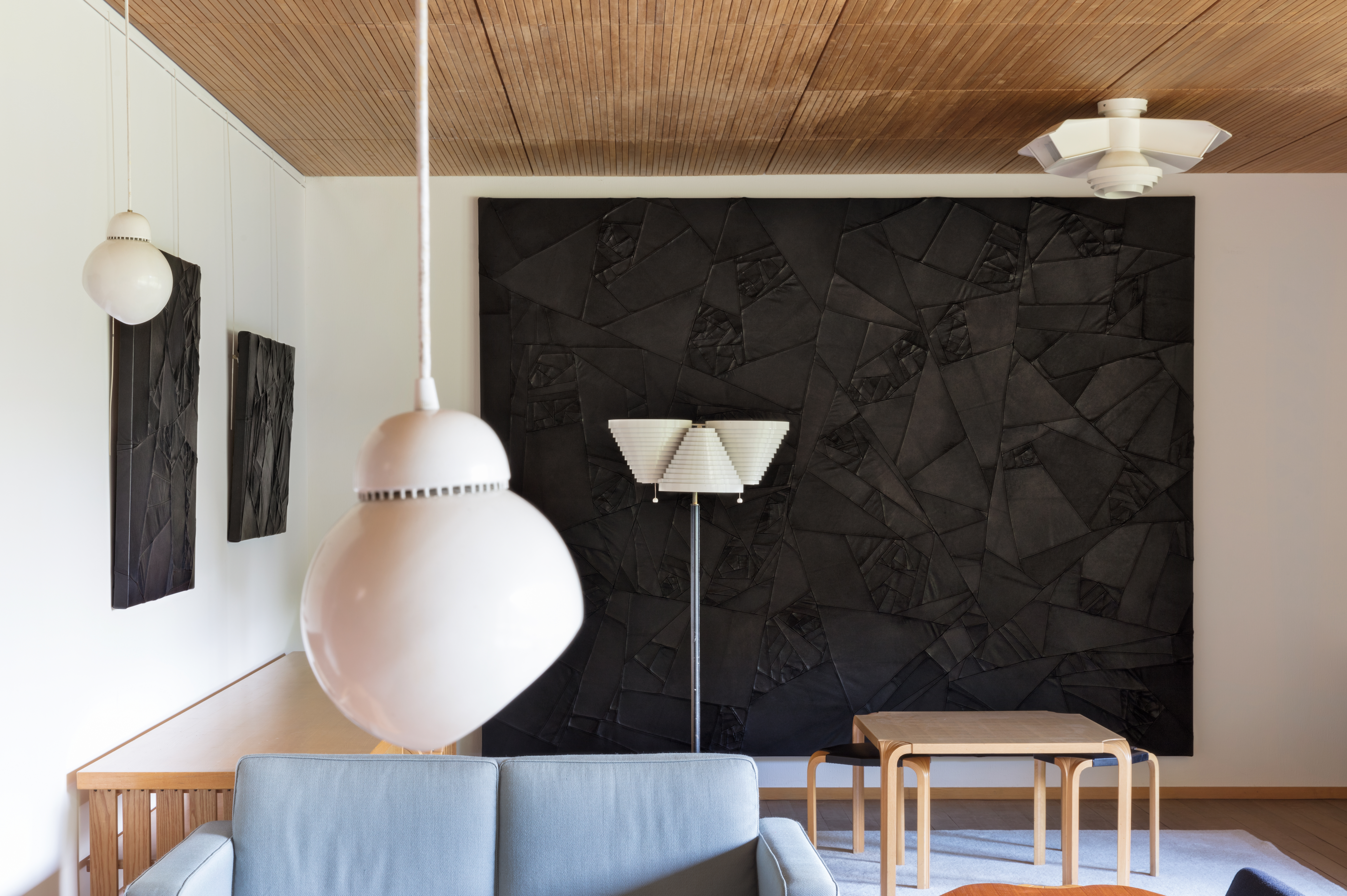
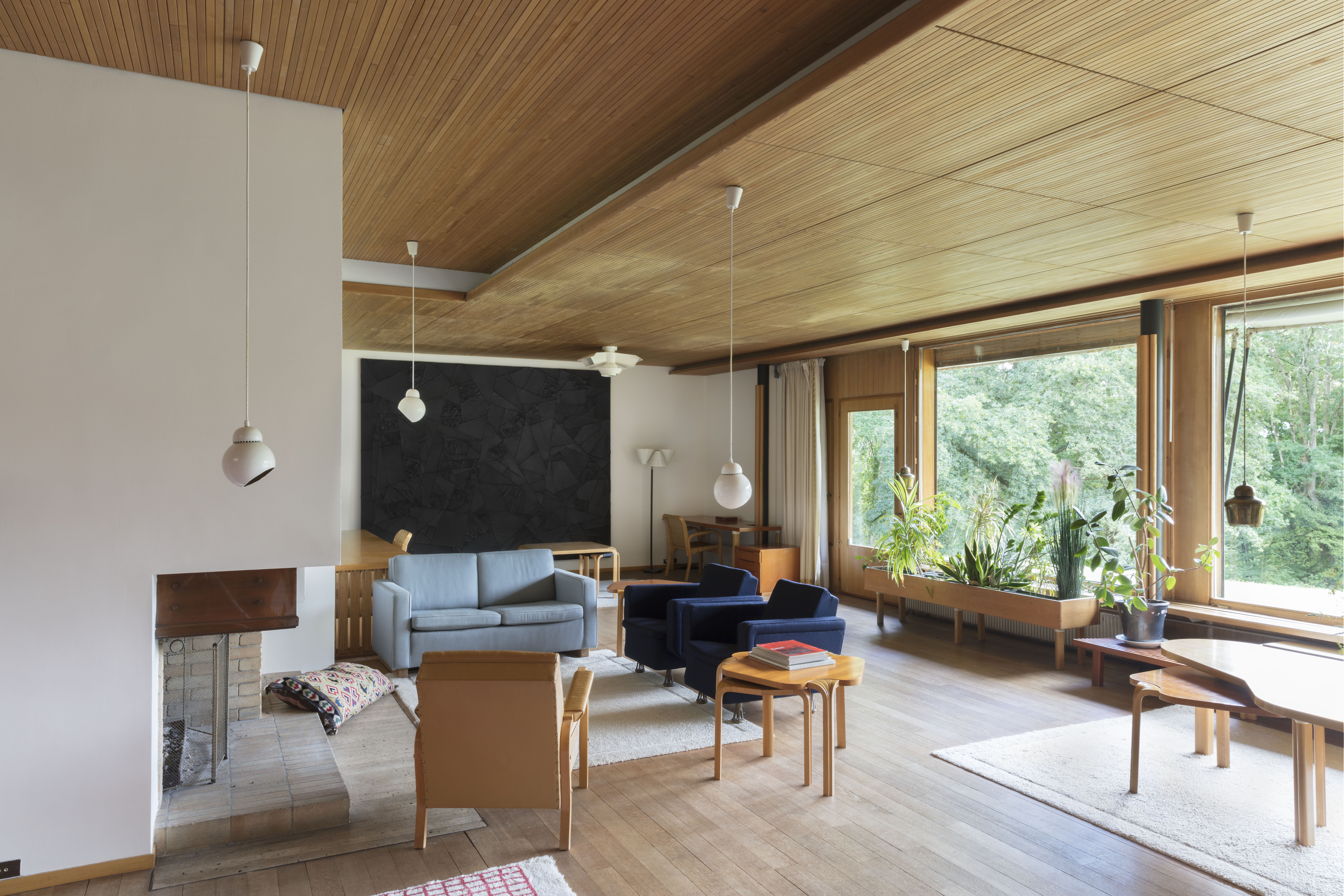
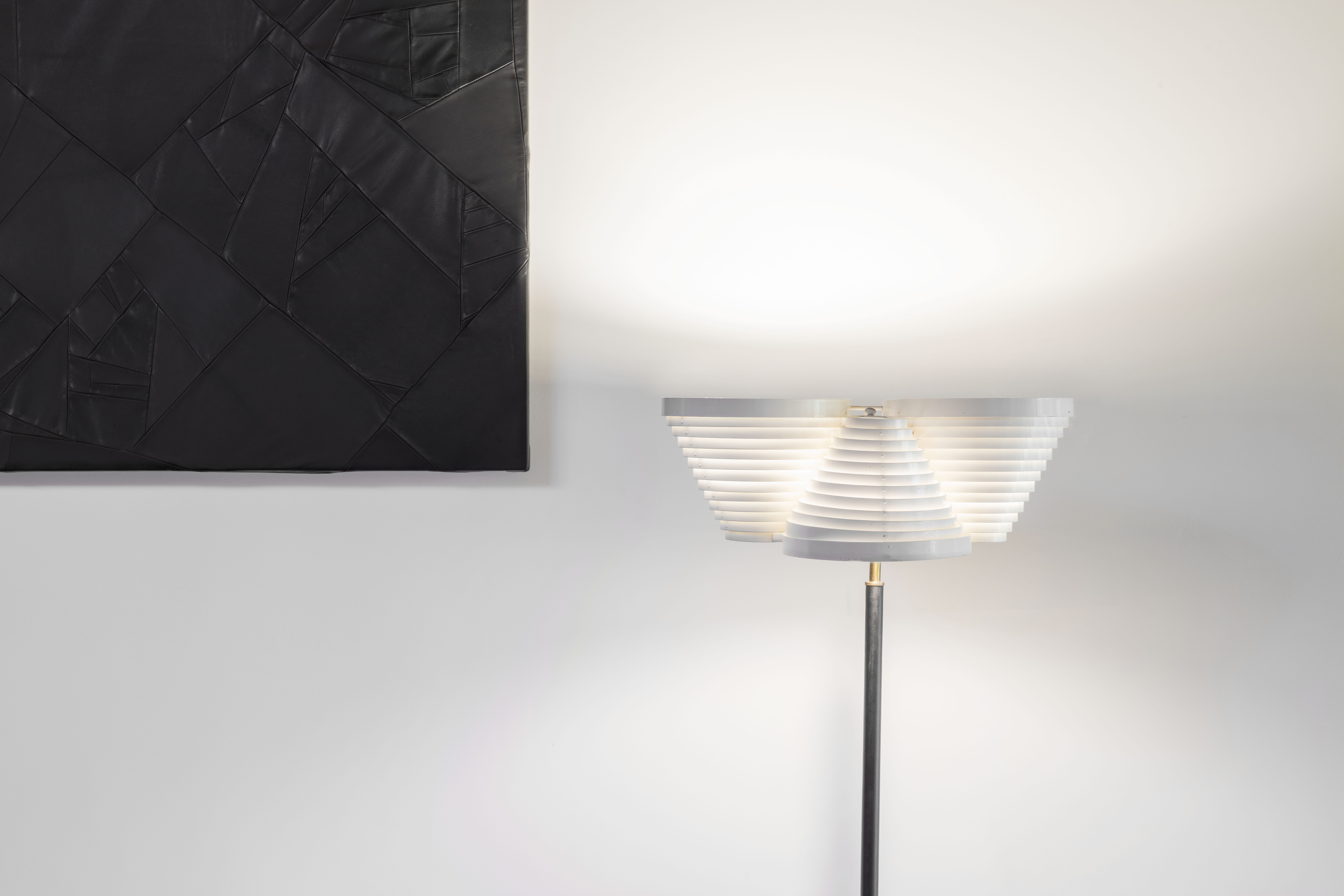
Mobile Composition, 2017, Maison Louis Carré, Bazoches-sur-Guyonne. Quilted aniline goat leather, artist publication, HD video. Photos: Lucy Dawkins
Mobile Composition is an installation and artist book that develop through one another, focusing on the interior of Alvar Aalto-designed Maison Louis Carré and the art collection of Paris art dealer Louis Carré, for whom the house was built. Working from archival photographs that fix the collection at a specific moment in 1962, amidst a constant flow of paintings in and out of the house, the project examines its movement and posthumous dispersal and attempts to reconvene it through other means. Acting as placeholders, eighteen key works were traced and (re)produced in quilted black goat leather, retaining only the titles and dimensions of the originals, and installed and documented to restage the original photographs.
Named after a small standing mobile in the collection by Alexander Calder, the work considers how artefacts and architecture might move through the world and collide in ways that open up access to peripheral histories and wider narratives.
Supported by the British Council with Arts Council England, the Australia Council for the Arts and Association Alvar Aalto en France.

archival impulse
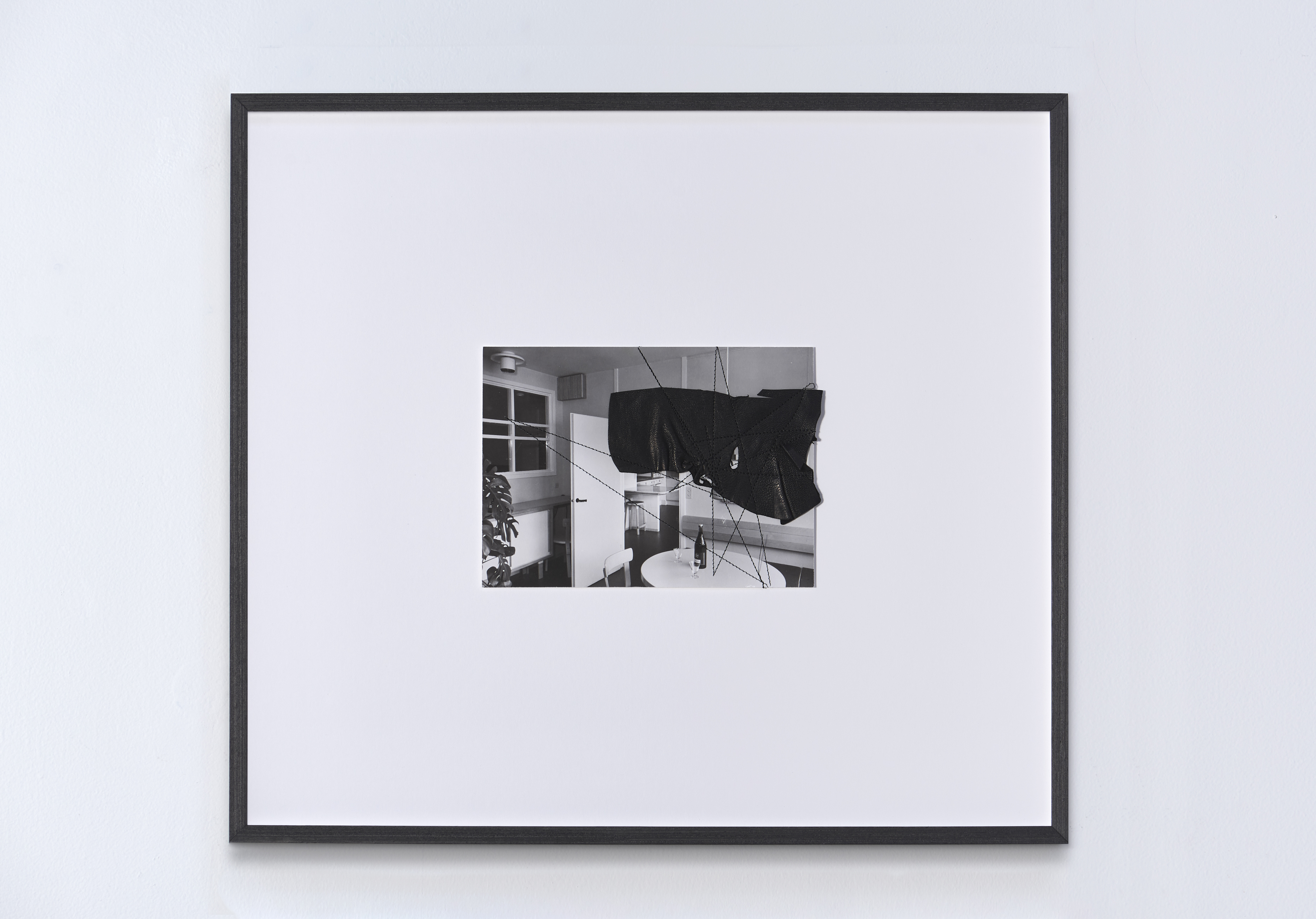
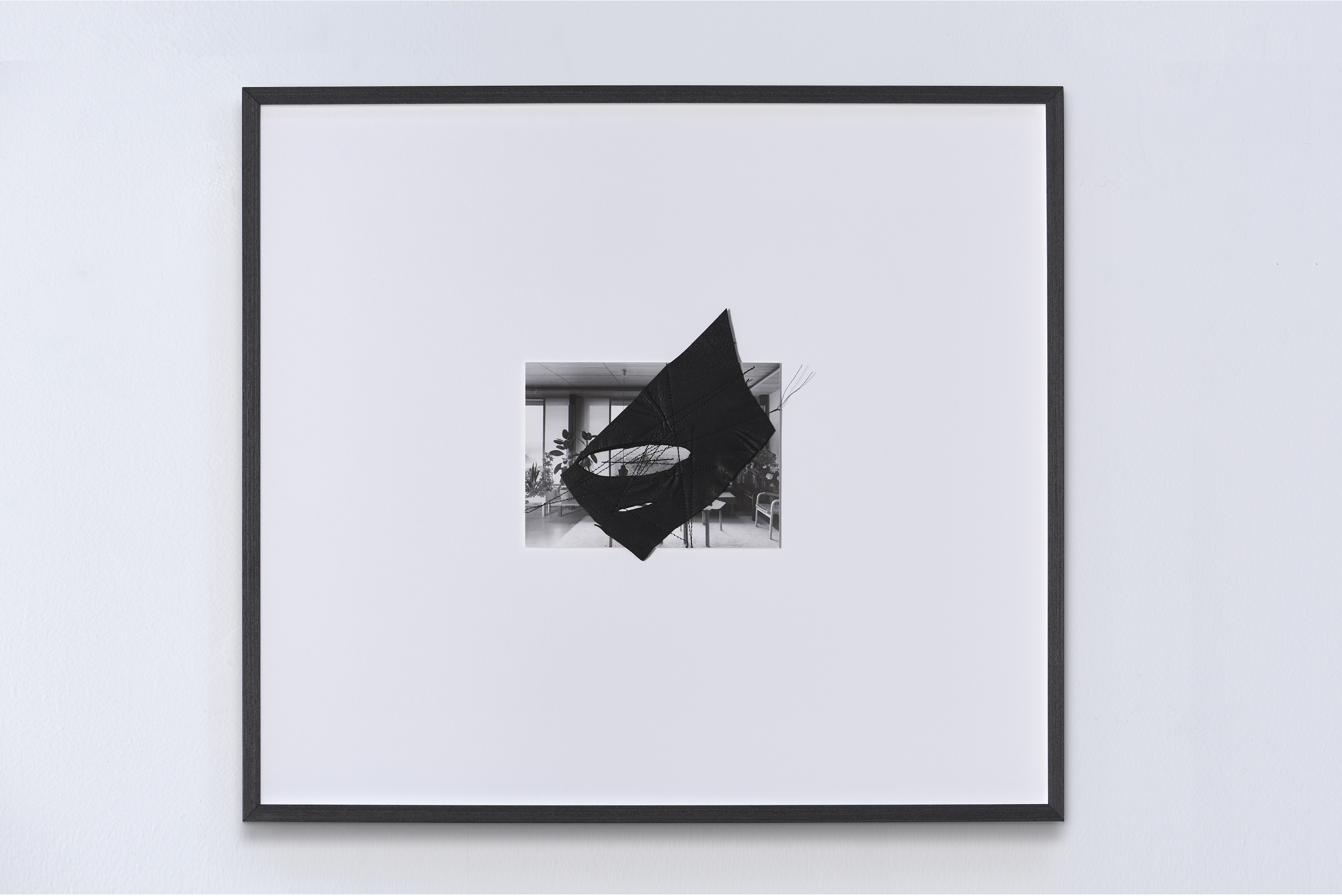
Archival Impulse (Personnel); Archival Impulse (Salon), 2017, aniline goatskin and thread on pigment print, 51 x 57cm each. Photos: Rebecca Mansell
Archival Impulse is a series of collages—or automatic drawings—developed alongside the installation and publication Mobile Composition (2017–18). The works emerged as an experiment in forcing an archive and its material evidence into contact with a new materiality. Each piece incorporates photographs drawn from the archives of Aalto-designed Maison Louis Carré, where significant modernist artworks are redacted or obscured by remnants of goat leather and traces of studio industry.
deux lumières
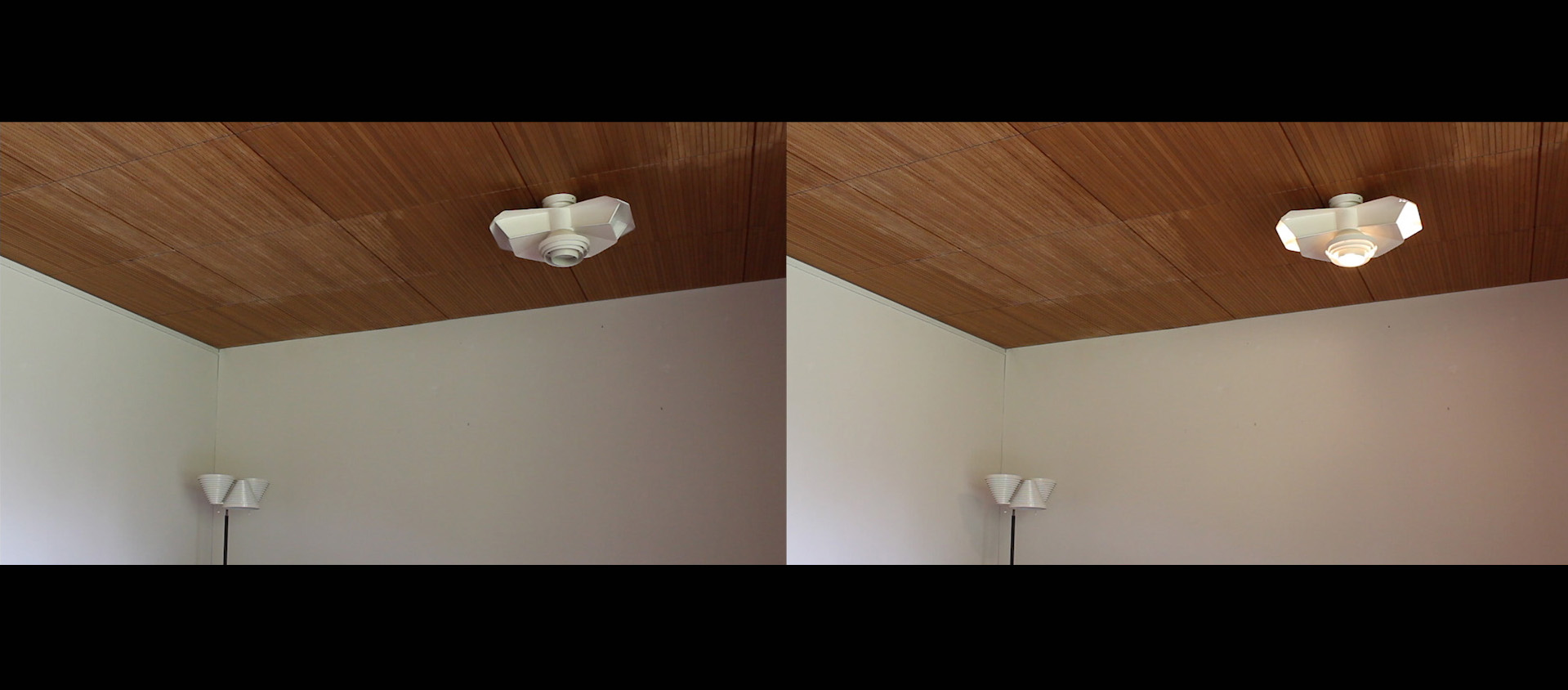
Deux Lumières, 2017. HD video, 7’19. Filmed at Maison Louis Carré, Bazoches-sur-Guyonne with permission from Association Alvar Aalto en France
exterior a
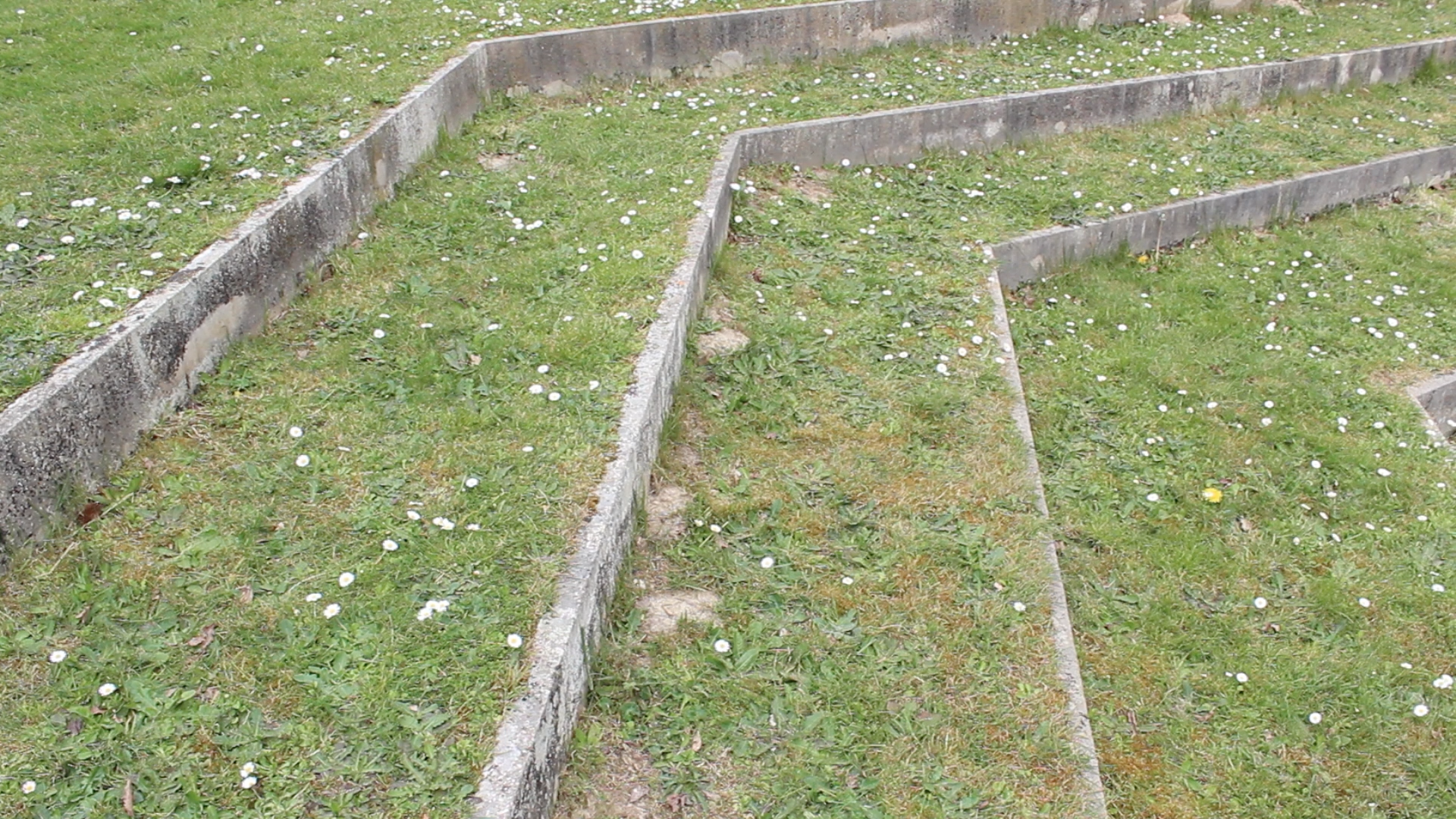
Exterior A, 2016. HD video, 6’28. Filmed at Maison Louis Carré, with permission from Association Alvar Aalto en France. Published by the Oxford Artistic and Practice Based Research Platform, Issue 1: Sites of Research http://www.oarplatform.com/the-surface-as-site-exterior-a/
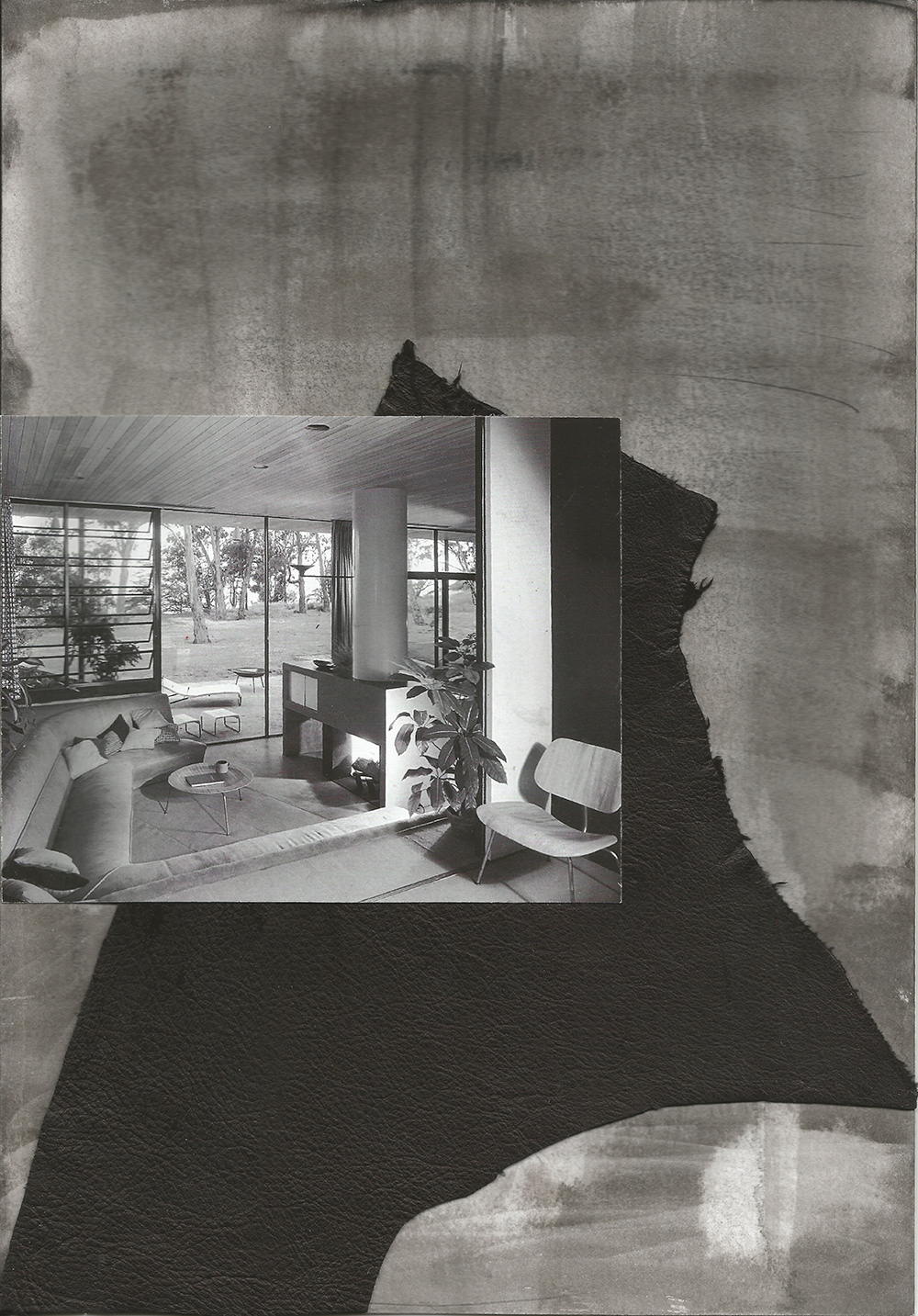
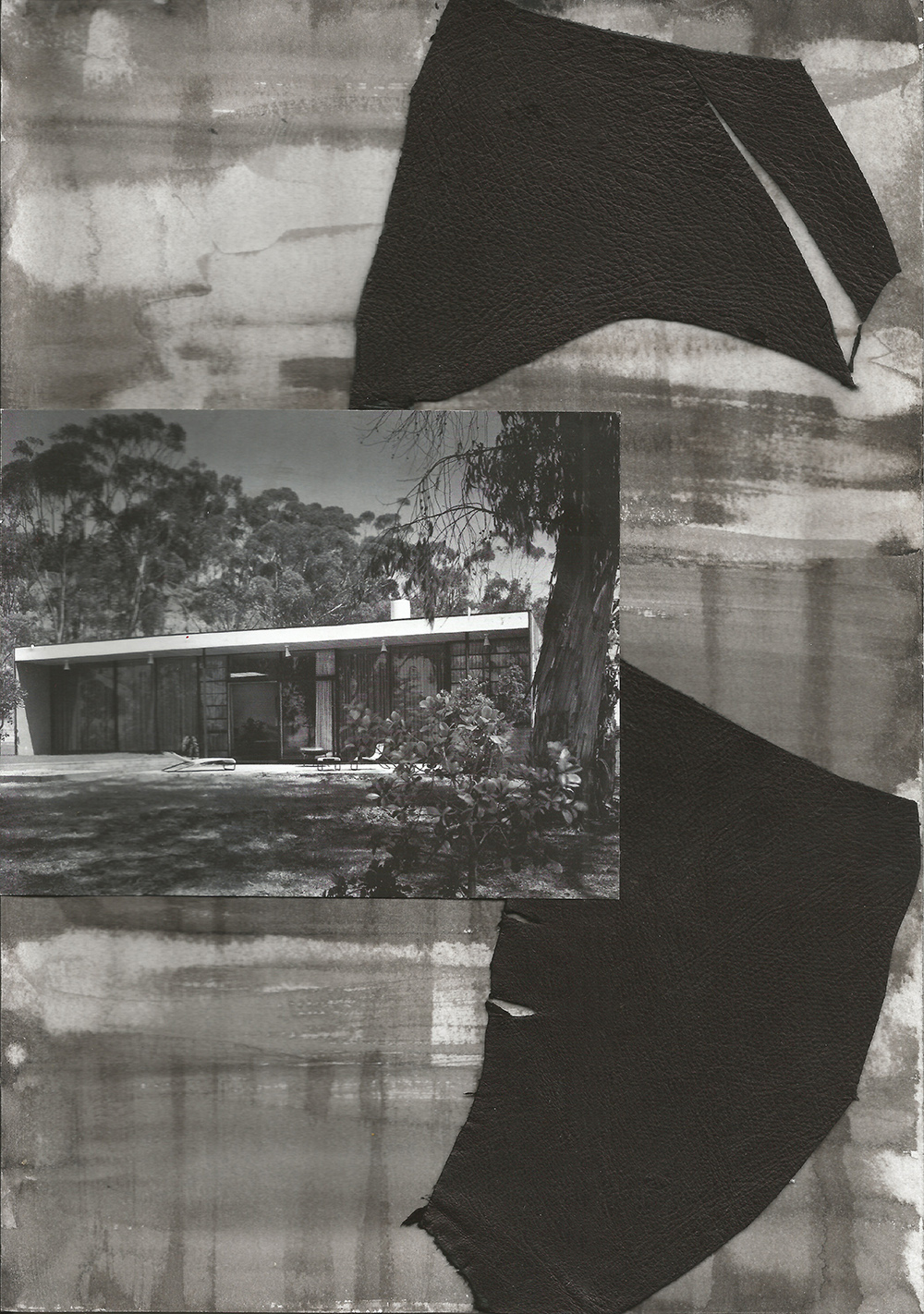
a vase rests on a table
A vase rests on a table, 2016. Bookplates depicting Case Study House #9 designed by Charles Eames and Eero Saarinen for John Entenza, goatskin, gouache on paper
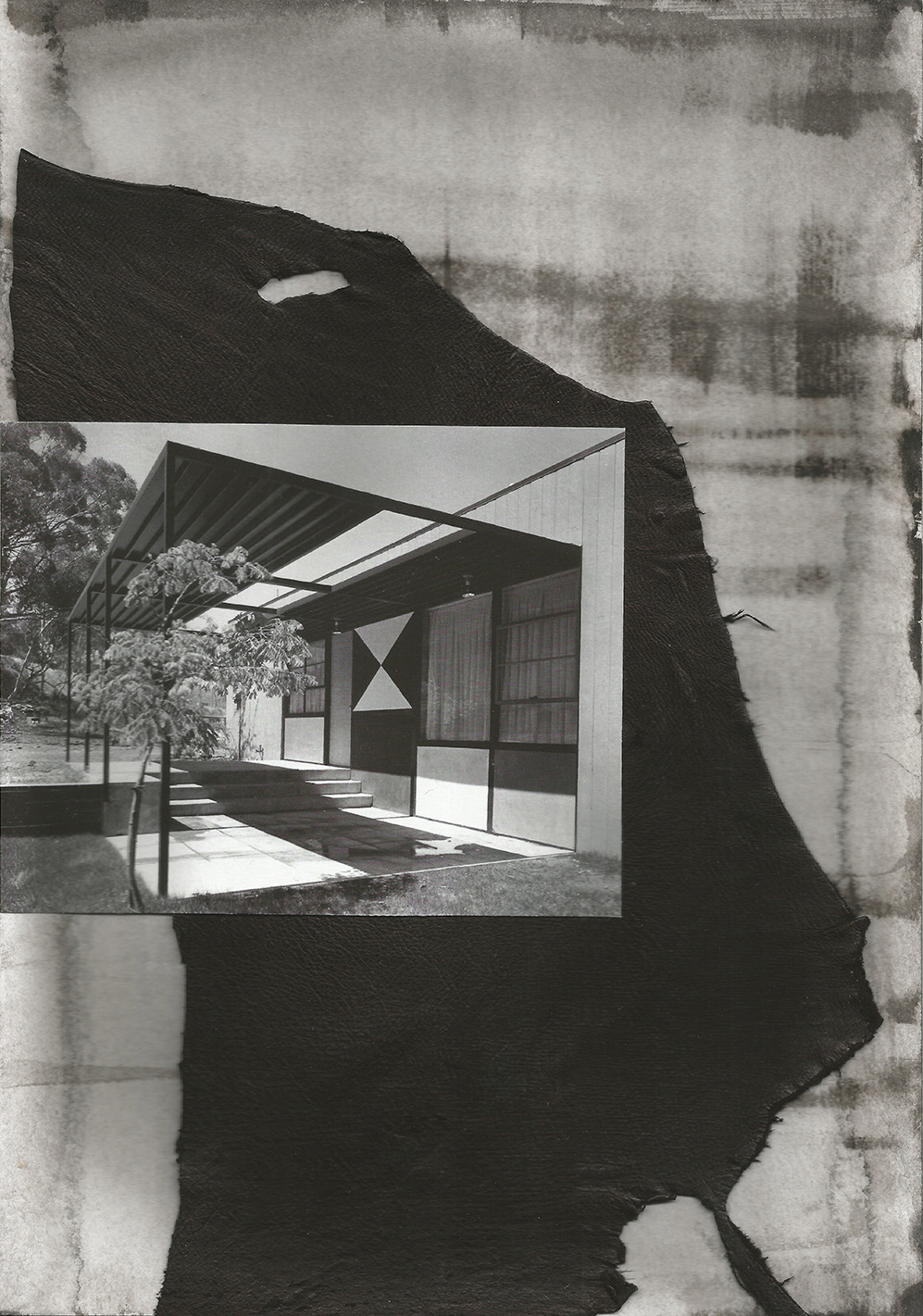
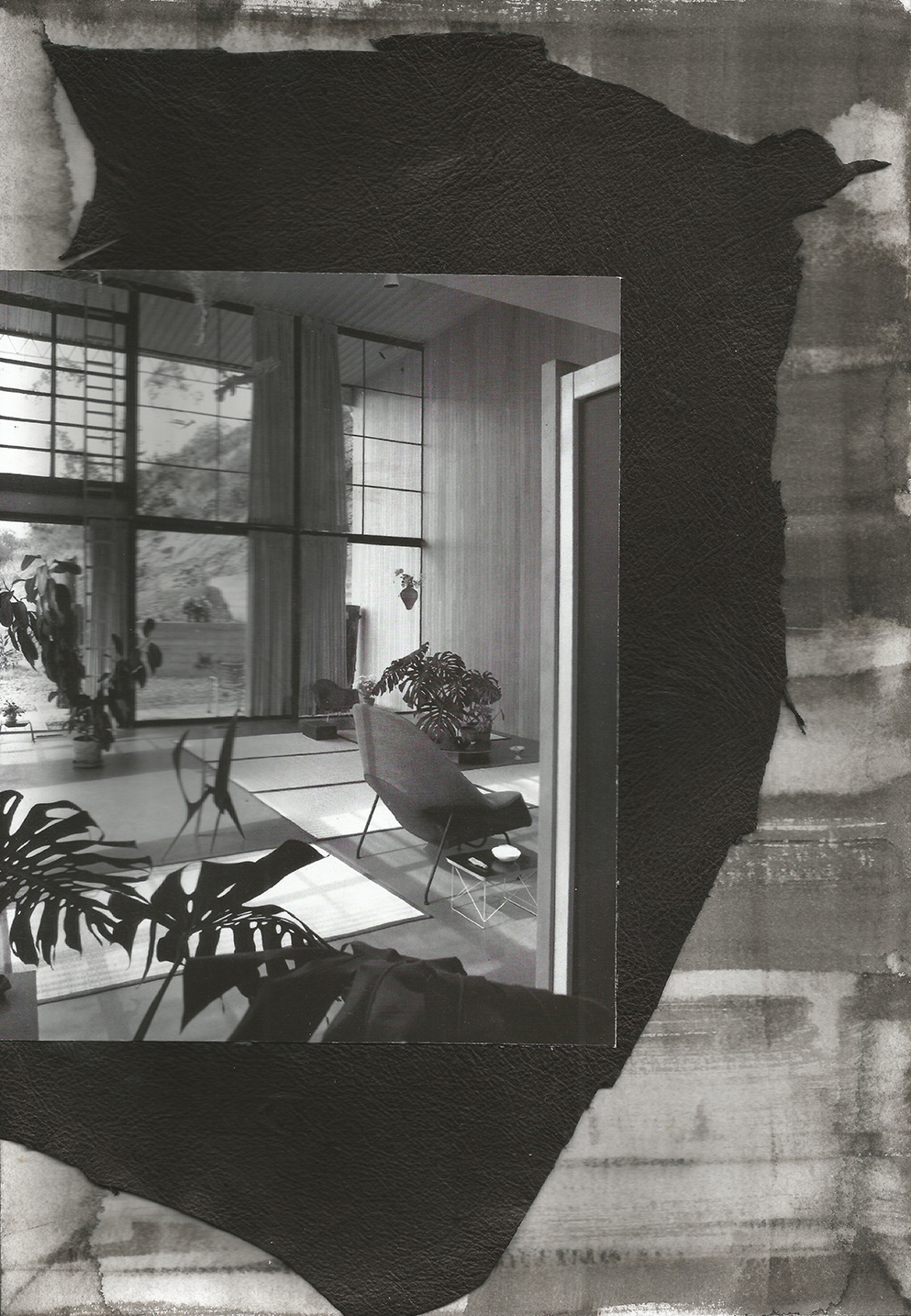
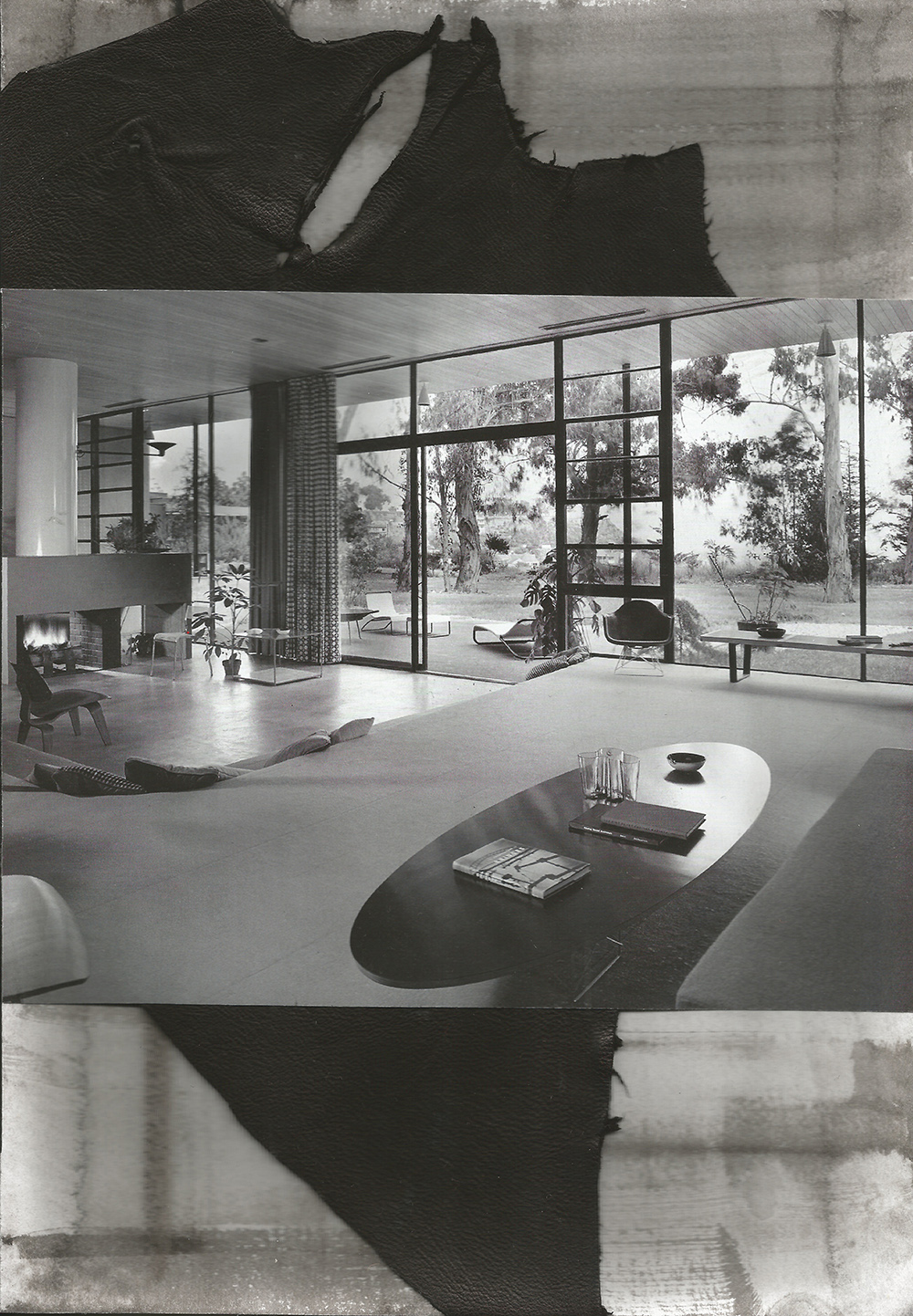
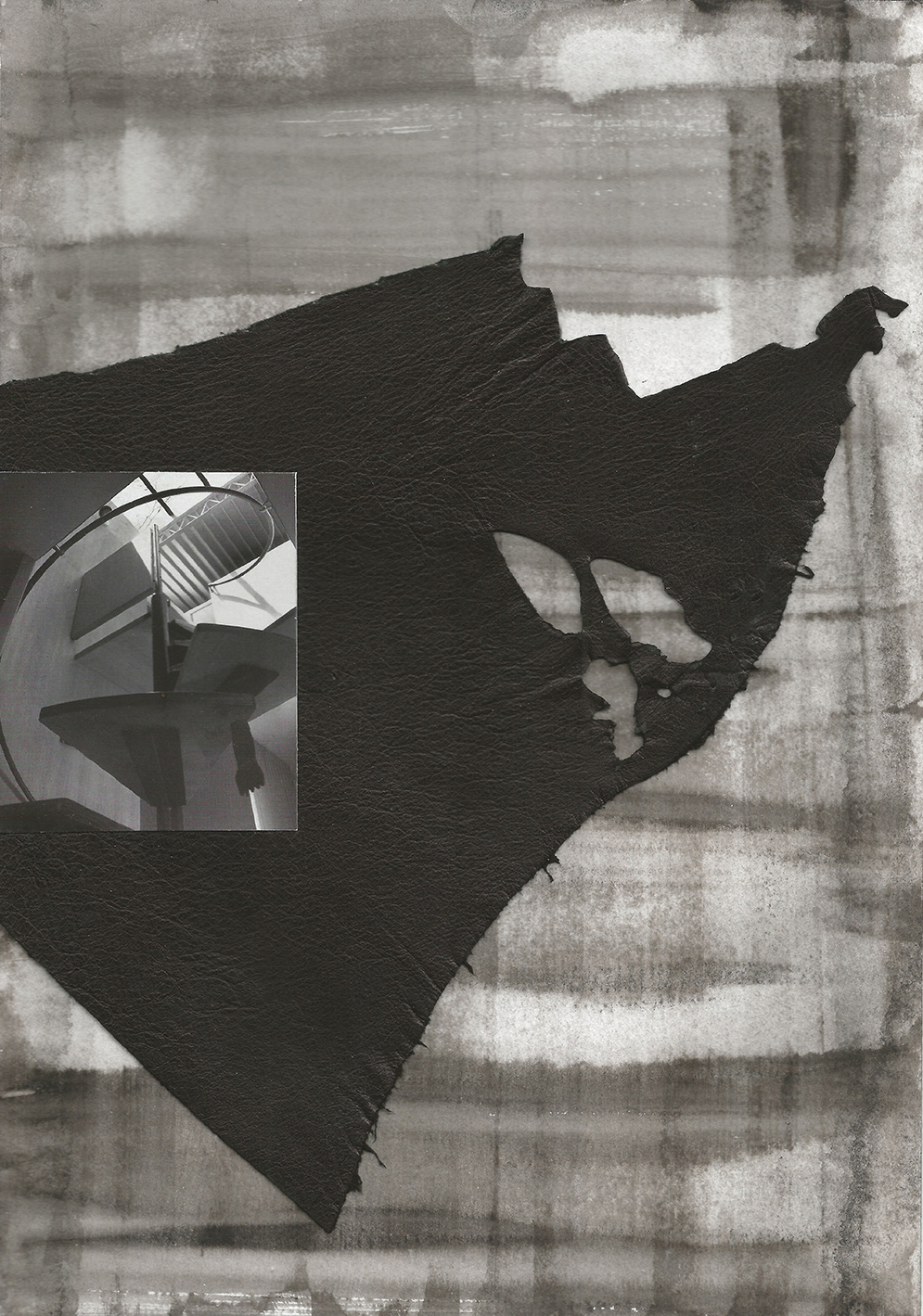
xyz (a chronology)
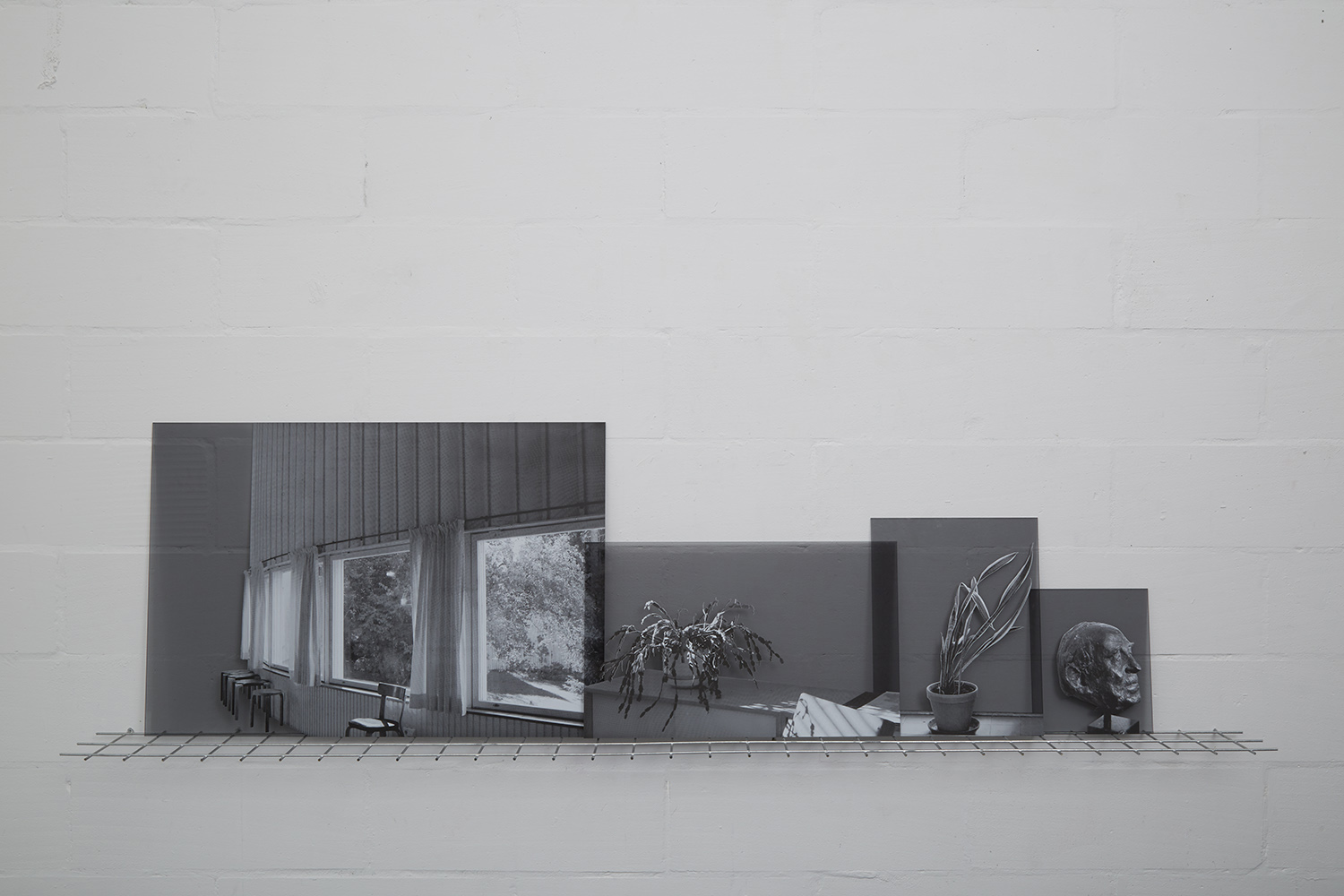
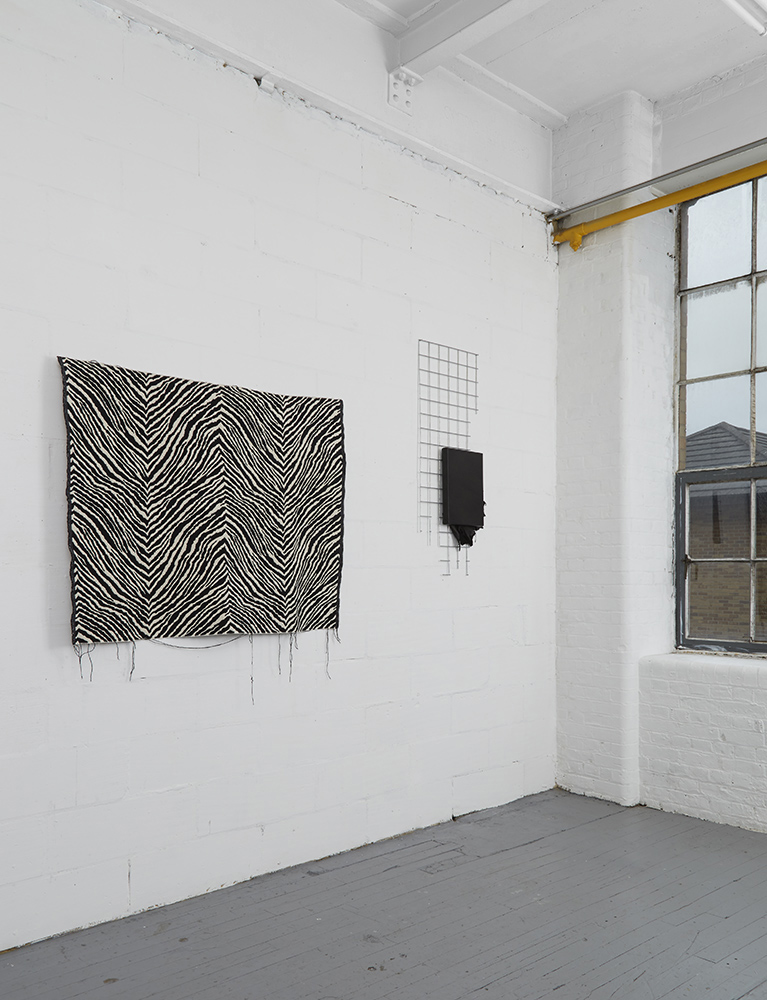
XYZ (A Chronology), 2015. Curated by Leigh Robb for Perth Institute of Contemporary Art (PICA)
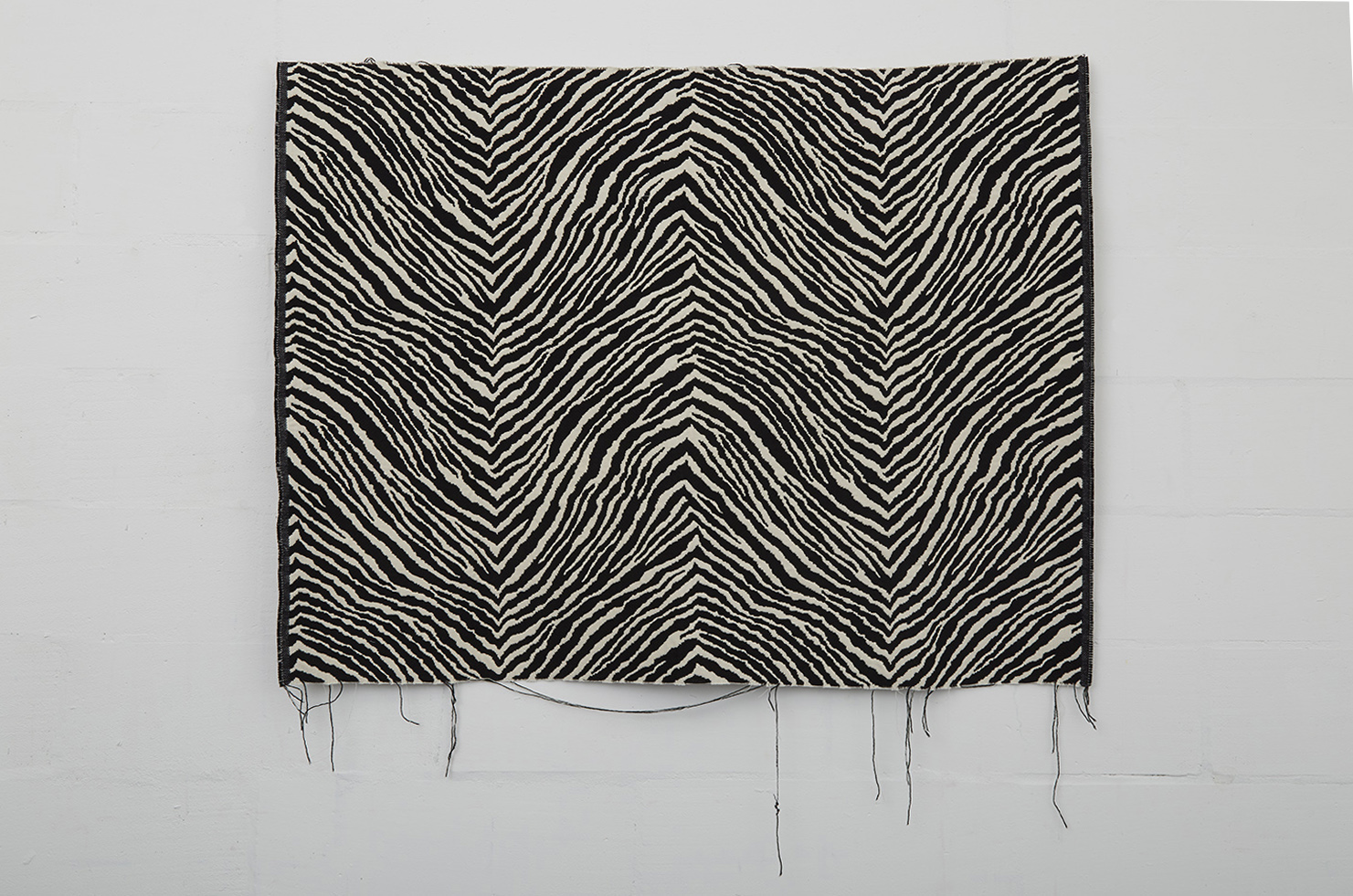
remnant of Artek wool upholstery, silkscreen on perspex, galvanised steel, goatskin, gouache painting on pigment prints.
Photos: Ben Westoby


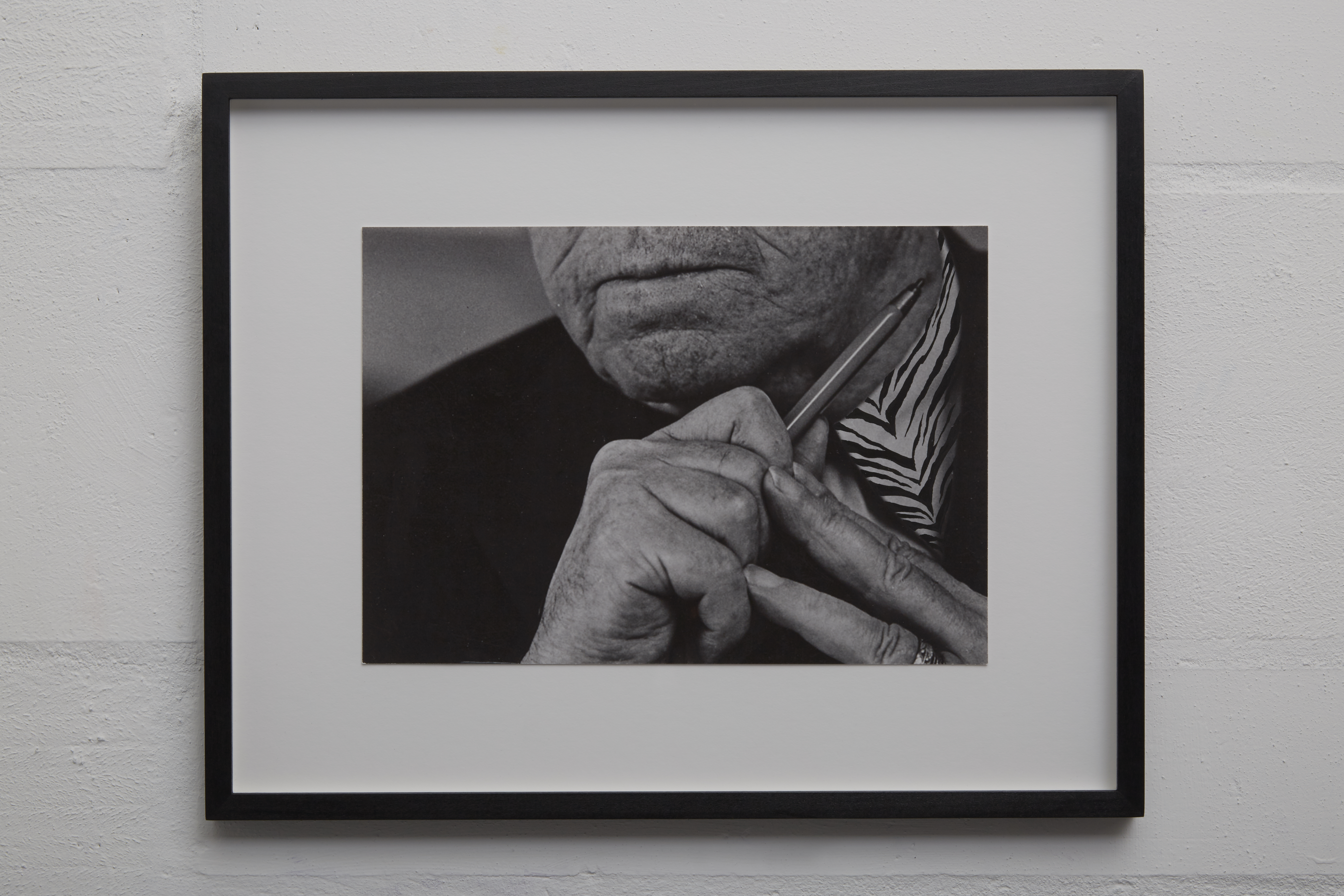
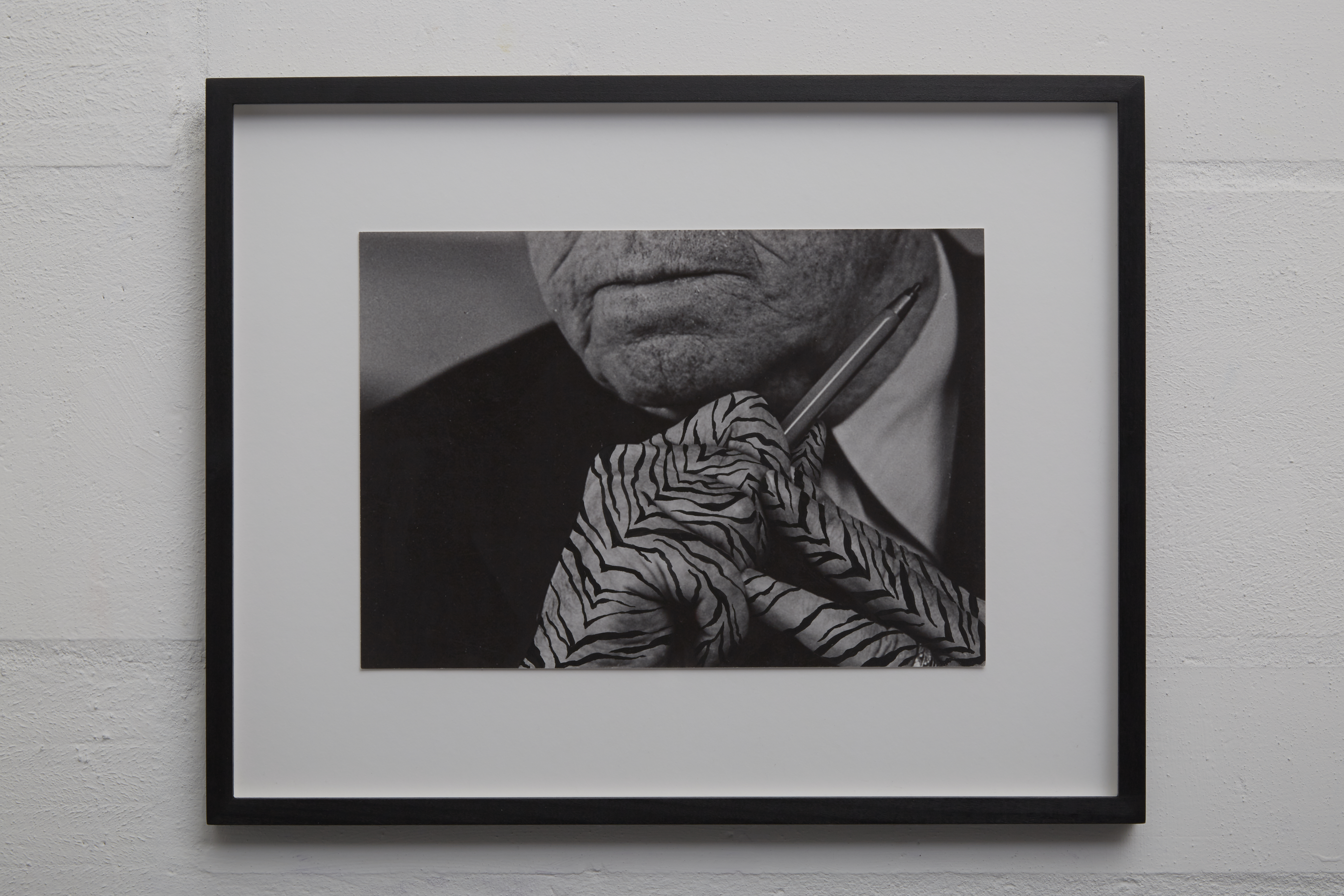
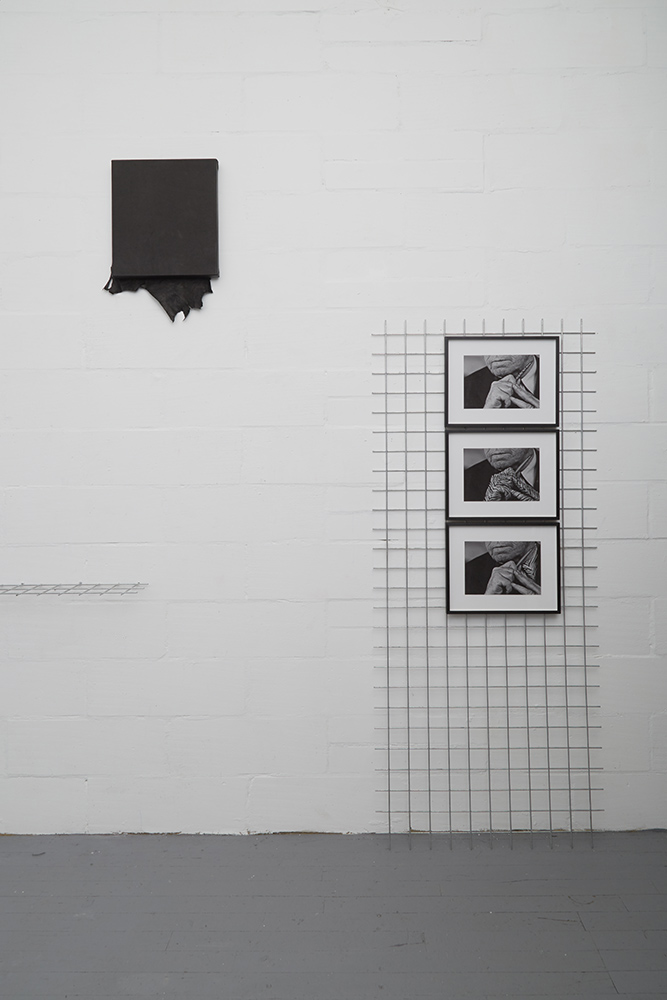
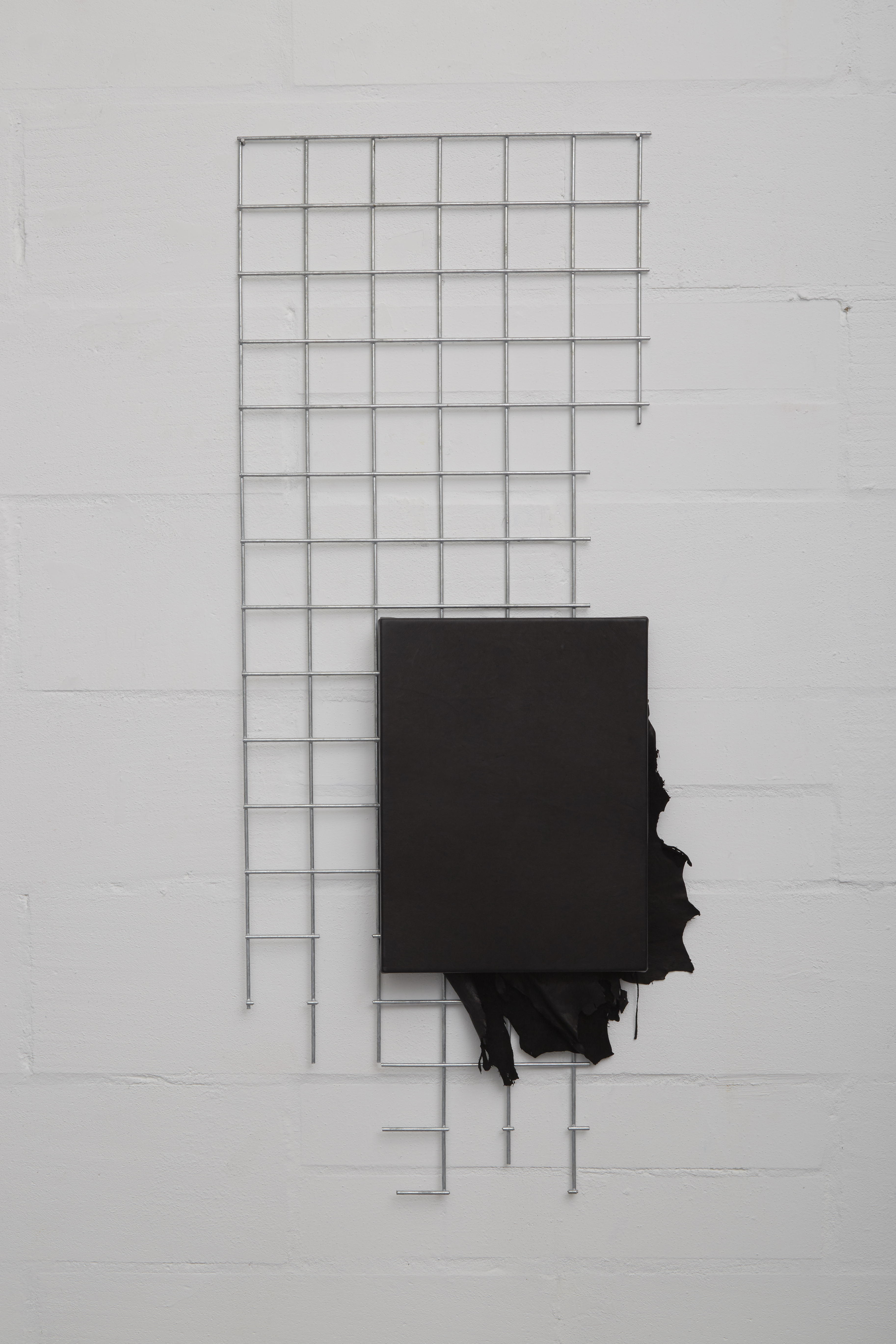
a sudden extinction of light
A Sudden Extinction of Light, 2014, silkscreen on aniline goat leather, acrylic, galvanised steel, 202 x 500 cm. Photos: Sam Drake
This work draws together the 19th-century photographic iconography of hysteria with the lighting designs of Finnish architect Alvar Aalto, following the discovery of Aalto-designed objects in the archives of the Freud Museum in London. The title of the work is derived from a photo caption used by Jean-Martin Charcot—neurologist and mentor to Sigmund Freud—in his staged demonstrations of hysteria. The referenced image illustrates how a hysterical woman might be induced into a cataleptic or lethargic state via exposure to a bright light. Displaying five of Aalto’s iconic light designs: A338 (Bilberry), A881 (Snow Bell), A805 (Angel Wing), A110 (Hand Grenade), A331 (Beehive), the silkscreens merge the abstract designs and their colloquial names with the materiality of goat leather—a material I use often for its association with both sharp peripheral vision and erratic behaviour. The lights are brought into contact with the dark fields they inhabit through the illusion that they, too, are constructed from leather.


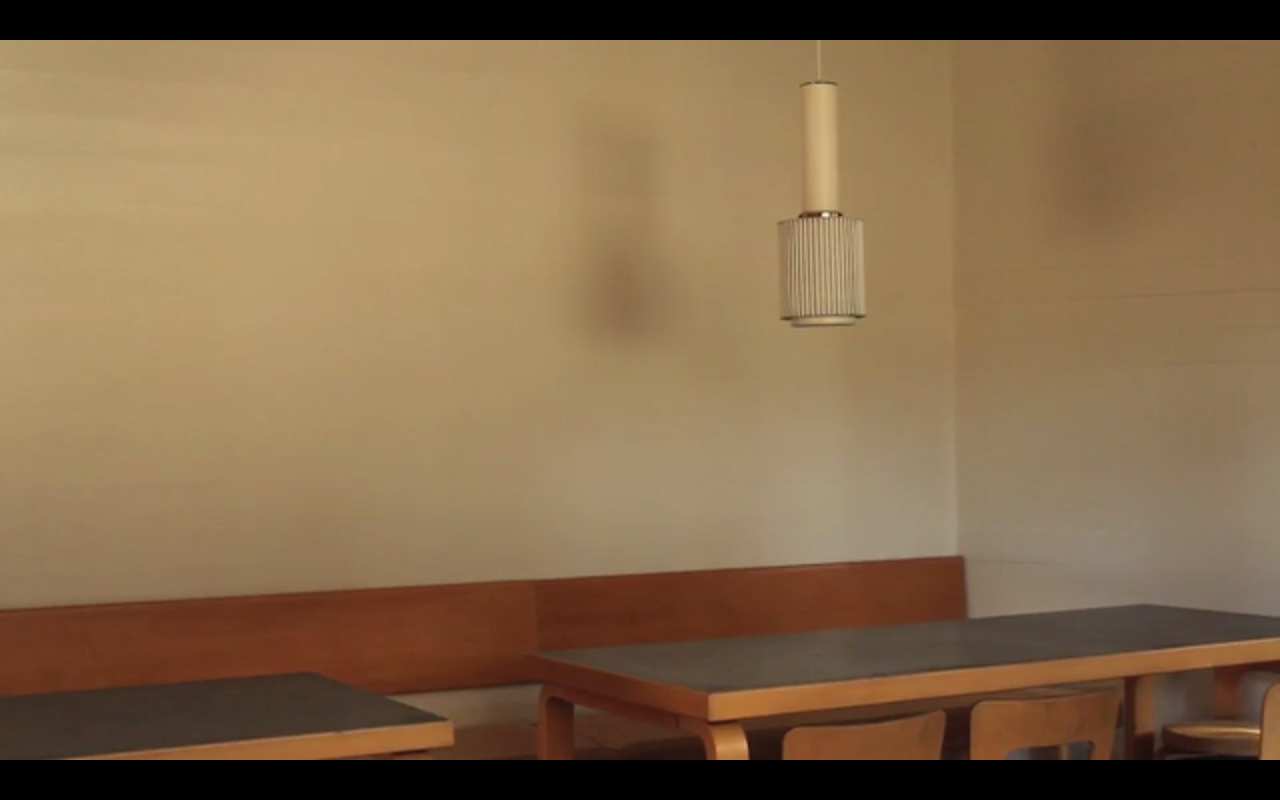
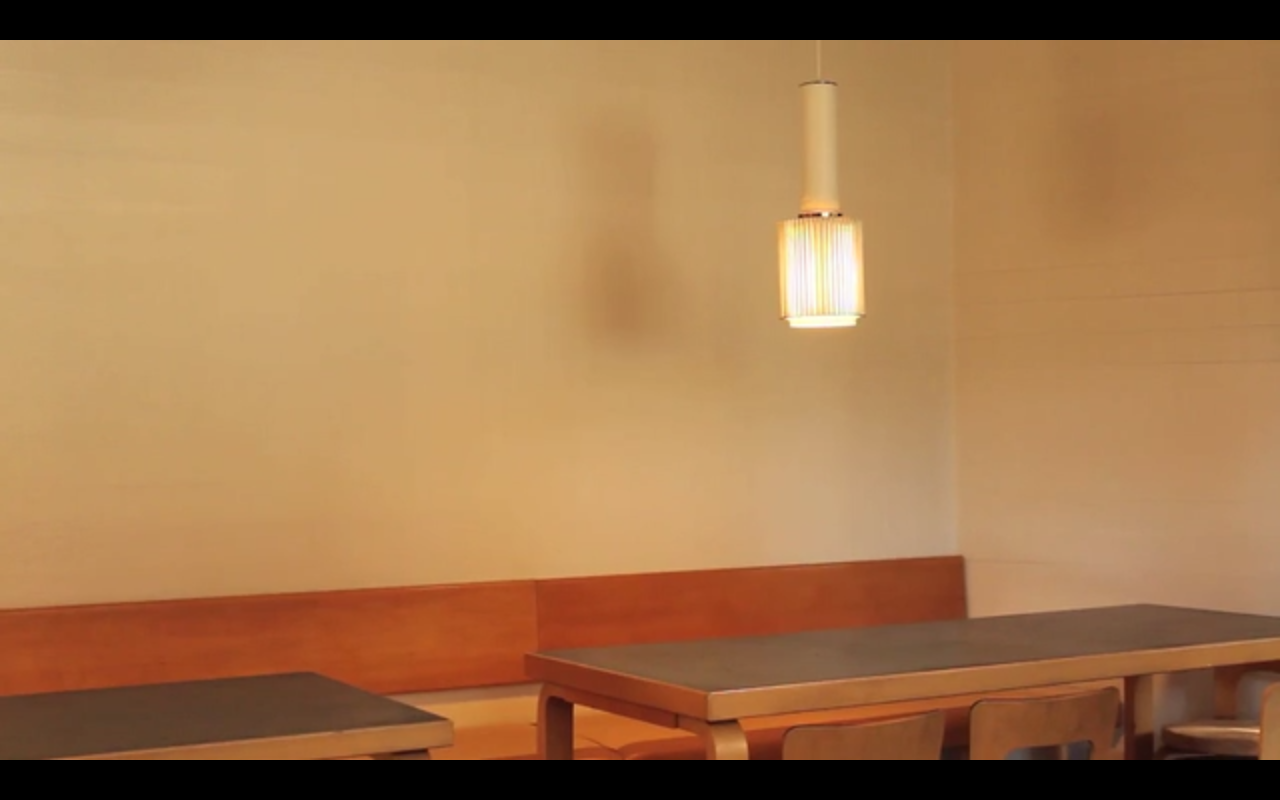
tavern with pendant A110
Tavern with Pendant A110, 2014. HD video loop. Filmed at Studio Aalto with the permission of the Alvar Aalto Foundation, Helsinki
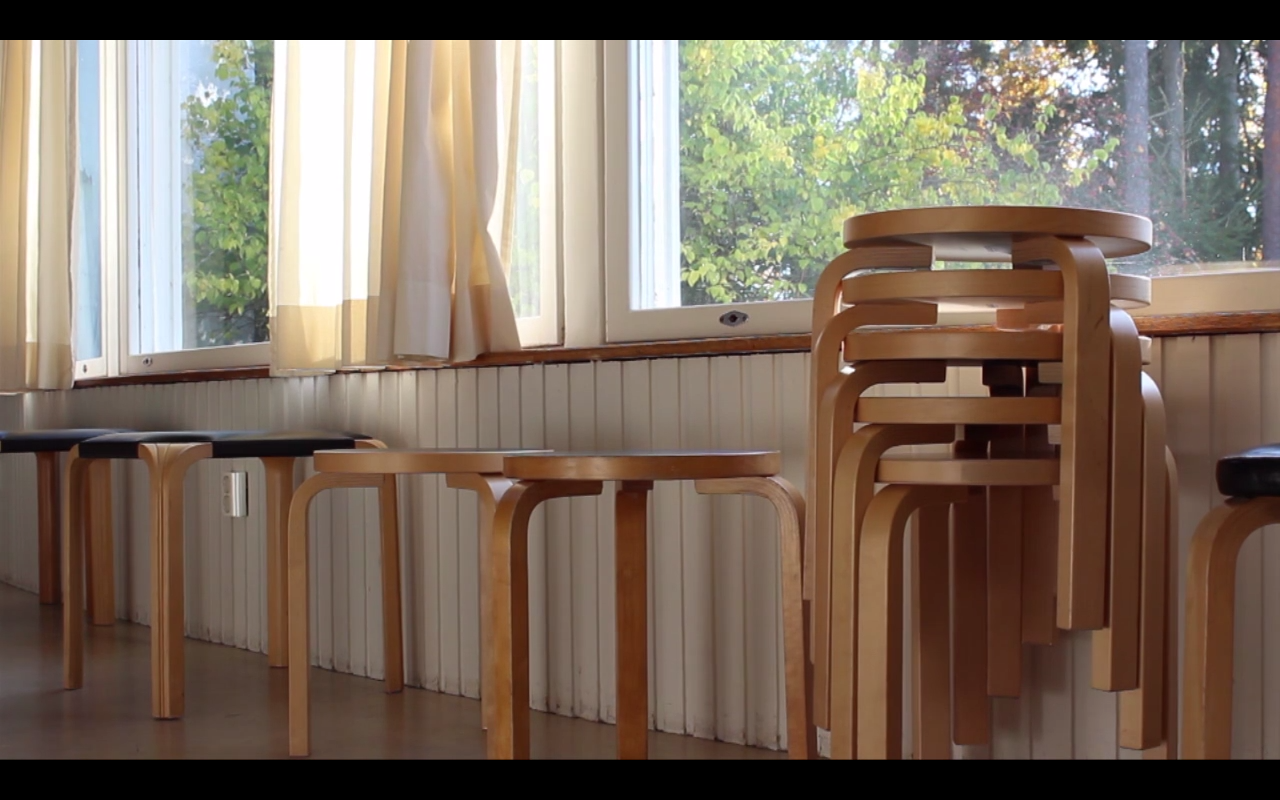
studio a (from a stool 60)
Studio A (from a Stool 60), 2014. HD video, 10’26. Filmed at Studio Aalto with permission of the Alvar Aalto Foundation, Helsinki
forum sequence
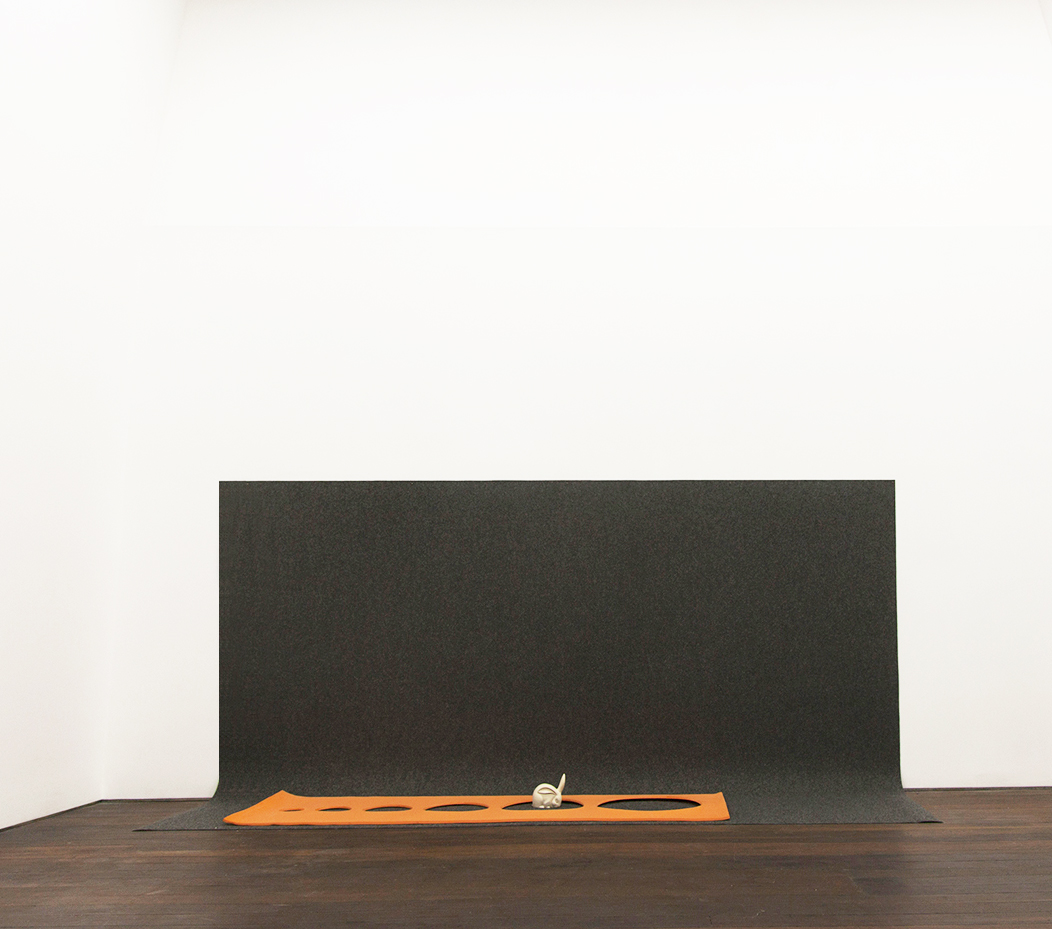
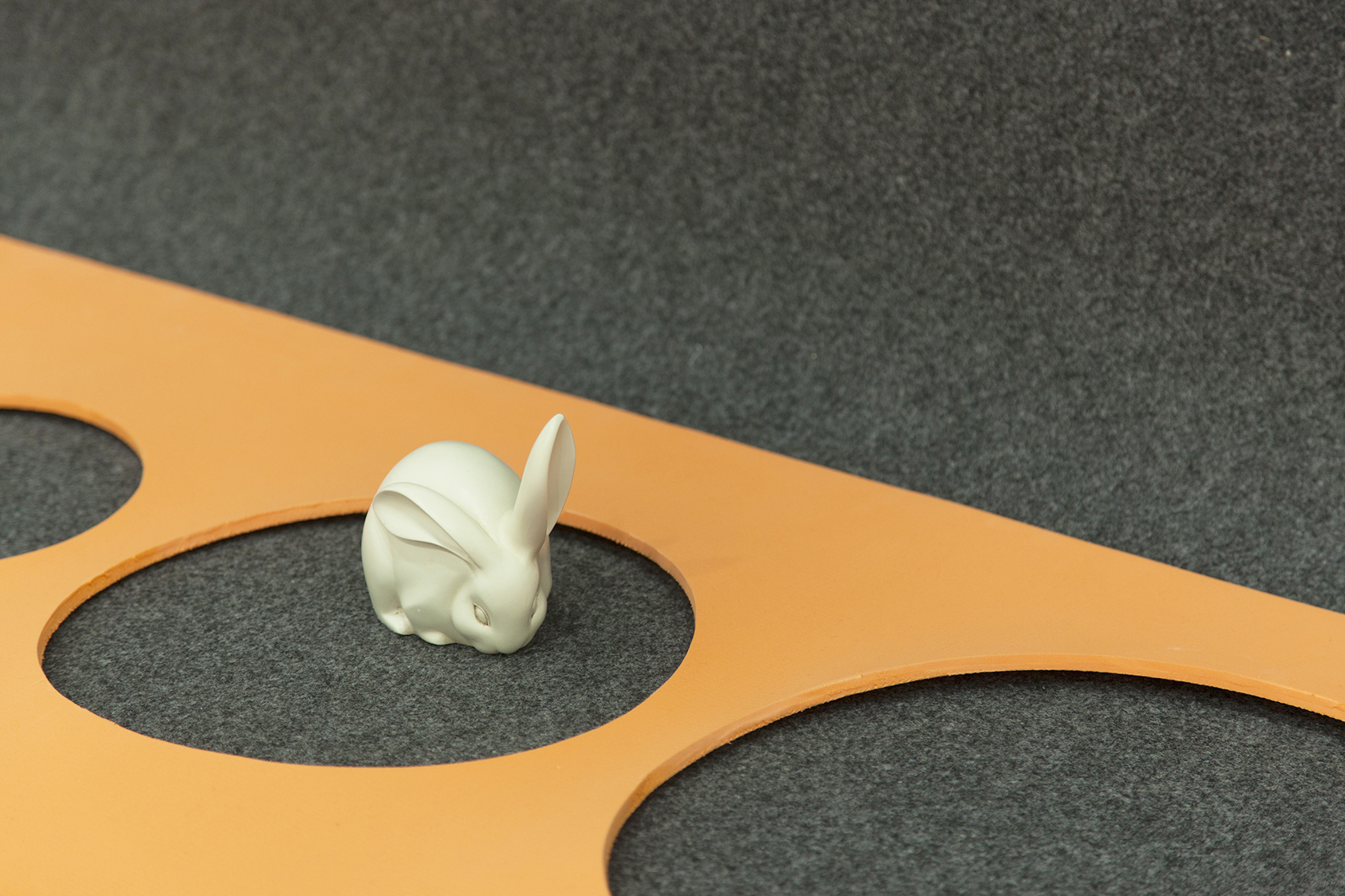
Forum Sequence, 2014. Curated by Gemma Weston for Medium, Moana Project Space, Perth
Polypropylene carpet, yoga mat, reconstituted stone interpretation of Edouard Marcel Sandoz’s Lapin Une Oreille Levée by Sue Dawes for ARTFORUM.
Photos: Casey Ayres
open cube, white cube, london
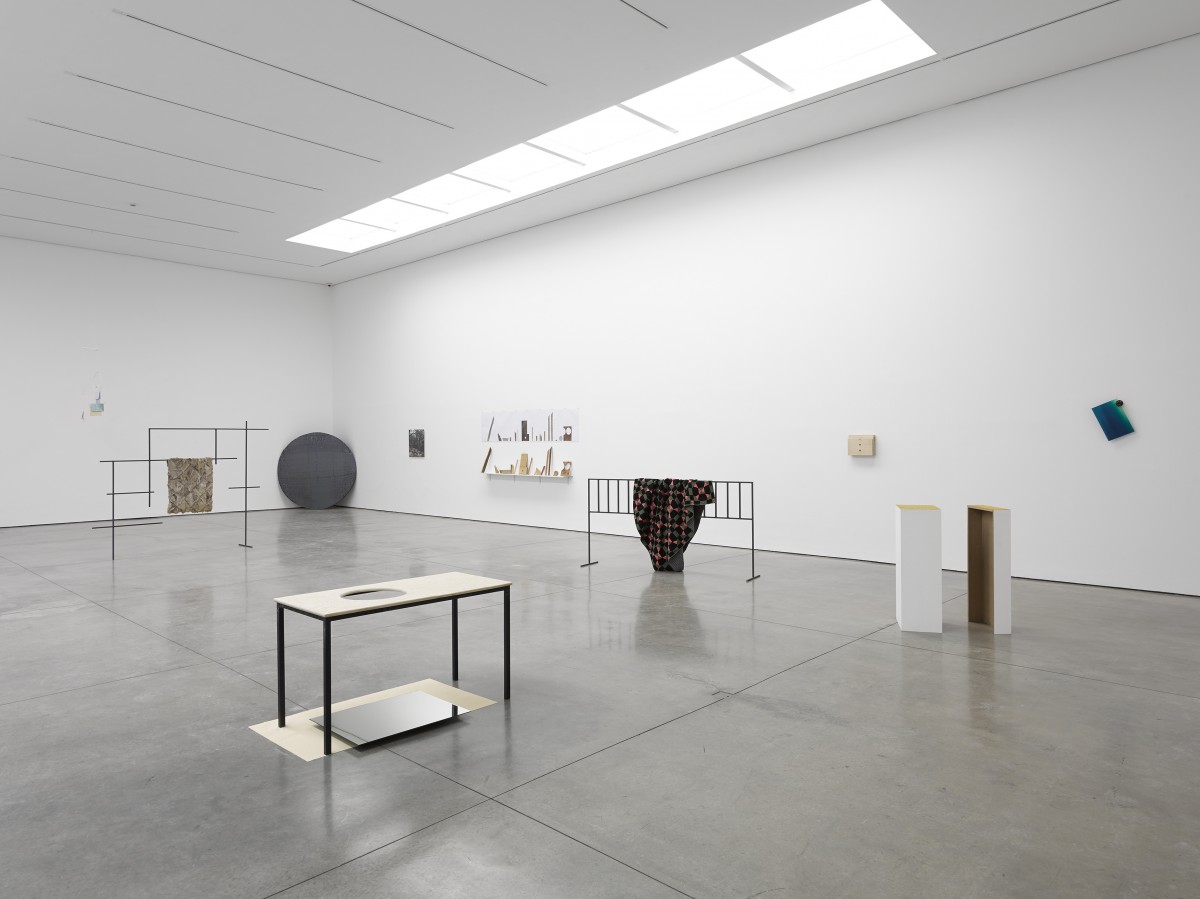
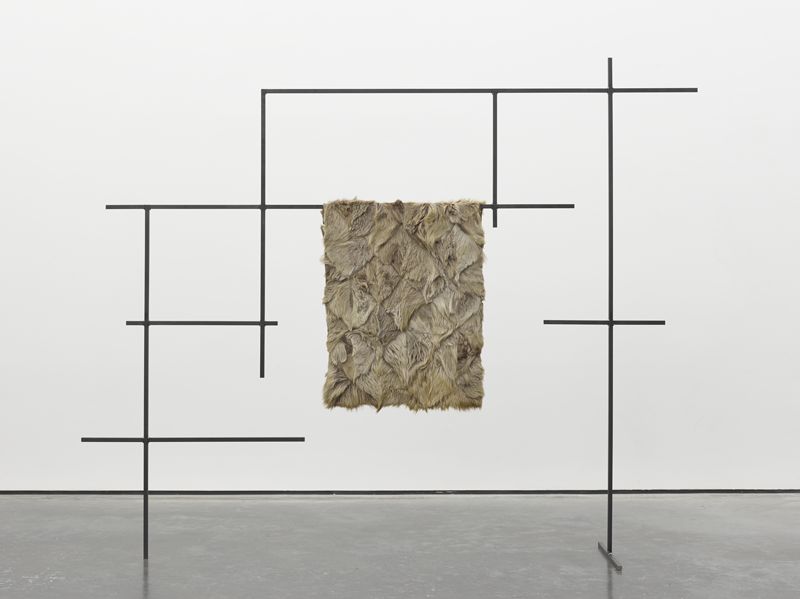
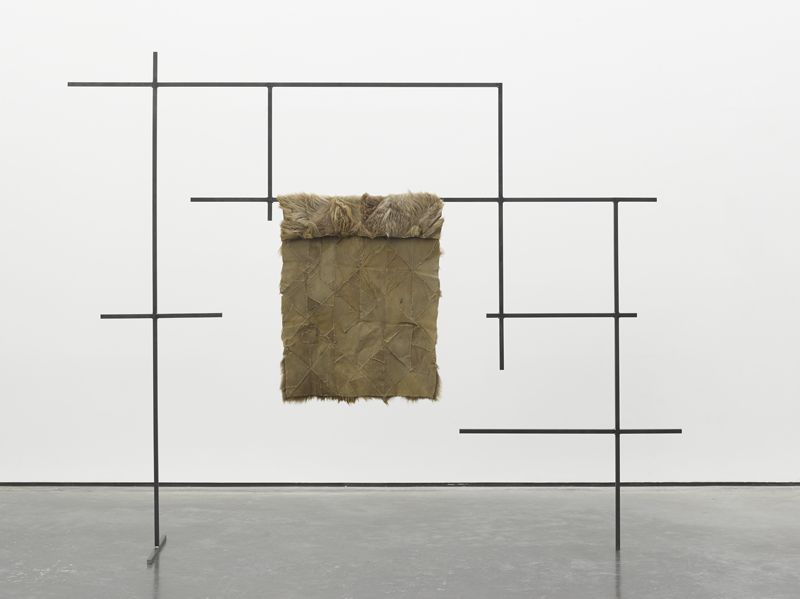
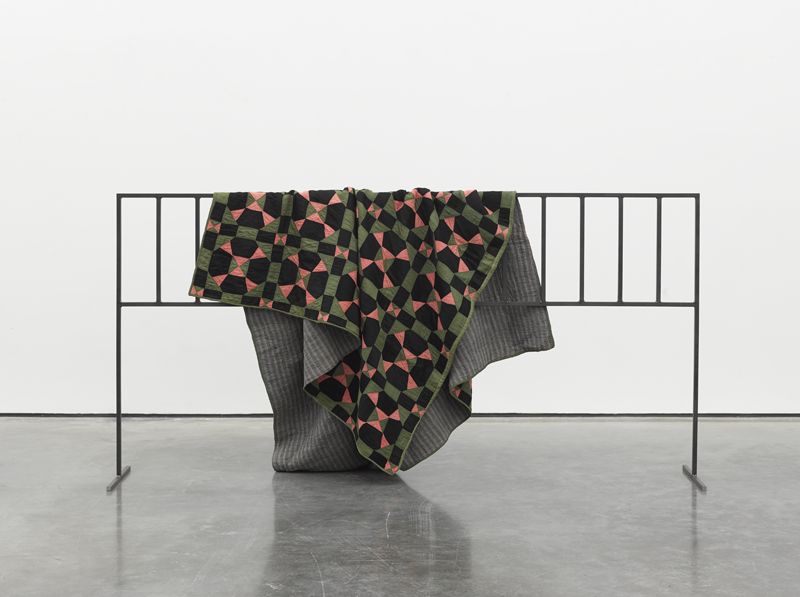
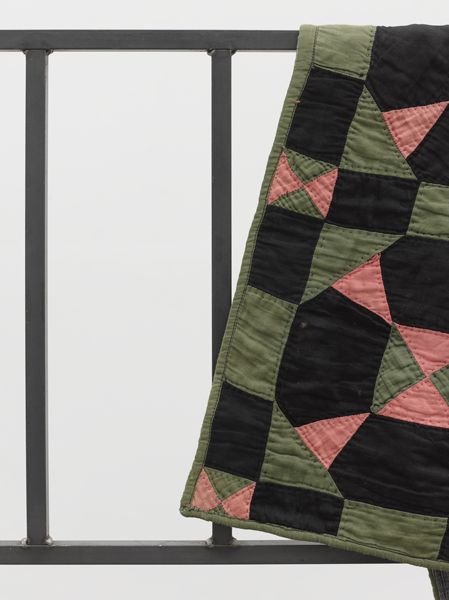
Open Cube, 2013. Curated by Adriano Pedrosa for White Cube, Mason’s Yard, London. Amish quilt c. 1920, quilted goatskin rug, mild steel. Photos: Ben Westoby


peripheral orbit, acme, london
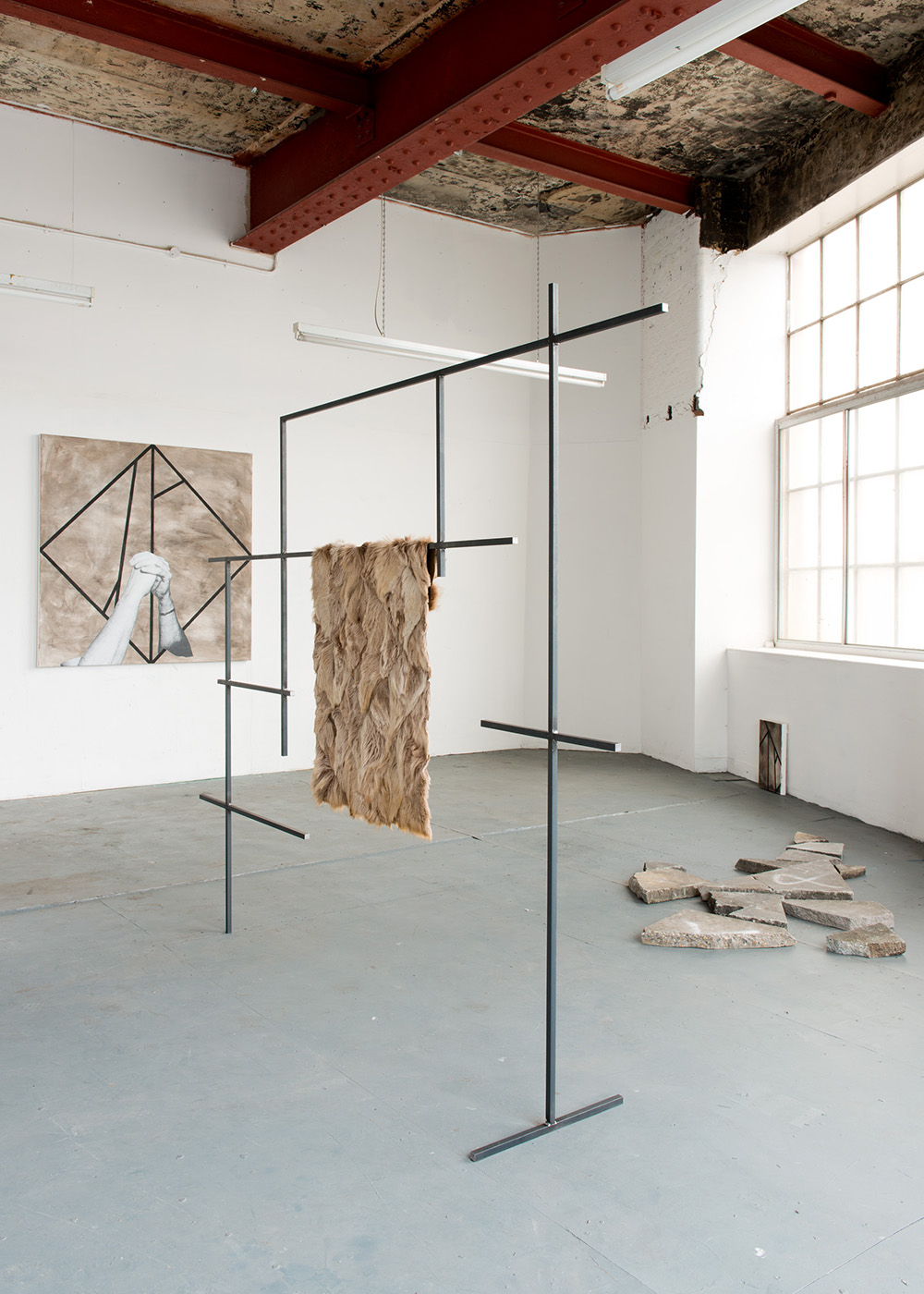
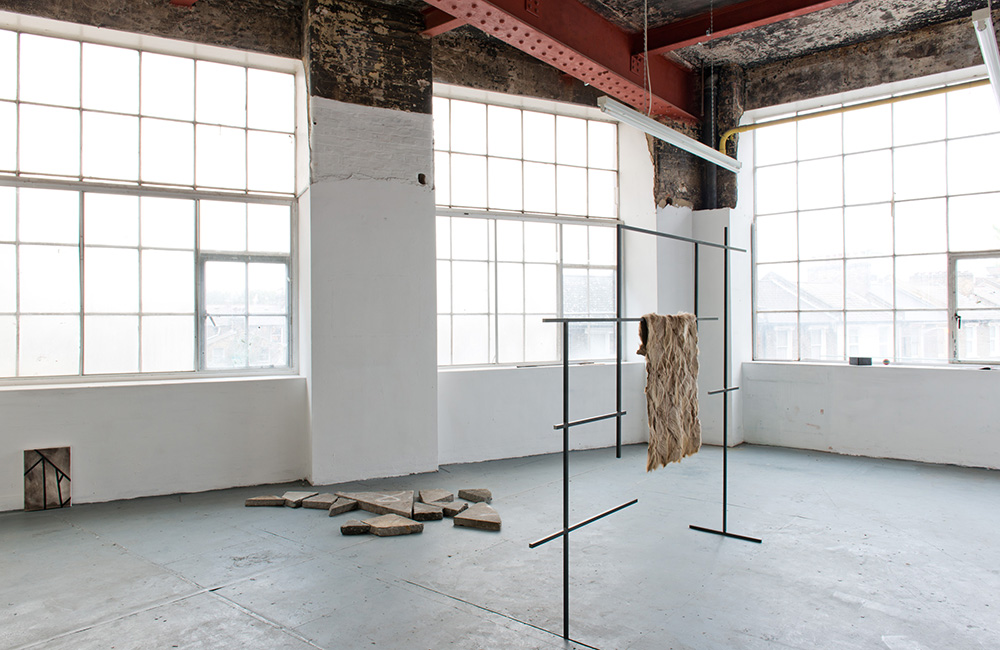
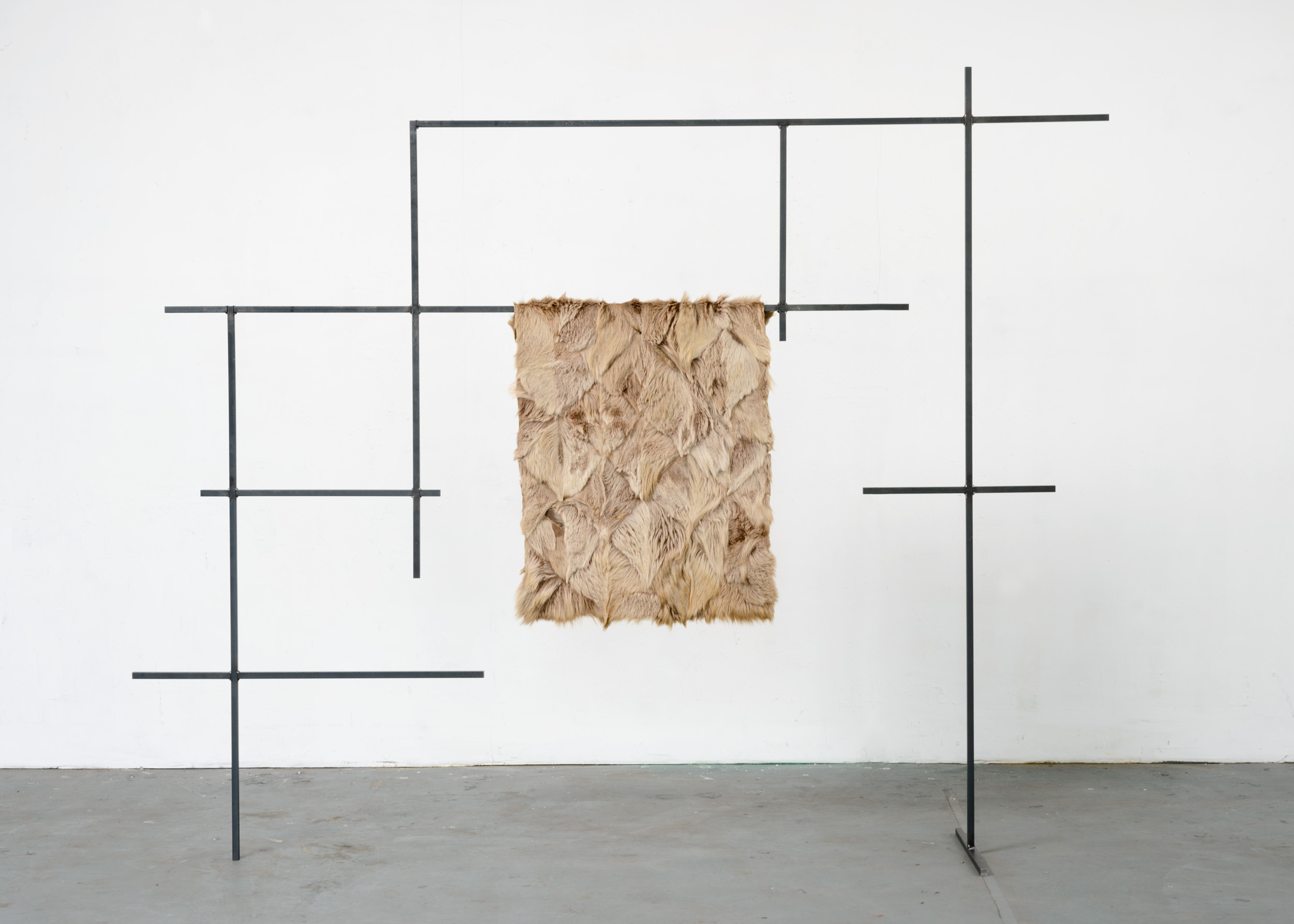
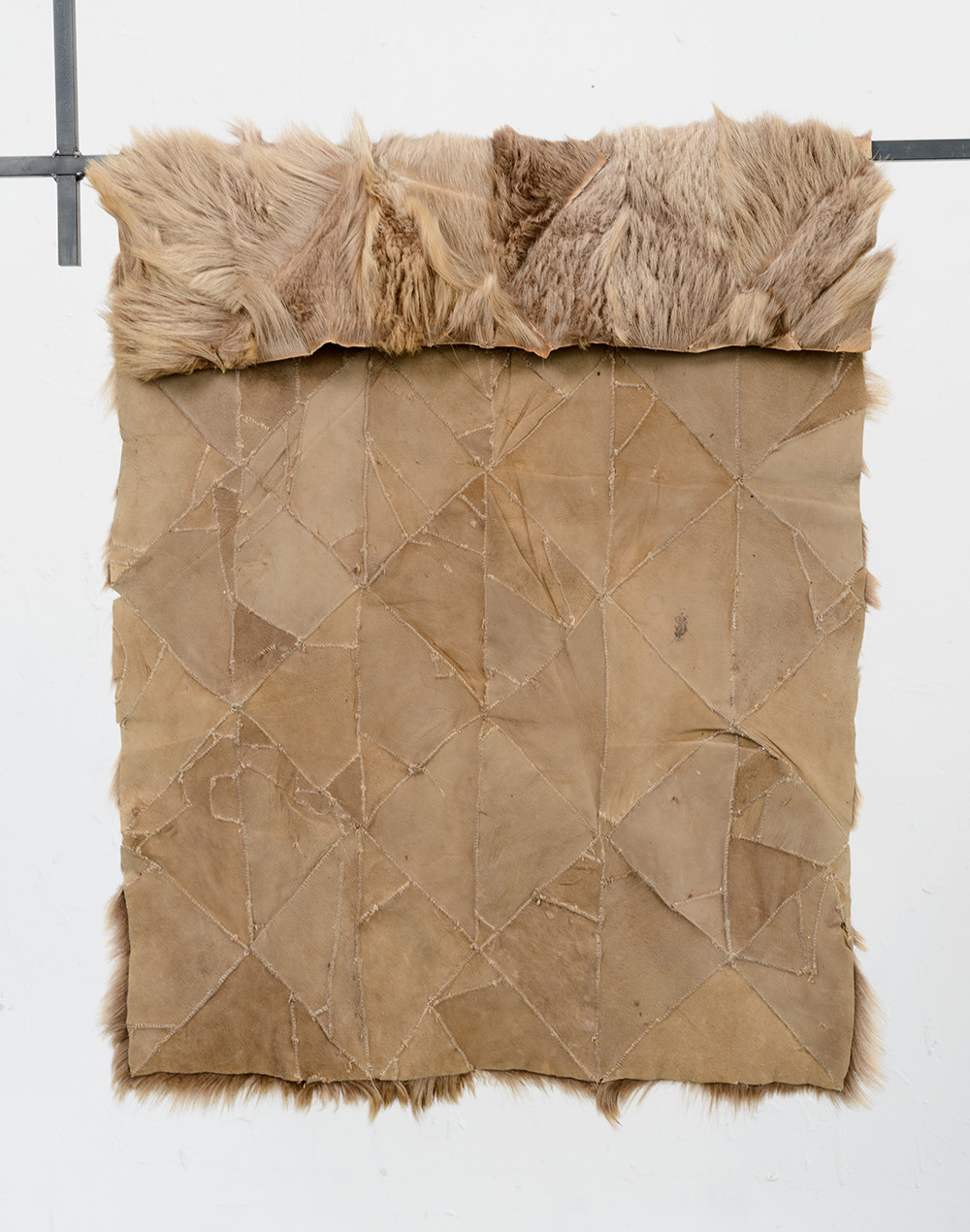
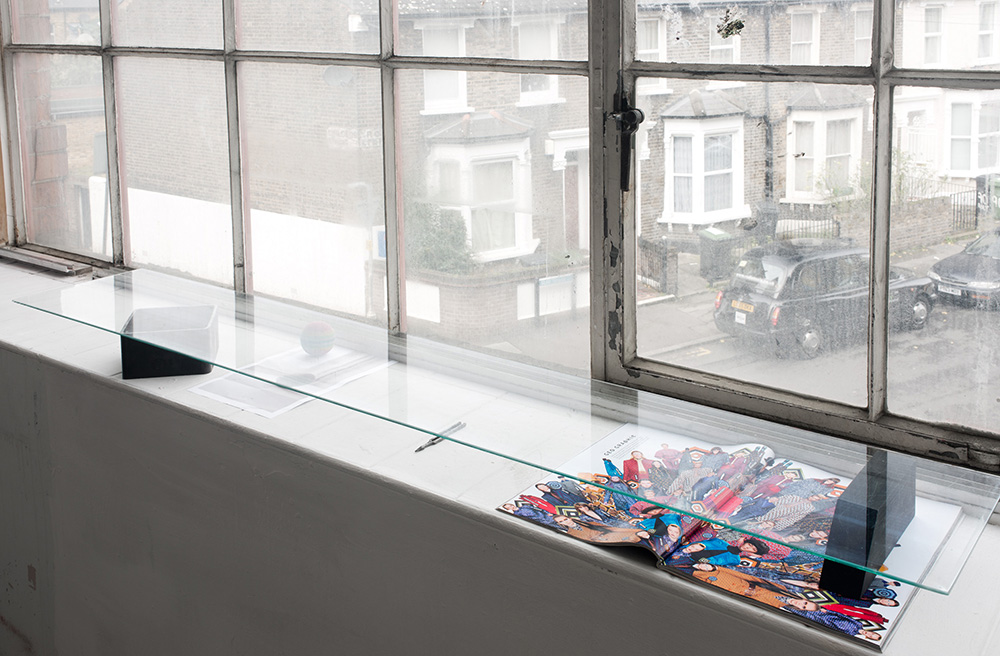
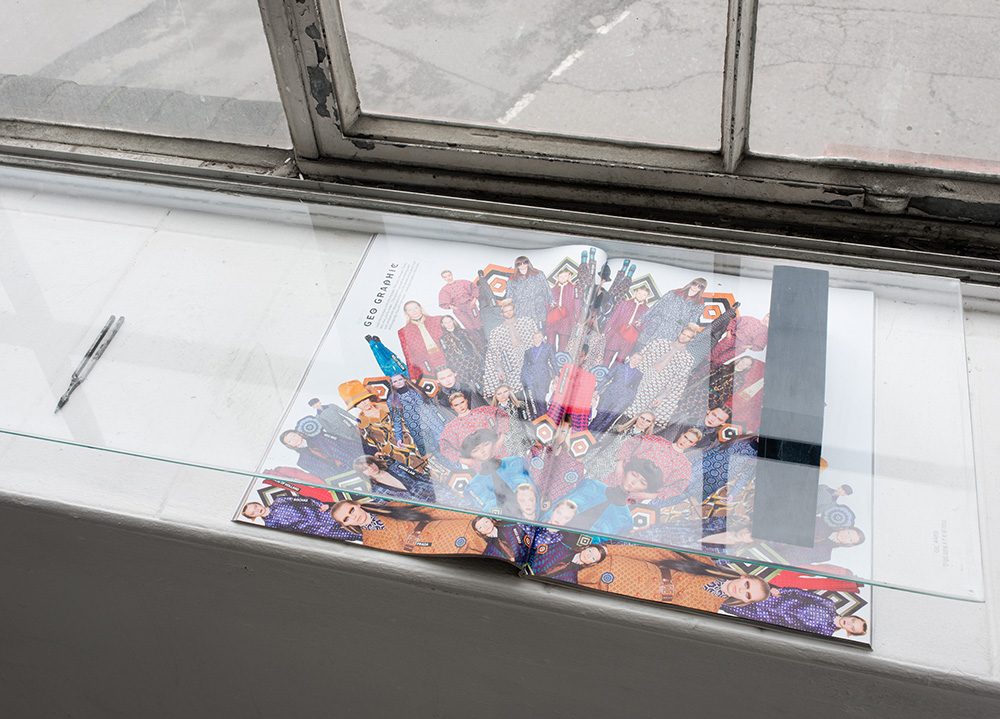
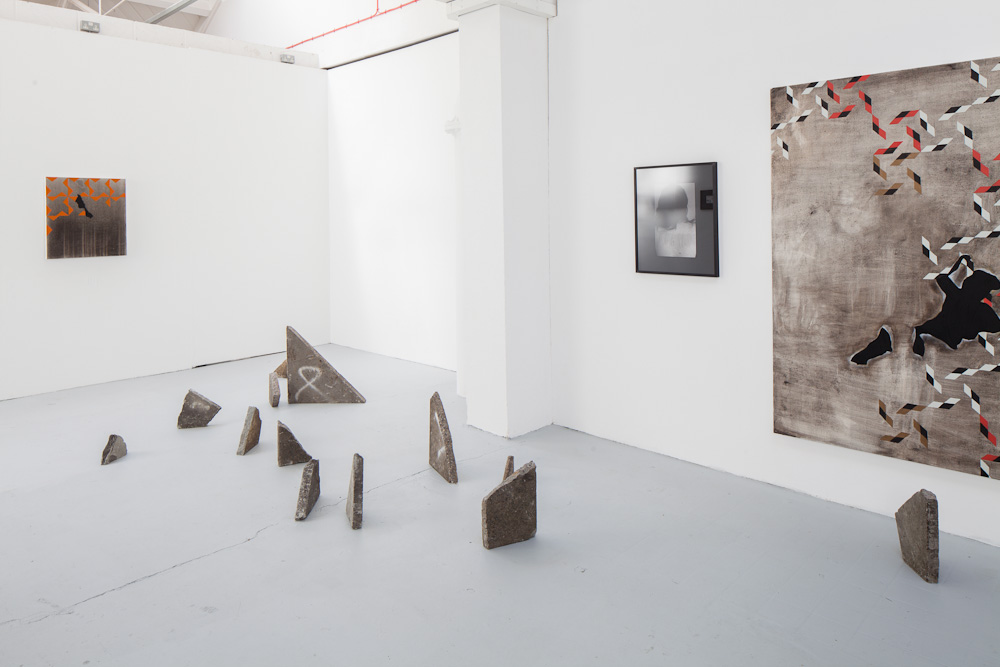
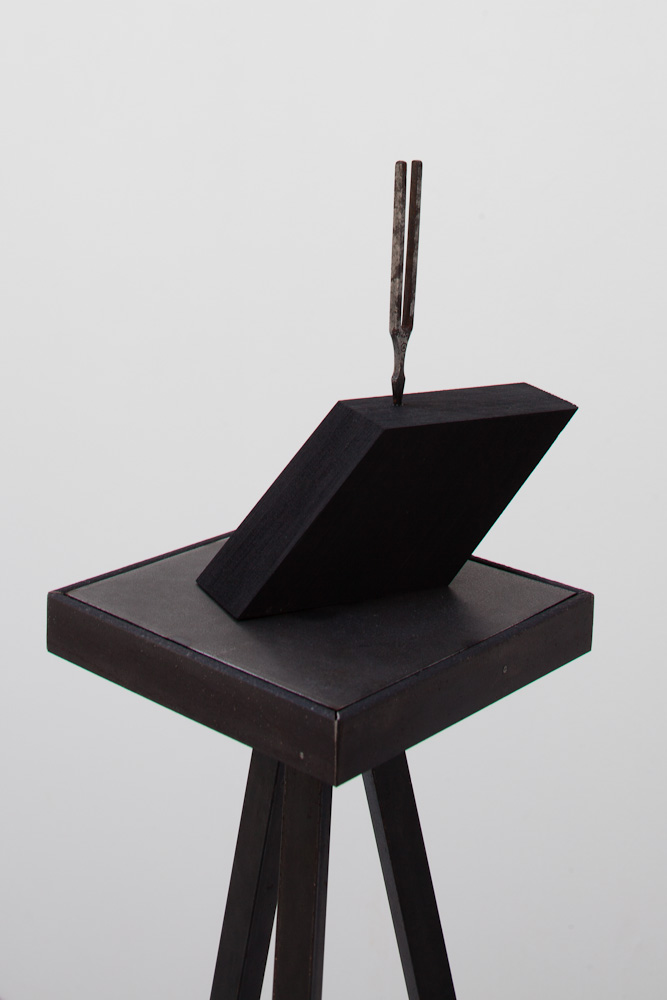
Peripheral Orbit, 2013. Goatskin rug, steel, silkscreen and oil on canvas, concrete, tuning fork, toy ball, fashion journal, inkjet transparency prints, stained timber, images from the archives of Freud Museum, London. Photos: Sam Drake

history painting (modern melancholy)
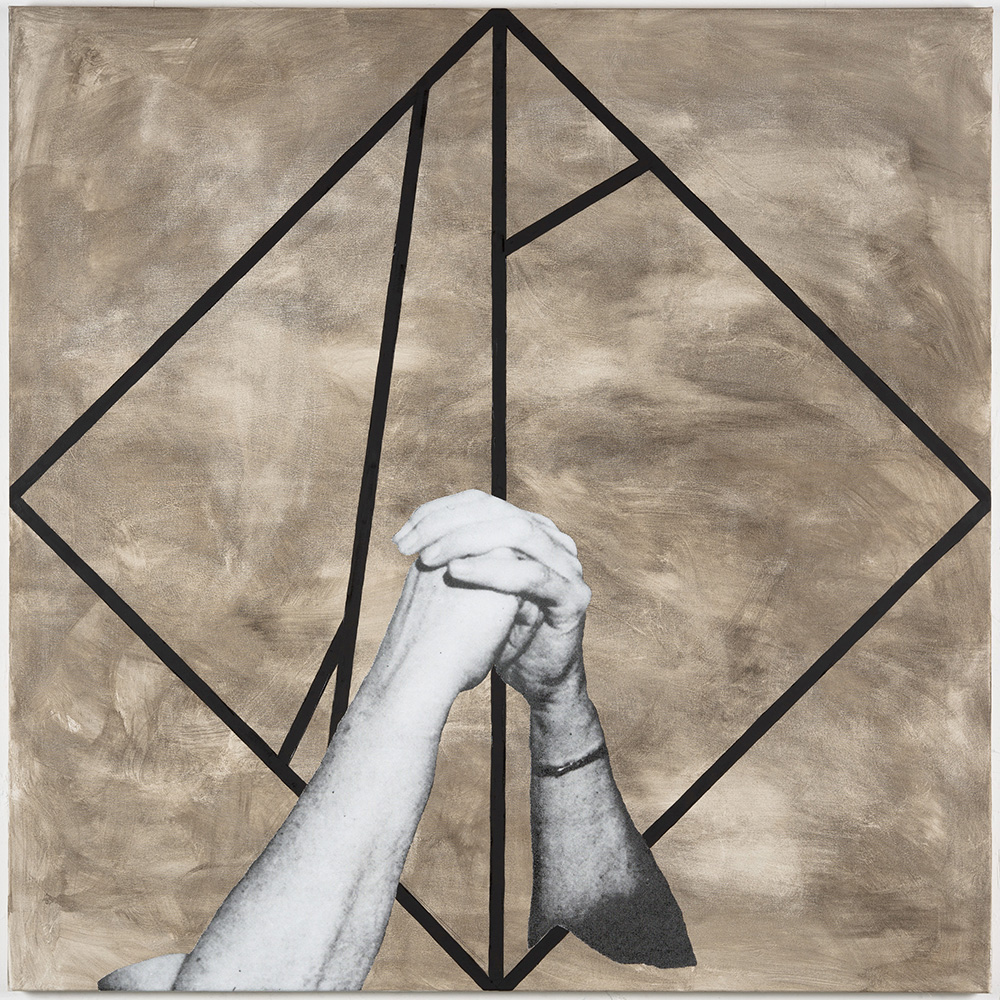
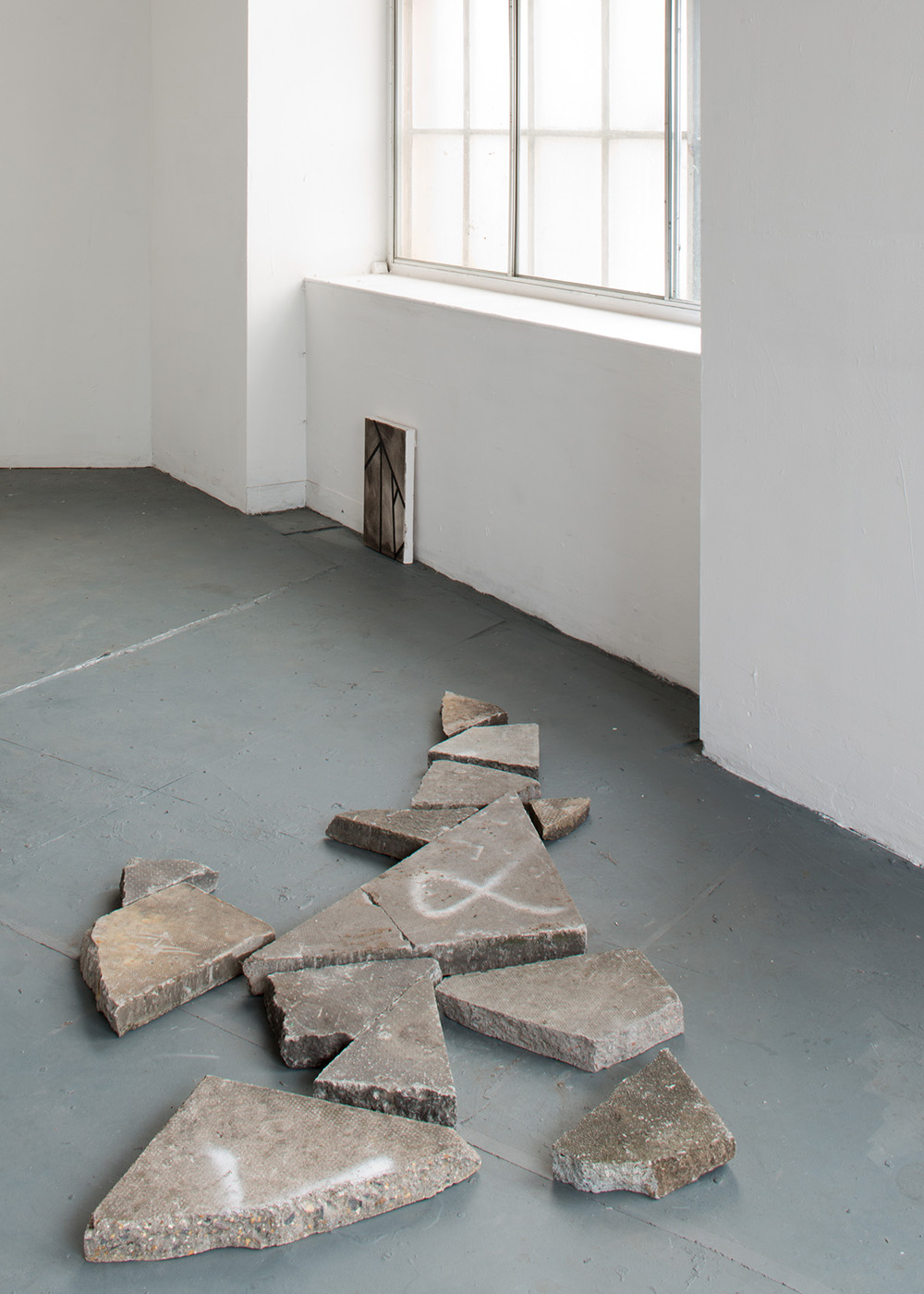
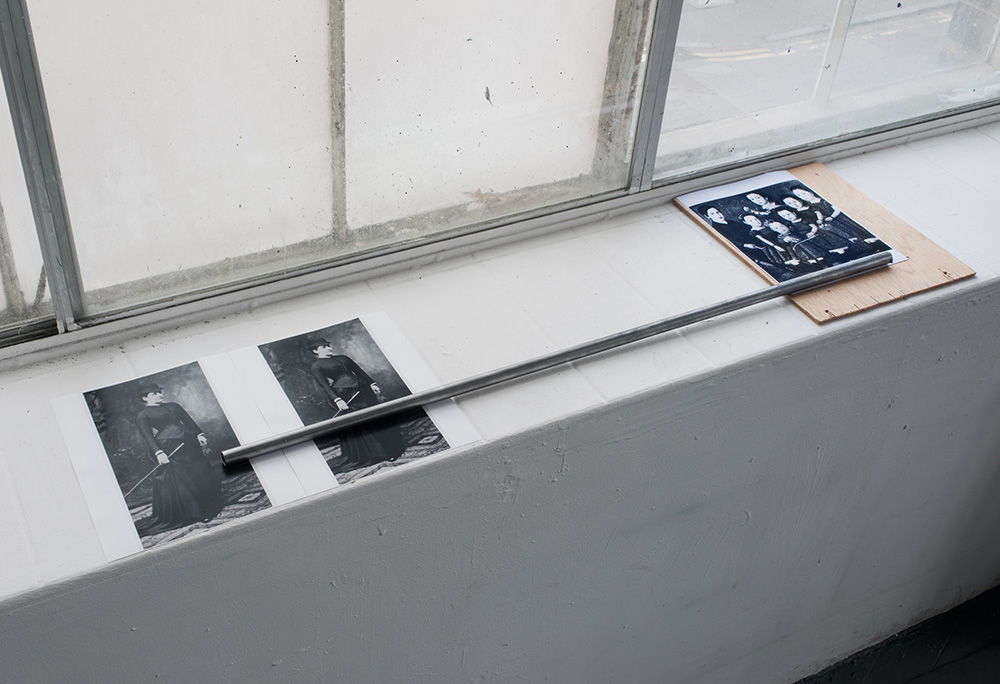
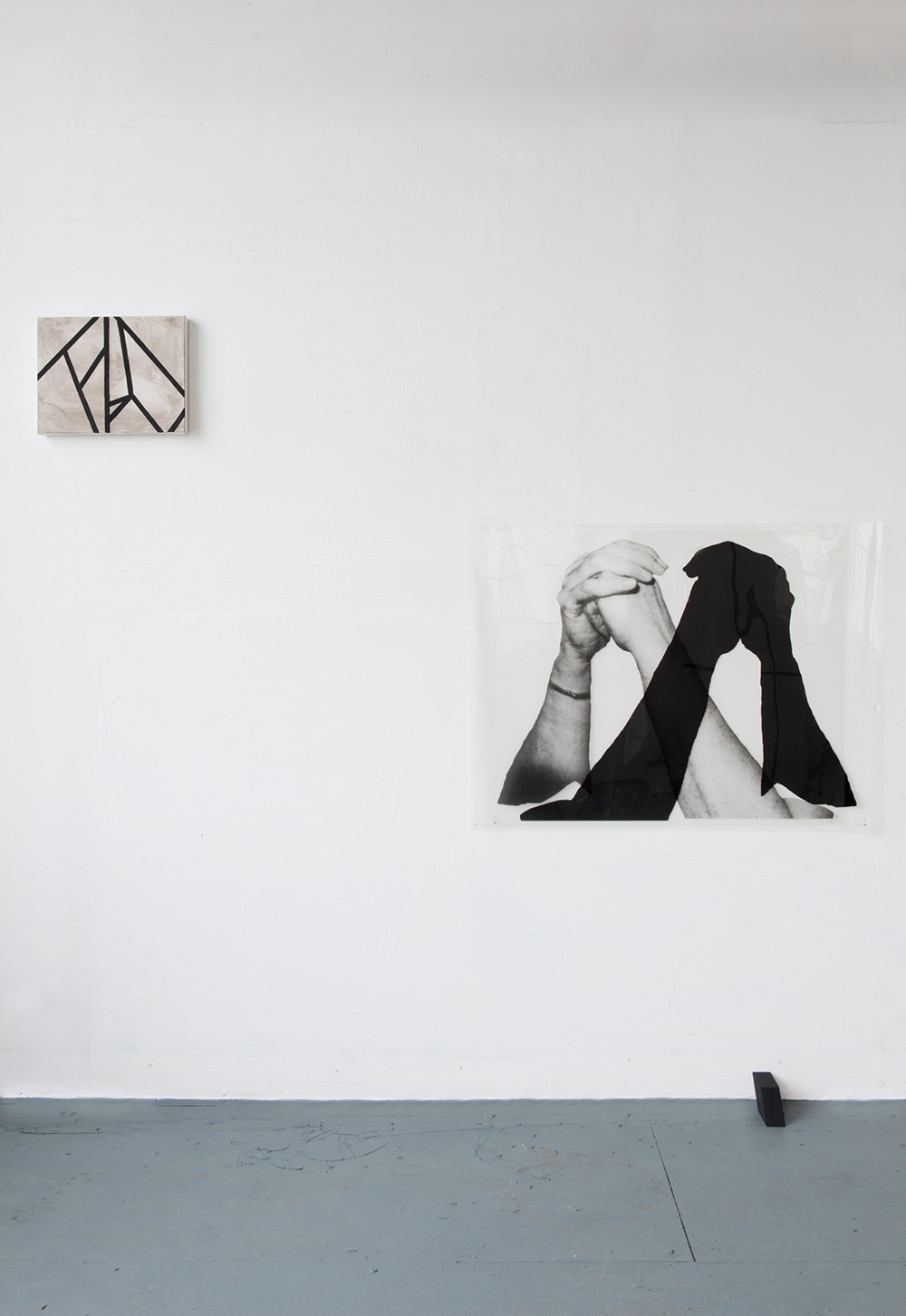
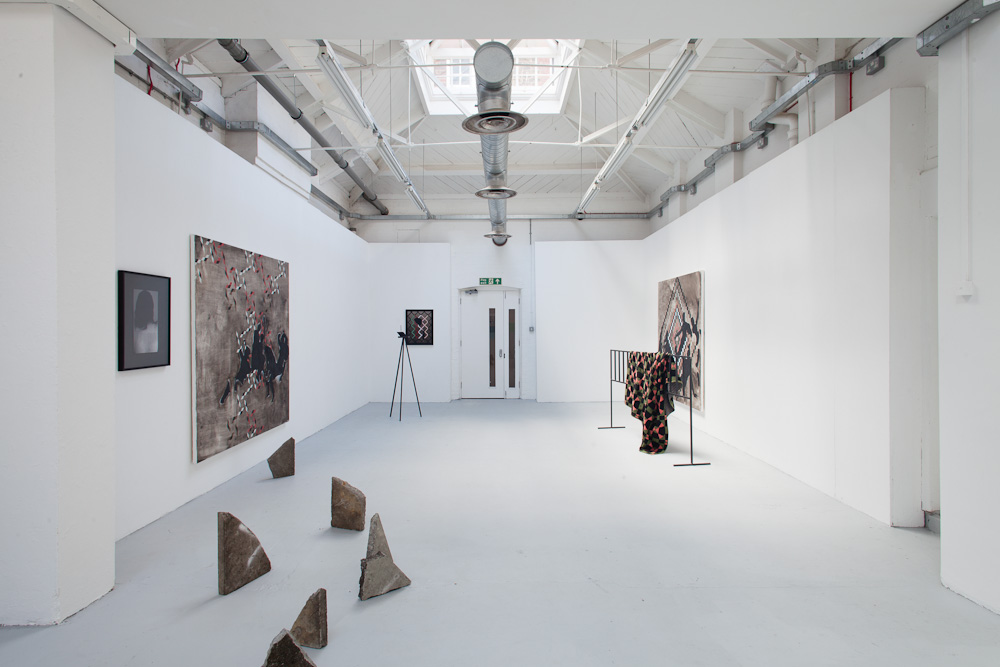
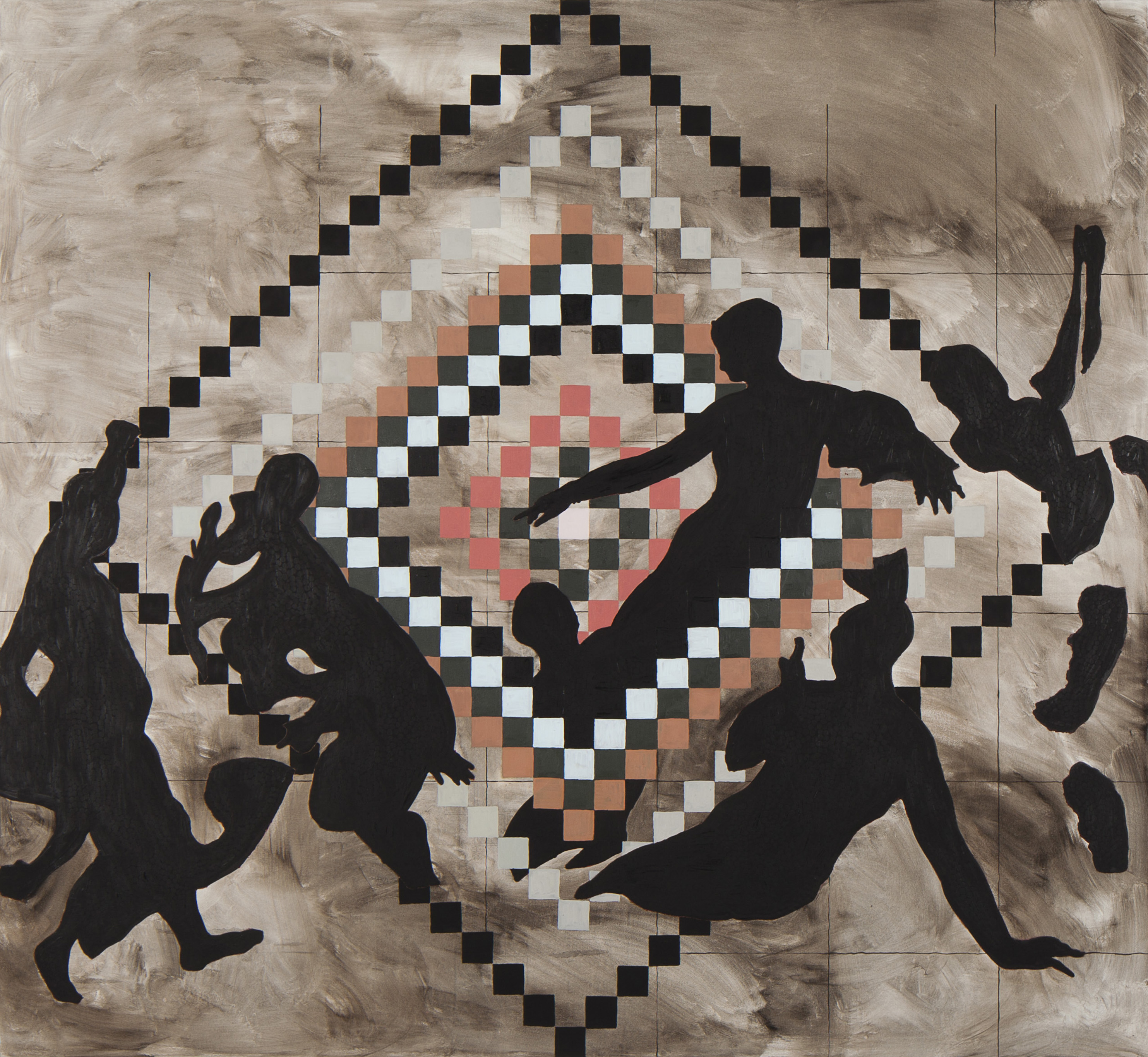
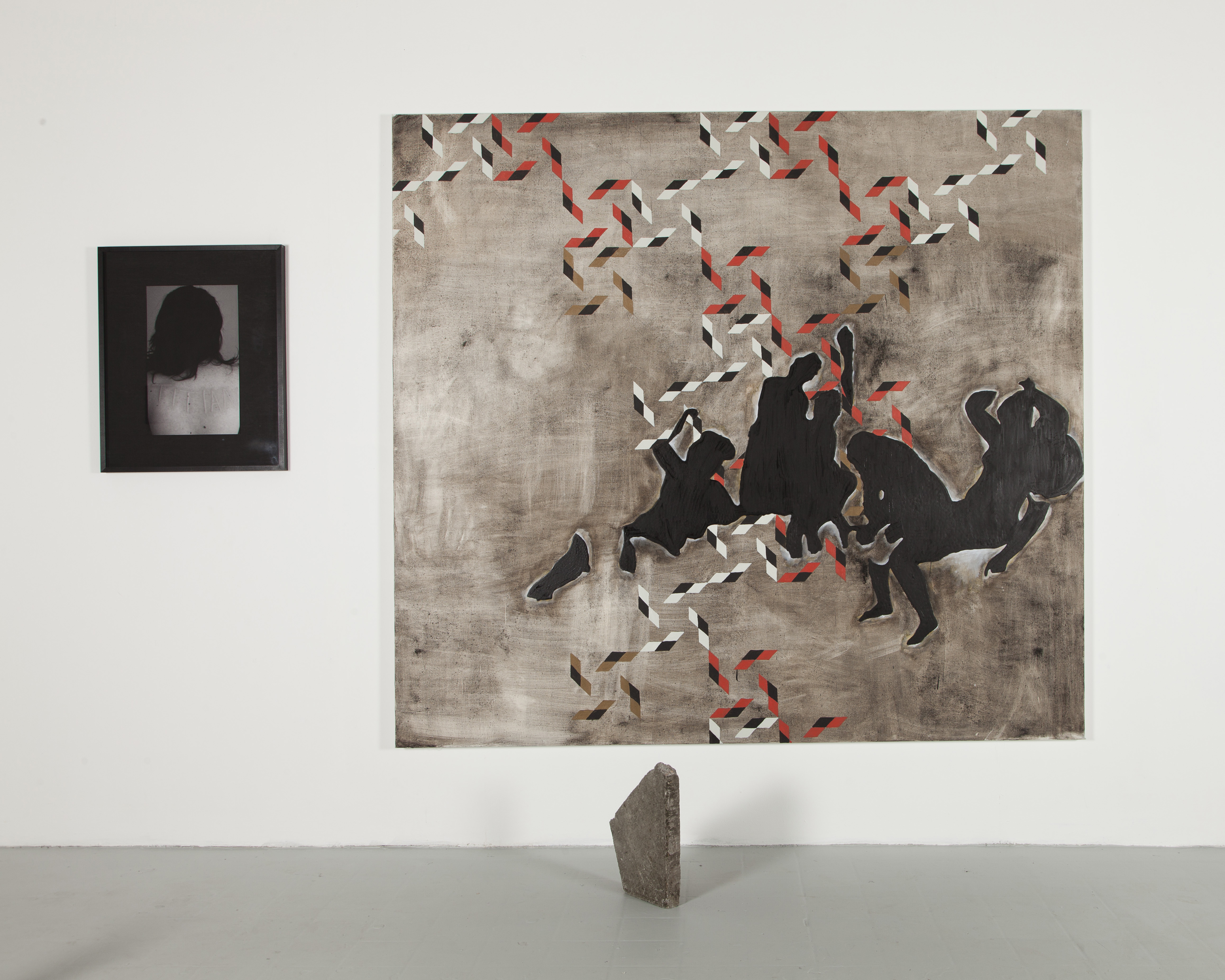
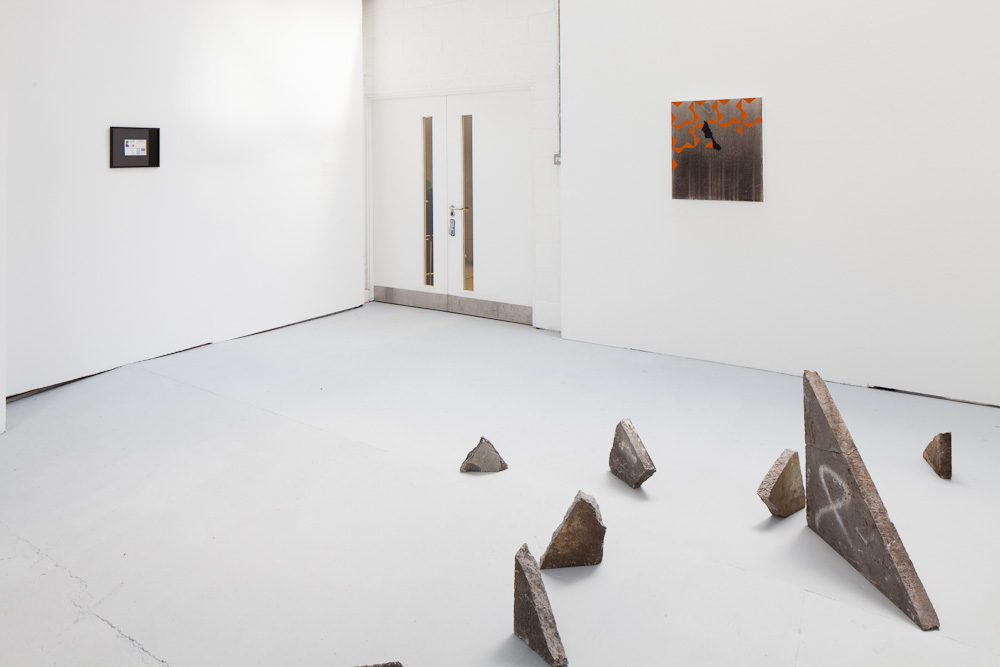
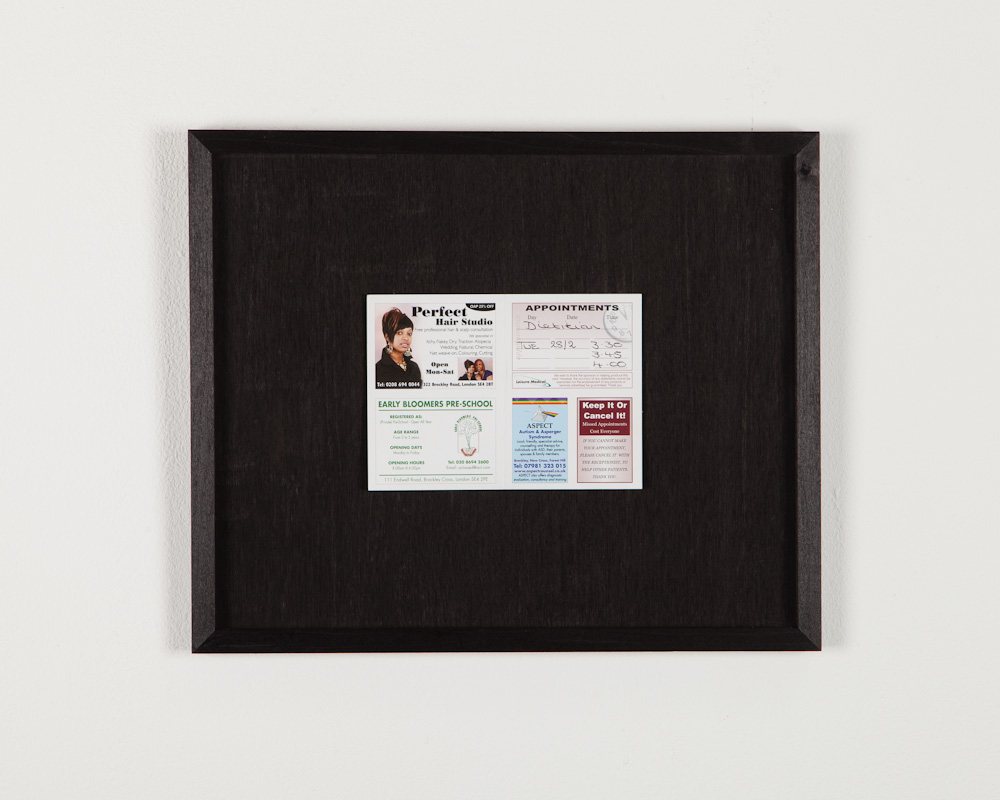
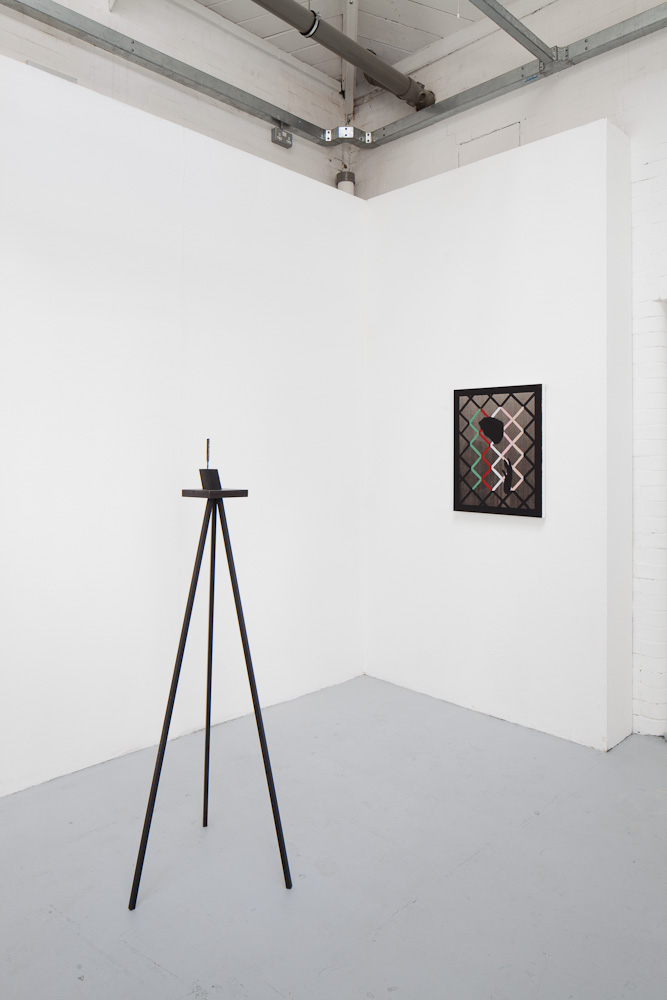
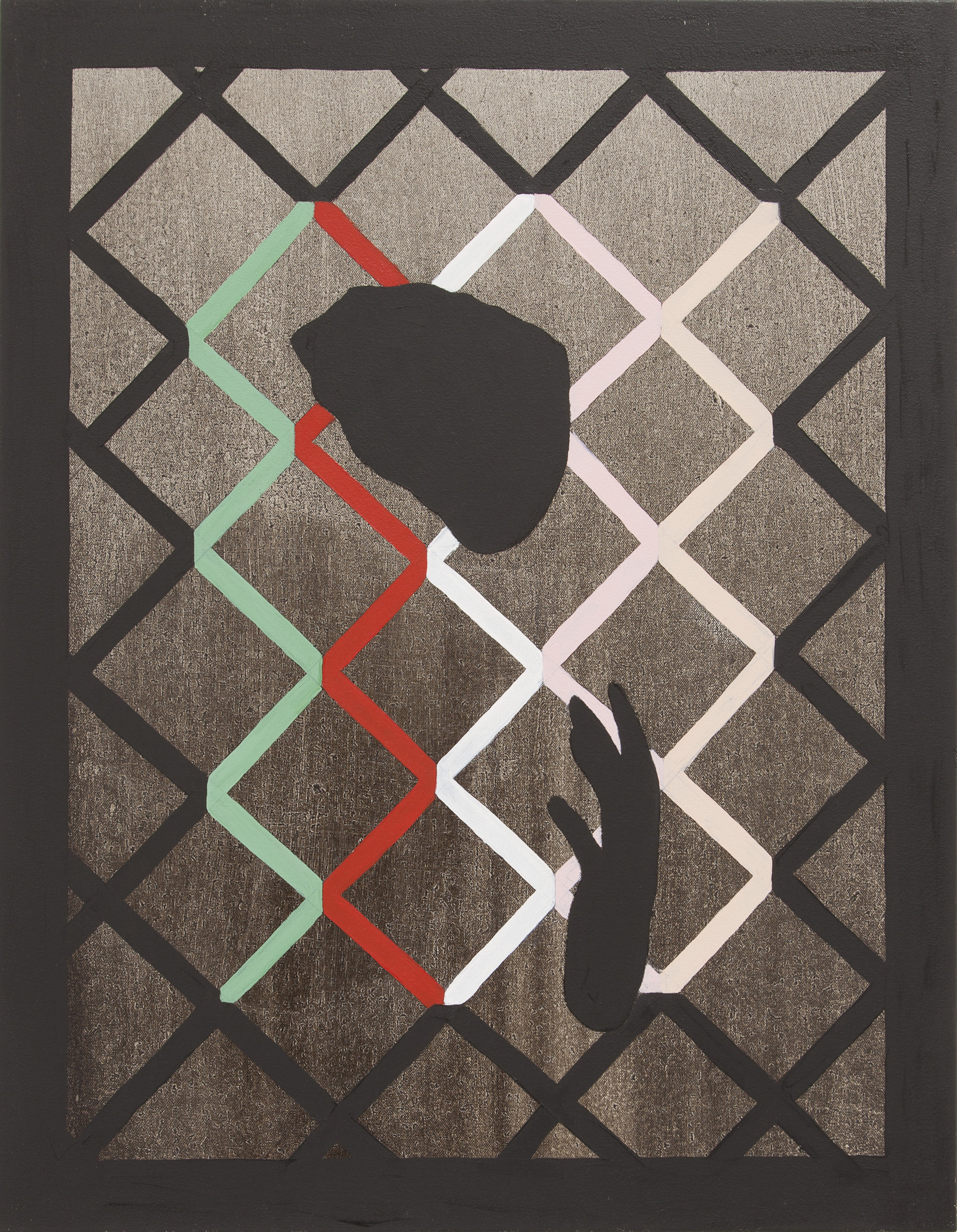
History Painting (Modern Melancholy), 2012, oil on canvas, pigment print, tuning fork, stained timber, concrete, Amish quilt c. 1920, mild steel, medical appointment notice. Photos: Joe Clark


 Caitlin Yardley